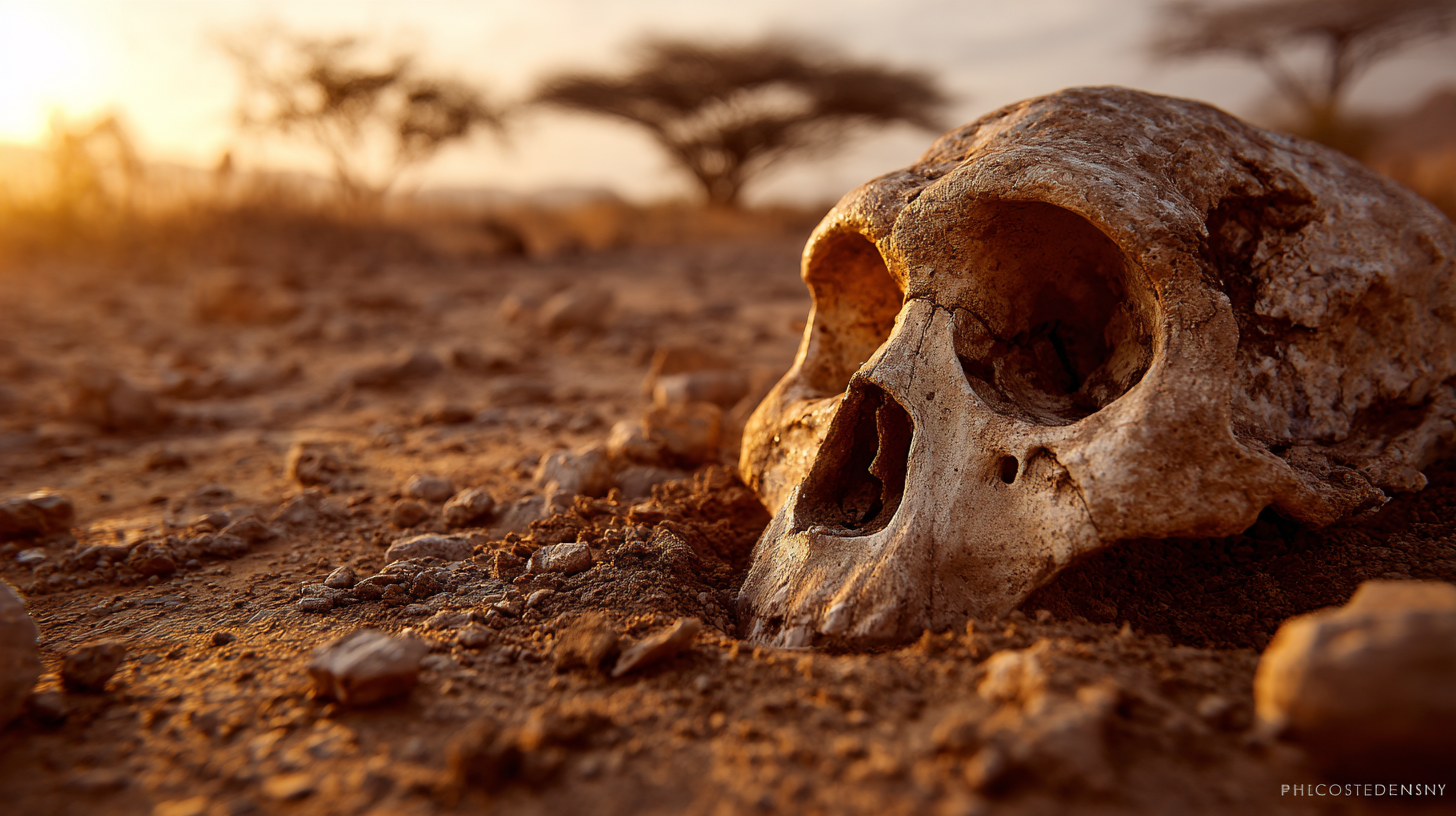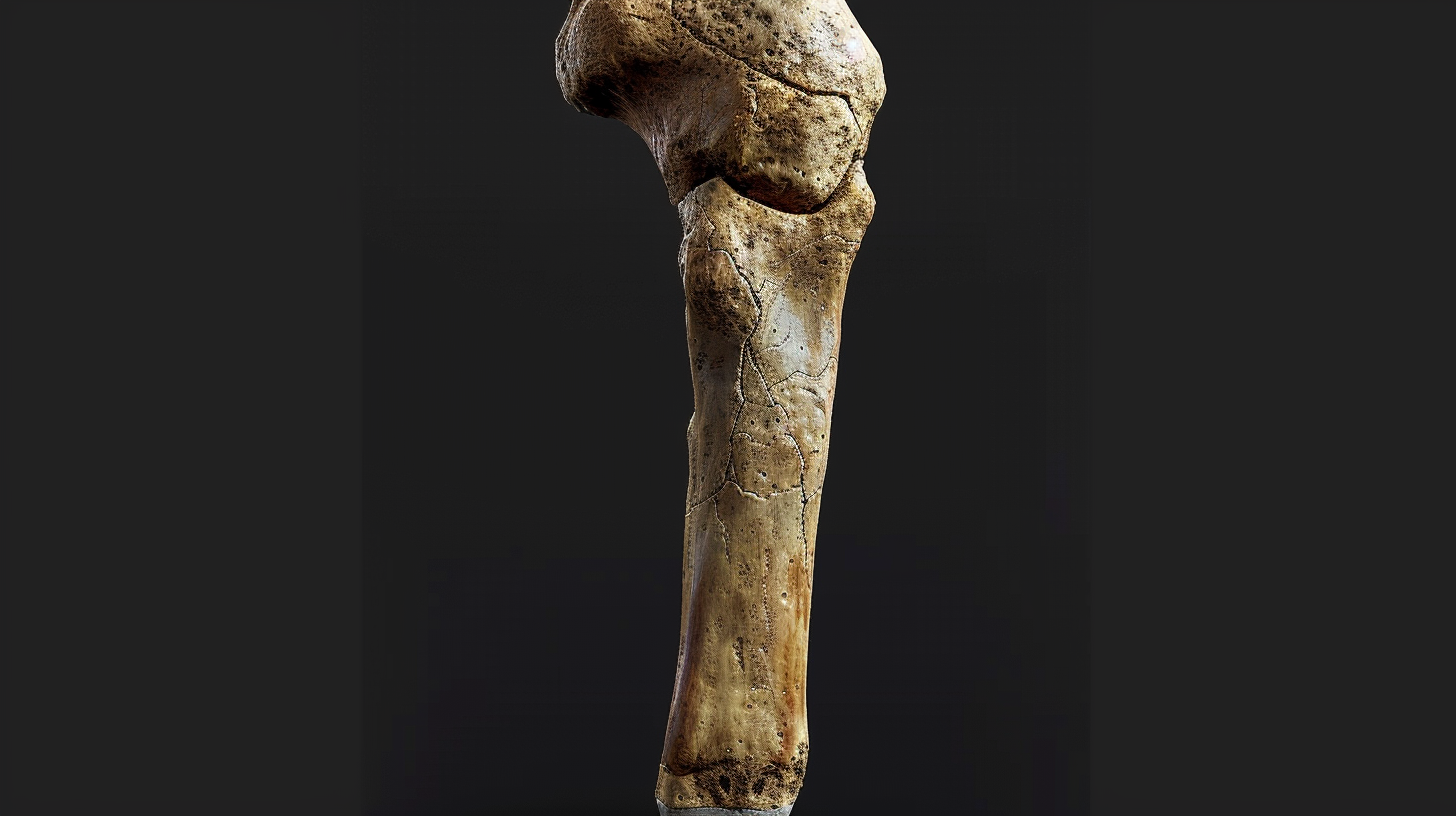

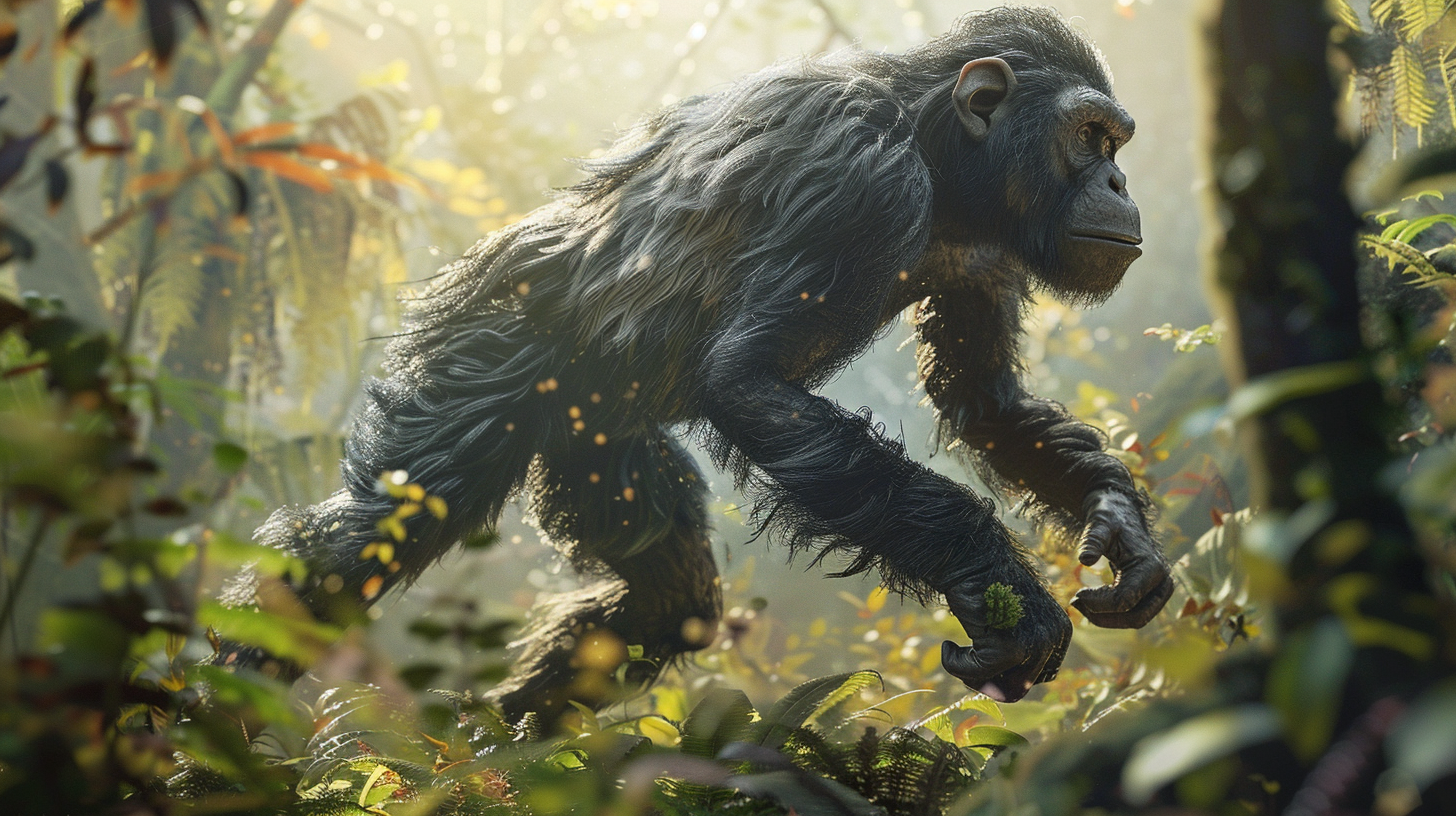
When you think of the history of human evolution, do you often imagine the image of a hunched chimpanzee gradually straightening its back and walking to become a human? In 2009, a fossil was revealed to the world that completely shook this long-held stereotype.
It is Ardipithecus ramidus, nicknamed ‘Ardi’.
Today, we will explain in very simple terms the identity of Ardi, who turned the scientific world upside down, and the intense debate among scientists surrounding her that continues to this day.
1. Who is ‘Ardi’?
Ardi is an early human who roamed the forests of the Afar region in present-day Ethiopia about 4.4 million years ago. She is a ‘great senior’ who is a whopping 1 million years older than ‘Lucy’ (Australopithecus), the most famous fossil to us.
- Name: Ardipithecus ramidus (Nickname: Ardi)
- Time Period: Approximately 4.4 million years ago (Early Pliocene)
- Height: About 120cm (similar to a lower elementary school student)
- Weight: About 50kg (similar to a modern chimpanzee)
- Brain Size: 300~350cc (1/4 the size of modern humans, about the size of a bonobo or female chimpanzee)
💡 One-line Summary: Although the brain is still small and similar to a chimpanzee, the cranial structure already has features showing it is a human ancestor (hominin).
2. How is she different from Lucy?
Comparing her to ‘Lucy’, the ancestor best known to the public, makes Ardi’s characteristics clearer.
| Comparison Item | Ardi (4.4 million years ago) | Lucy (3.2 million years ago) |
| Habitat | Dense Forest (Woodland) | Mix of forest and grassland |
| Locomotion | Walking on trees + ground (Hybrid) | Walking well on the ground (Fully bipedal) |
| Foot Shape | Big toe splayed to the side (Can grasp objects) | Big toe aligned with other toes |
| Diet | Mainly forest fruits, leaves ($C_3$ plants) | Consumed tough grasses or hard foods (Included $C_4$ plants) |
Key Point: If Lucy is closer to a ‘walking human’, Ardi is a ‘transitional human who combined tree climbing and walking’.
3. Mystery: Why did they walk in the forest? (Collapse of the Savanna Hypothesis)
For a long time, scientists believed that “humans started walking as forests disappeared and grasslands (savannas) emerged.” However, the place where Ardi was found was not an open grassland but a forest thick with trees and vines.
Analysis of Ardi’s teeth and surrounding soil revealed that they mainly ate fruits and leaves from the forest rather than grasses from the grassland.
Shocking Conclusion: Humans did not start walking because of grasslands. They started walking on two feet while already living in the forest! It is highly likely they walked to pick fruits in trees and carry those fruits on the ground.
4. Hot Potato in the Scientific Community: How Did Ardi Move?
Ardi’s bones, especially the hands and feet, look very strange. They look like a human’s and also like a monkey’s. This is still a subject of heated debate in academia.
Round 1. “Different from Chimpanzees!” (Original 2009 Research Team)
According to research published in Science in 2009, Ardi did not use ‘knuckle-walking’ like chimpanzees.
- Feet: The big toe was splayed to the side to grasp branches, but the other toes had a rigid bone (os peroneum), making them advantageous for pushing off the ground to walk.
- Hands: The wrists were flexible, suggesting a mode of careful clambering on trees rather than swinging or knuckle-walking like chimpanzees.
- Argument: “Human ancestors did not resemble chimpanzees. Chimpanzees evolved independently later!”
Round 2. “No, Similar to Apes!” (Recent Rebuttal Studies)
However, recent scientists (2019, 2021) analyzing Ardi again with the latest technology voice a different opinion.
- Feet: Analysis of Ardi’s foot proportions showed results very similar to modern chimpanzees or gorillas.
- Hands: The degree of curvature of the finger bones and the shape of the joints were forms very suitable for hanging on trees (Suspension).
- Argument: “Human ancestors likely also hung on trees or crawled on the ground like chimpanzees at some point!”
5. The Beginning of Peace: Love and War Told by Canines
The most touching (?) feature found in Ardi is the ‘reduced canines’. Usually in ape societies, the large, sharp canines of males are symbols of weapons and competition. Chimpanzees have upper canines that interlock with lower teeth when the mouth is closed, sharpening them like knives (honing complex).
However, Ardi completely lost this function. The male’s canine size became small enough to have almost no difference from the female’s.
What does this mean?
It means early human males no longer bared their fangs to fight. Instead, it is highly likely they chose ‘cooperation’ and a ‘family-oriented appearance’ of walking on two feet to bring delicious food to females and pairing up to raise children together.
Concluding: The Question Ardi Left Us
Ardipithecus ramidus is evidence that we did not simply evolve from chimpanzees, but have walked a unique path from very long ago.
Although their walking might have been waddling and clumsy, they were already the first humans to choose cooperation over fighting, and coexistence over competition. Long before our brains got bigger, perhaps we already possessed a ‘human-like’ heart?
References
- Gibbons, A. (2009). A new kind of ancestor: Ardipithecus unveiled. Science, 326(5949), 36–40.
- Haile-Selassie, Y. (2001). Late Miocene hominids from the Middle Awash, Ethiopia. Nature, 412, 178–181.
- Kimbel, W. H., et al. (2014). Ardipithecus ramidus and the evolution of the human cranial base. Proceedings of the National Academy of Sciences, 111(3), 948–953.
- Lovejoy, C. O. (2009). Reexamining human origins in light of Ardipithecus ramidus. Science, 326(5949), 74, 74e1–74e8.
- Lovejoy, C. O., et al. (2009). Combining prehension and propulsion: The foot of Ardipithecus ramidus. Science, 326(5949), 72, 72e1–72e8.
- Lovejoy, C. O., et al. (2009). The great divides: Ardipithecus ramidus reveals the postcrania of our last common ancestors with African apes. Science, 326(5949), 73, 100–106.
- Lovejoy, C. O., et al. (2009). The pelvis and femur of Ardipithecus ramidus: The emergence of upright walking. Science, 326(5949), 71, 71e1–71e6.
- Prang, T. C. (2019). The African ape-like foot of Ardipithecus ramidus and its implications for the origin of bipedalism. eLife, 8, e44433.
- Prang, T. C., et al. (2021). Ardipithecus hand provides evidence that humans and chimpanzees evolved from an ancestor with suspensory adaptations. Science Advances, 7(9), eabf2474.
- Suwa, G., et al. (2009). Paleobiological implications of the Ardipithecus ramidus dentition. Science, 326(5949), 69, 94–99.
- Suwa, G., et al. (2009). The Ardipithecus ramidus skull and its implications for hominid origins. Science, 326(5949), 68, 68e1–68e7.
- White, T. D., et al. (1994). Australopithecus ramidus, a new species of early hominid from Aramis, Ethiopia. Nature, 371, 306–312.
- White, T. D., et al. (1995). Australopithecus ramidus, a new species of early hominid from Aramis, Ethiopia (Corrigendum). Nature, 375, 88.
- White, T. D., et al. (2009). Ardipithecus ramidus and the paleobiology of early hominids. Science, 326(5949), 75–86.
- WoldeGabriel, G., et al. (2009). The geological, isotopic, botanical, invertebrate, and lower vertebrate surroundings of Ardipithecus ramidus. Science, 326(5949), 65, 65e1–65e5.