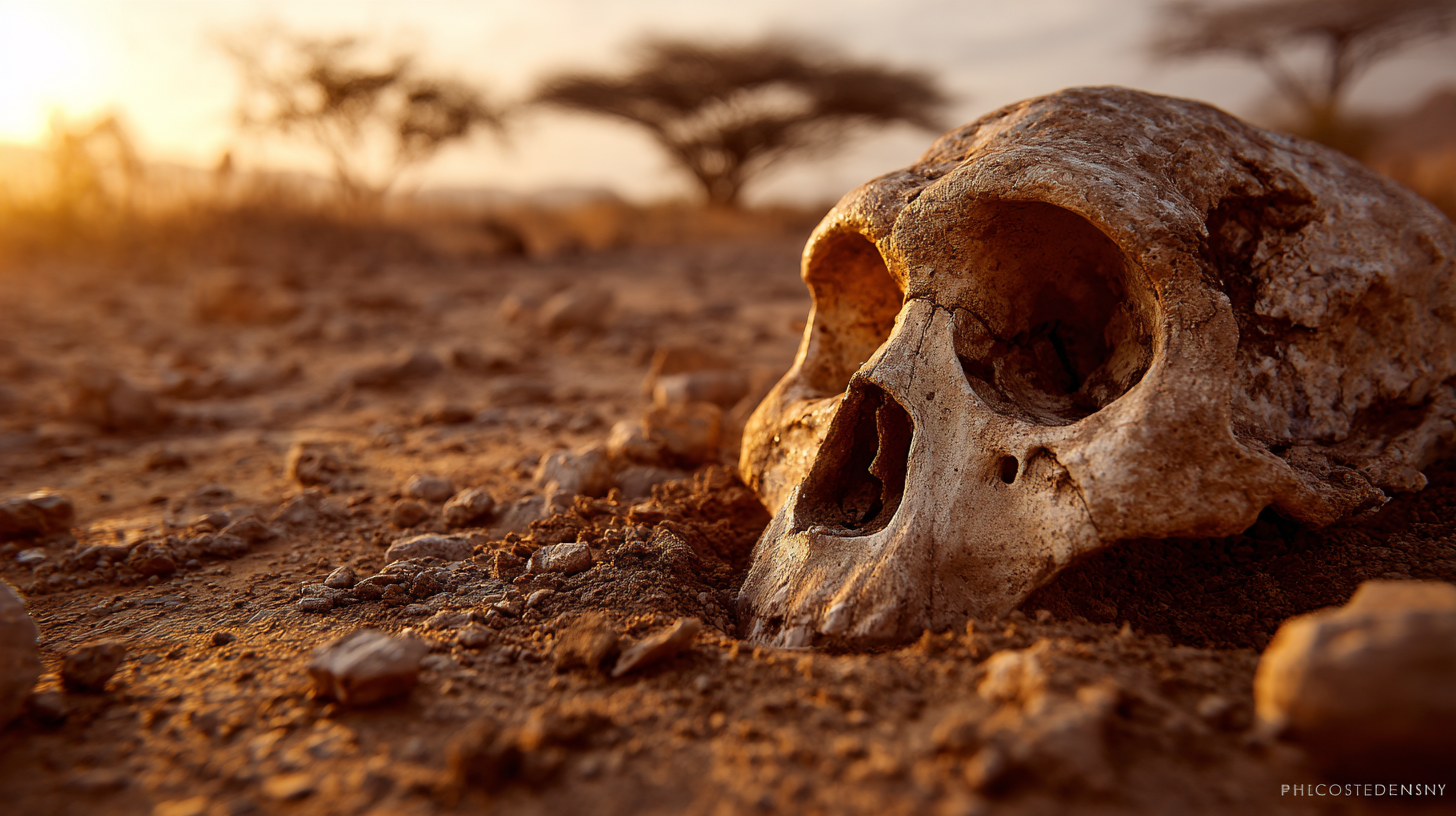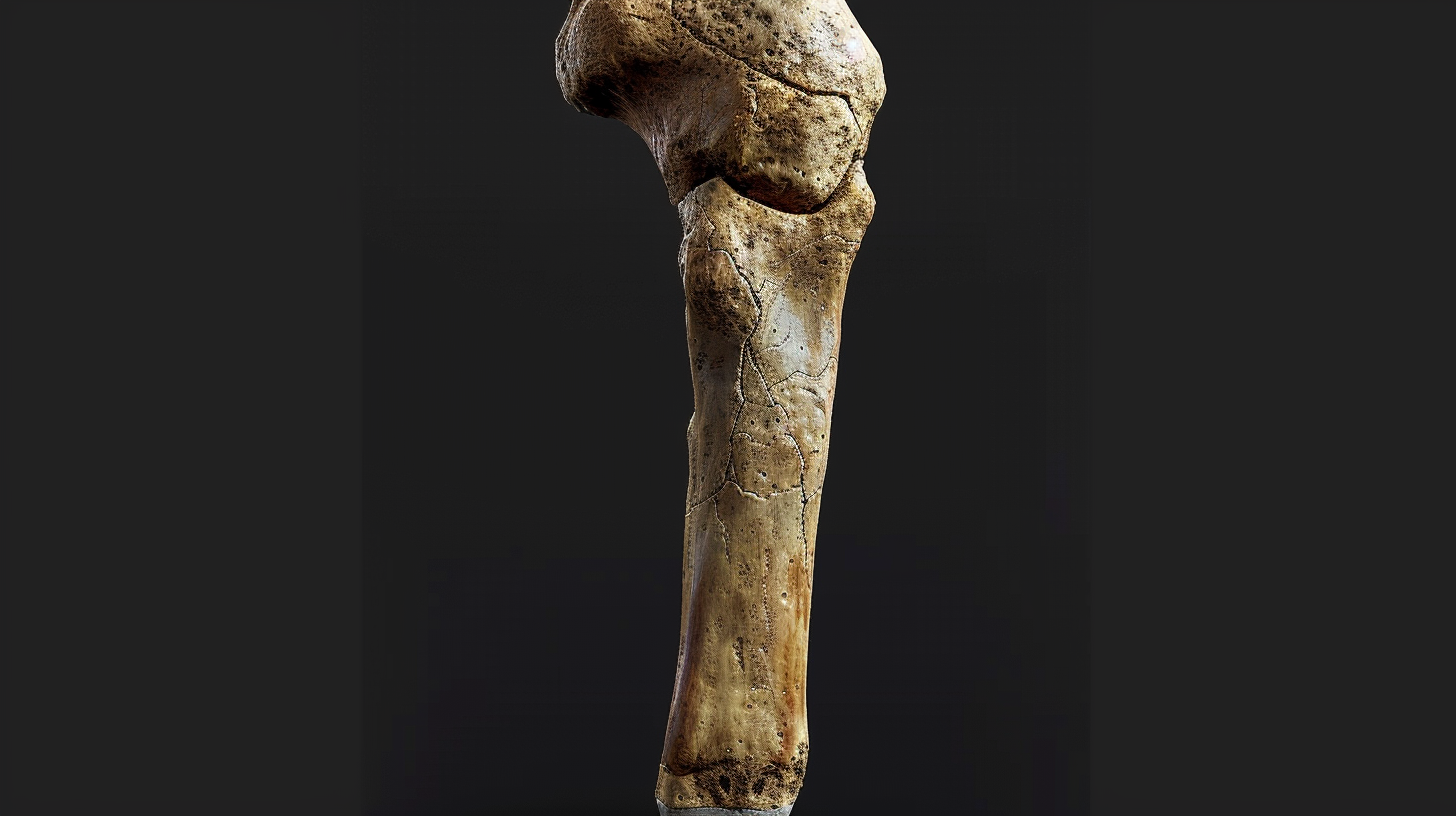


“Where did humans come from?” To find the answer to this question, scientists have excavated the earth for decades. In that process, they encountered a peculiar being that possessed characteristics of both apes and humans: Australopithecus.
Meaning “Southern (Australo) Ape (pithecus),” these were no ordinary apes. Today, we will break down everything about Australopithecus in an easy-to-understand way—from the superstar of human evolutionary history, “Lucy,” to the mystery of the transition into the Homo (human) genus.
1. The Rise of Superstars: The Outcast ‘Taung Child’ and the Pop Star ‘Lucy’
Behind the name Australopithecus lies a dramatic history of discovery.
😢 The Academic Outcast, ‘Taung Child’ (1925)
In 1924, the skull of a young child was discovered in a quarry in South Africa. Anatomist Raymond Dart discovered traces indicating this fossil walked on two feet (the position of the foramen magnum) and claimed it was a human ancestor. However, at the time, the academic world firmly believed that “the origin of humanity lies in Asia” and ignored this small-brained fossil. Professor Dart was treated as an outsider for decades, but eventually, his claim was proven correct. This fossil is Australopithecus africanus (A. africanus).
🎸 ‘Lucy’ Appears with the Beatles (1974)
About 50 years later, a discovery that changed the history of anthropology occurred in the Hadar desert of Ethiopia. A fossil with nearly 40% of its skeleton preserved—close to perfection—was found. On the night of the discovery, the Beatles’ song ‘Lucy in the Sky with Diamonds’ was playing on the radio at the camp. In their excitement, the research team nicknamed the fossil ‘Lucy.’ Her scientific name is Australopithecus afarensis (A. afarensis). Lucy instantly became a global star.
(Caption: The reconstructed skeleton of Lucy, who lived 3.2 million years ago. She is a human ancestor who walked upright despite her small stature.)
2. What Did They Look Like, and How Did They Live?
If we were to express Australopithecus in one sentence, it would be: “Ape from the waist up, Human from the waist down.”
🚶 Walking: The Masters of Hybrid Locomotion
Lucy was about 1 meter tall, roughly the size of a lower elementary school student. However, her walking style was similar to ours. Her pelvis had become wider and shorter like a human’s, making it perfect for balancing while standing on two feet. But that’s not all. Their shoulder blades (scapulae) faced upward like a gorilla’s, making it easy to reach their arms above their heads. In other words, they lived a ‘hybrid’ life: walking on the ground, but climbing trees to sleep or escape danger.
🥗 Diet: The Misunderstanding of the ‘Killer Ape’
In the past, they were imagined as fierce hunters, but the reality was different. Analysis of their teeth revealed they mainly ate plants. In particular, they possessed very thick enamel (tooth surface), allowing them to survive by crunching on hard roots or nuts even during dry seasons when food was scarce.
🔪 The First Use of Tools?
Surprisingly, marks made by stone tools were found on animal bones in the Dikika region of Ethiopia, dating back 3.39 million years. This is shocking evidence suggesting that Australopithecus (A. afarensis) may have already used tools to butcher meat even before the genus Homo (human) appeared.
3. Sorting the Family Tree: Who is Whose Ancestor?
The Australopithecus family is more complex than you might think. Here is a summary of the key flow.
- 1st Generation: Australopithecus anamensis (A. anamensis)
- Period: Approx. 4.2 ~ 3.9 million years ago
- Characteristics: The founder of the Australopithecus family. Their faces were very similar to chimpanzees, but their leg bones (tibia) show they were already perfect bipedal walkers. Recently discovered skull fossils suggest they coexisted with Lucy’s species rather than evolving in a single straight line,.
- 2nd Generation: Australopithecus afarensis (A. afarensis)
- Period: Approx. 3.7 ~ 3.0 million years ago
- Characteristics: Lucy’s species. The most prosperous group in East Africa.
- 3rd Generation: The Mysterious Descendants
- Australopithecus garhi (A. garhi): Appeared 2.5 million years ago. With a primitive head but limb proportions similar to humans, it is a candidate for the ancestor leading to the Homo genus.
- Australopithecus sediba (A. sediba): Approx. 1.98 million years ago in South Africa. They had long thumbs advantageous for tool making. It is a “hot” fossil proposed as a direct ancestor of the Homo genus.
4. Conclusion: They Are Not ‘Missing Links’
We often refer to Australopithecus as a clumsy intermediate stage between monkeys and humans, a so-called ‘Missing Link.’ However, the recent academic perspective is different.
They dominated the forests and grasslands of Africa for over 2 million years. According to, they were adaptable enough to expand beyond East Africa into Chad.
A recently discovered mandible fossil (LD 350-1) dating back 2.8 million years provides a crucial clue to how Australopithecus transformed into humans (Homo). However, that process was not a straight line as we often imagine, but rather like a complex tree with numerous branches extending out.
Australopithecus was not an ‘unfinished human,’ but a great ancestor who adapted perfectly and succeeded in their own right.
References
Species Discovery & Taxonomy
- A. africanus: Dart, R. A. (1925). Australopithecus africanus: The Man-Ape of South Africa.
- A. afarensis: Johanson, D. C., et al. (1978). A new species of the genus Australopithecus from the Pliocene of eastern Africa.
- A. anamensis: Leakey, M. G., et al. (1995). New four-million-year-old hominid species from Kanapoi and Allia Bay, Kenya.
- A. anamensis : Ward, C. V., et al. (2013). New fossils of Australopithecus anamensis from Kanapoi, West Turkana, Kenya (2003-2008).
- A. anamensis : Haile-Selassie, Y., et al. (2019). A 3.8-million-year-old hominin cranium from Woranso-Mille, Ethiopia.
- A. garhi: Asfaw, B., et al. (1999). Australopithecus garhi: A New Species of Early Hominid from Ethiopia.
- A. sediba: Berger, L. R., et al. (2010). Australopithecus sediba: A New Species of Homo-Like Australopith from South Africa.
- A. bahrelghazali: Brunet, M., et al. (1995). The first australopithecine 2,500 kilometres west of the Rift Valley.
- A. deyiremeda: Haile-Selassie, Y., et al. (2015). New species from Ethiopia further expands Middle Pliocene hominin diversity.
- Hadar discovery: Johanson, D. C., & Taieb, M. (1976). Plio-Pleistocene hominid discoveries in Hadar, Ethiopia.
Anatomy & Locomotion
- Lovejoy, C. O. (1988). The Evolution of Human Walking.
- Green, D. J., & Alemseged, Z. (2012). Australopithecus afarensis Scapular Ontogeny, Function, and the Role of Climbing in Human Evolution.
- Stern, J. T., & Susman, R. L. (1983). The locomotor anatomy of Australopithecus afarensis.
- Kivell, T. L., et al. (2011). Australopithecus sediba Hand Demonstrates Mosaic Evolution of Locomotor and Manipulative Abilities.
- Musiba, C. M., et al. (2008). Pliocene Animal Trackways at Laetoli: Research and Conservation Potential.
- McHenry, H. M., & Coffing, K. (2000). Australopithecus to Homo: Transformations in Body and Mind.
Diet, Tools & Ecology
- Ungar, P. S., & Sponheimer, M. (2011). The Diets of Early Hominins.
- McPherron, S. P., et al. (2010). Evidence for Stone-Tool-Assisted Consumption of Animal Tissues before 3.39 million years ago at Dikika, Ethiopia.
- Wynn, J. G., et al. (2020). The ecology of Australopithecus anamensis in the early Pliocene of Kanapoi.
Origins of Homo & Debates
- Villmoare, B., et al. (2015). Early Homo at 2.8 Ma from Ledi-Geraru, Afar, Ethiopia.
- DiMaggio, E. N., et al. (2015). Late Pliocene fossiliferous sedimentary record and the environmental context of early Homo from Afar, Ethiopia.
- Hawks, J., et al. (2015). Comment on “Early Homo at 2.8 Ma from Ledi-Geraru, Afar, Ethiopia”.
- Villmoare, B., et al. (2015). Response to Comment on “Early Homo at 2.8 Ma from Ledi-Geraru, Afar, Ethiopia”.
- Wood, B., & Boyle, E. K. (2016). The changing face of Genus Homo.
Phylogeny & Methodology
- Collard, M., & Wood, B. (2000). How reliable are human phylogenetic hypotheses?.
- Kimbel, W. H., & Delezene, L. K. (2009). ‘Lucy’ Redux: A Review of Research on Australopithecus afarensis.
- Haile-Selassie, Y. (2010). Phylogeny of early Australopithecus: new fossil evidence from the Woranso-Mille (central Afar, Ethiopia).