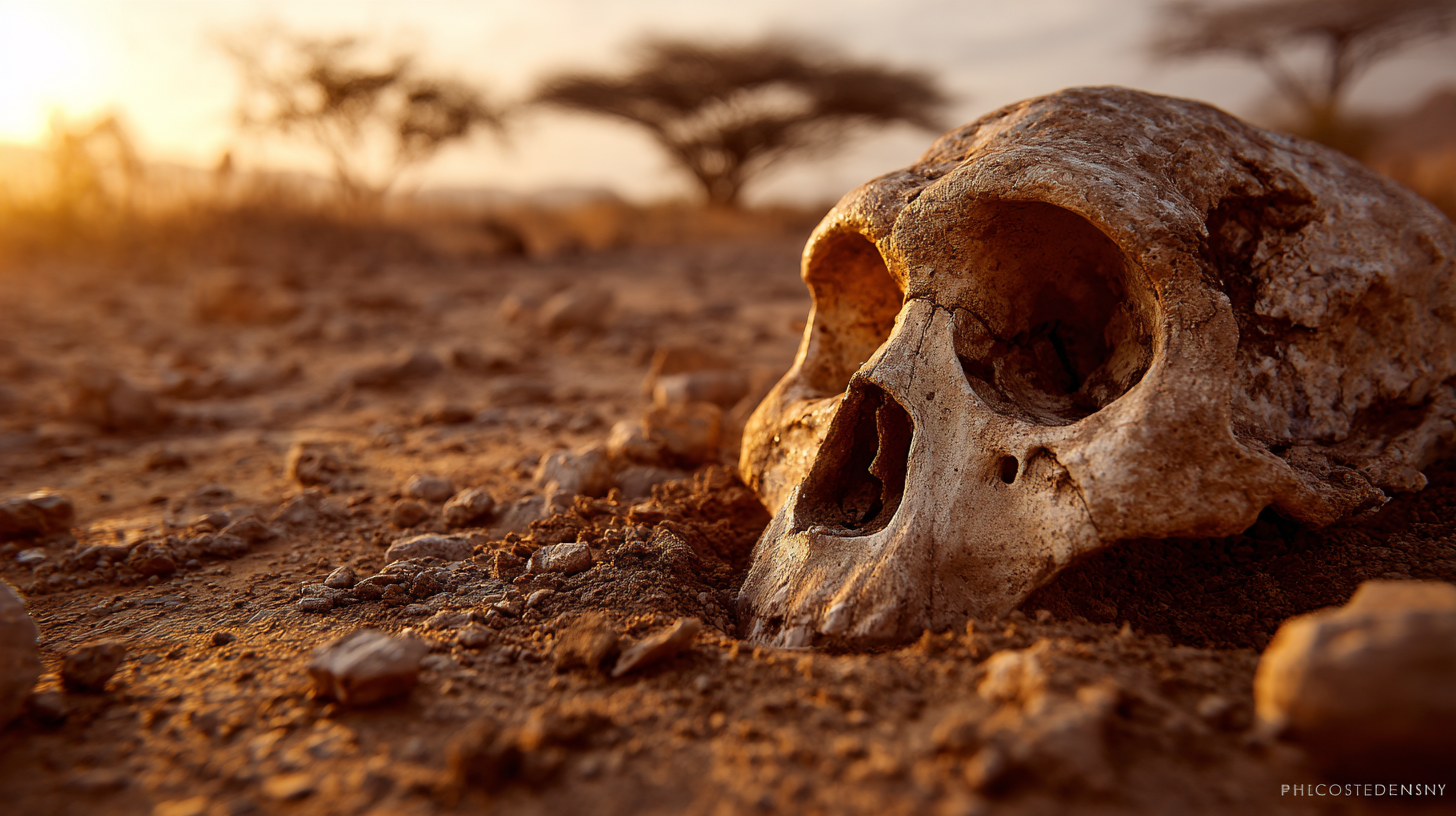


We often think of human evolution as a linear process of monkeys gradually straightening their backs to stand up. However, the story told by fossils is much more complex and dramatic.
Today, we will dig deep into the first protagonist to shed the characteristics of Australopithecus (apes) and finally earn the name ‘Homo’ (human): Homo habilis.
📋 Homo habilis Profile at a Glance
Before we begin the full story, let’s check their “specs.” You might be surprised by how small they actually were.
- Meaning of Name: Handy Man
- Era: Approx. 2.4 million ~ 1.4 million years ago (Early Pleistocene)
- Habitat: Eastern and Southern Africa
- Brain Size: Average 600cc ~ 700cc (About 1/2 of modern humans, larger than chimpanzees)
- Height & Weight: Approx. 100~135cm tall / Approx. 32kg
- Specialty: Production and utilization of Oldowan stone tools
1. A Shocking Discovery Ahead of Its Time
In 1964, Louis Leakey’s team discovered a groundbreaking fossil (OH 7) in Olduvai Gorge, Tanzania. They named this new species ‘Homo habilis‘, citing that it had a larger brain than Australopithecus and, above all, possessed ‘hands capable of using tools’.
However, the academic reaction at the time was cold. This was because there was an established standard that “brain size must be at least 700–800cc to be considered human (Homo).” Recognizing a fossil with a brain of only about 600cc as a human ancestor shook the paradigm of the time.
Dr. P.V. Tobias later recalled this as a “premature discovery.” Eventually, after about 20 years of fierce debate, Homo habilis was proudly acknowledged as the progenitor of the human family lineage.
2. Human Face, Monkey Body? (Mosaic Evolution)
Homo habilis displays a typical example of ‘mosaic evolution,’ appearing as if different features were mixed together like assembled parts.
- Face and Brain: The face protruded less than Australopithecus, the brain grew larger, and teeth became smaller. They definitely started to look like ‘humans’.
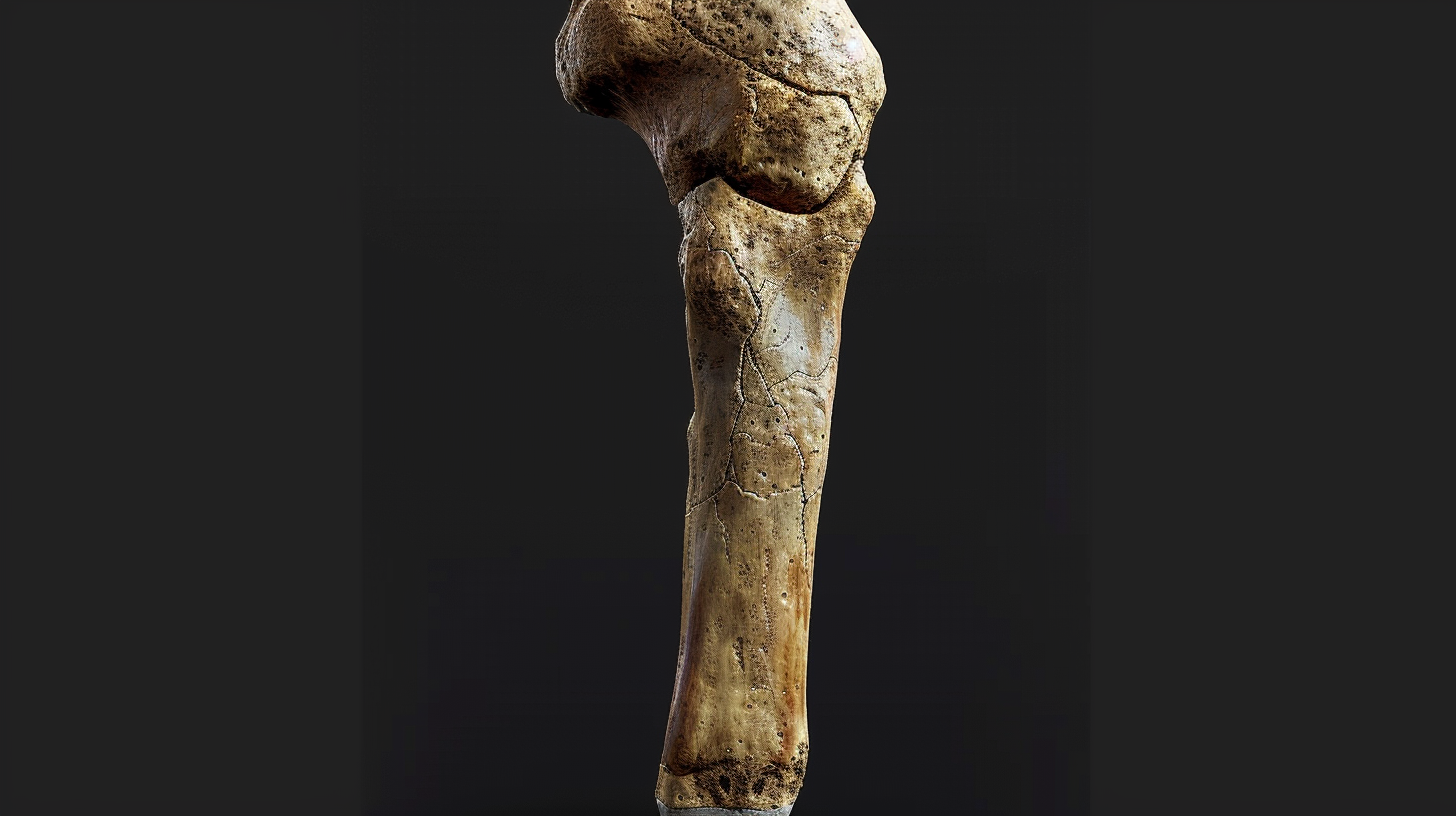
- Shocking Twist, The Body: However, the limb fossil discovered in 1986 (OH 62, aka ‘Lucy’s Child’) brought a shock. The arms were very long compared to the legs (humerofemoral index approx. 95%), making them closer to chimpanzees than modern humans.
What does this mean? It implies that while Homo habilis walked on two feet, the ability to climb trees was still important. They might have lived on the ground during the day and climbed trees at night to avoid predators.
3. Hunter or Scavenger?
With the title “First Tool Maker,” we often imagine them hunting mammoths with spears. But the reality was a bit different.
- Use of Tools: The ‘Oldowan stone tools’ they made were not grand weapons, but sharp fragments (flakes) made by striking stones together. According to research by Roche et al., they didn’t just smash stones; they understood the properties of the raw material and produced tools with a plan.
- Diet: Rather than brave hunters, they were closer to clever ‘scavengers.’ They brought back animal bones left behind by lions or hyenas, broke them with stones, and ate the nutritious bone marrow. Recent dental analysis shows they survived in rapidly changing climatic environments by consuming various plants as well as tough meat.
Note: Recent studies suggest that with the discovery of stone tools from 3.3 million years ago, the title of “first tool maker” might need to be passed to Australopithecus. However, habilis is still credited with being the first to use tools ‘systematically’ as an essential means of survival.
4. Not Alone: Coexistence with Competitors
The African savannah where Homo habilis lived was quite crowded.
- Paranthropus boisei: ‘Paranthropus,’ with huge jaws and teeth, also lived in Olduvai Gorge at the same time. Fortunately, they mainly ate grass or hard roots, so their menu didn’t overlap with Homo habilis, who sought meat and marrow, allowing for peaceful coexistence.
- Homo rudolfensis: Another early human similar to habilis but with a larger face and brain. Debate continues in academia regarding whether to view them as the same species as habilis or as a different species.
5. Conclusion: The Great Legacy Left by Imperfection
Homo habilis likely could not walk upright perfectly like modern humans, nor speak fluently. Some scholars even argue that because their body proportions are so primitive, they should be expelled from the genus ‘Homo’ and returned to Australopithecus.
However, the crude stones they held in their hands to adapt to environmental changes became the starting point of human civilization. Homo habilis went extinct about 1.4 million years ago, but their survival strategy was passed on to their successor, Homo erectus, becoming a crucial milestone determining the direction of human evolution.
“Although they were small and primitive, a single broken stone fragment they held opened the first page of the massive history called Humanity.”
References:
- Leakey, L. S. B., Tobias, P. V., & Napier, J. R. (1964). A new species of the genus Homo from Olduvai Gorge. Nature.
- Tobias, P. V. (1992). The species Homo habilis: example of a premature discovery. Ann. Zool. Fennici.
- Johanson, D. C., et al. (1987). New partial skeleton of Homo habilis from Olduvai Gorge, Tanzania. Nature.
- Susman, R. L., & Stern, J. T. (1982). Functional morphology of Homo habilis. Science.
- Wood, B., & Collard, M. (1999). The human genus. Science.
- Dunsworth, H. M. (2010). Origin of the Genus Homo. Evo Edu Outreach.
- Ungar, P. S., & Scott, R. S. (2009). Dental Evidence for Diets of Early Homo. In The First Humans.
- Roche, H., et al. (2009). Origins and Adaptations of Early Homo: What Archeology Tells Us. In The First Humans.
- Will, M., & Stock, J. T. (2015). Spatial and temporal variation of body size among early Homo. Journal of Human Evolution.
- Kimbel, W. H., & Villmoare, B. (2016). From Australopithecus to Homo: the transition that wasn’t. Philosophical Transactions of the Royal Society B.
- Davies, T. W., et al. (2024). Dental morphology in Homo habilis and its implications for the evolution of early Homo. Nature Communications.
- Wood, B., & Constantino, P. (2007). Paranthropus boisei: Fifty Years of Evidence and Analysis. Yearbook of Physical Anthropology.
- Sponheimer, M., & Lee-Thorp, J. A. (2009). Biogeochemical Evidence for the Environments of Early Homo in South Africa. In The First Humans.