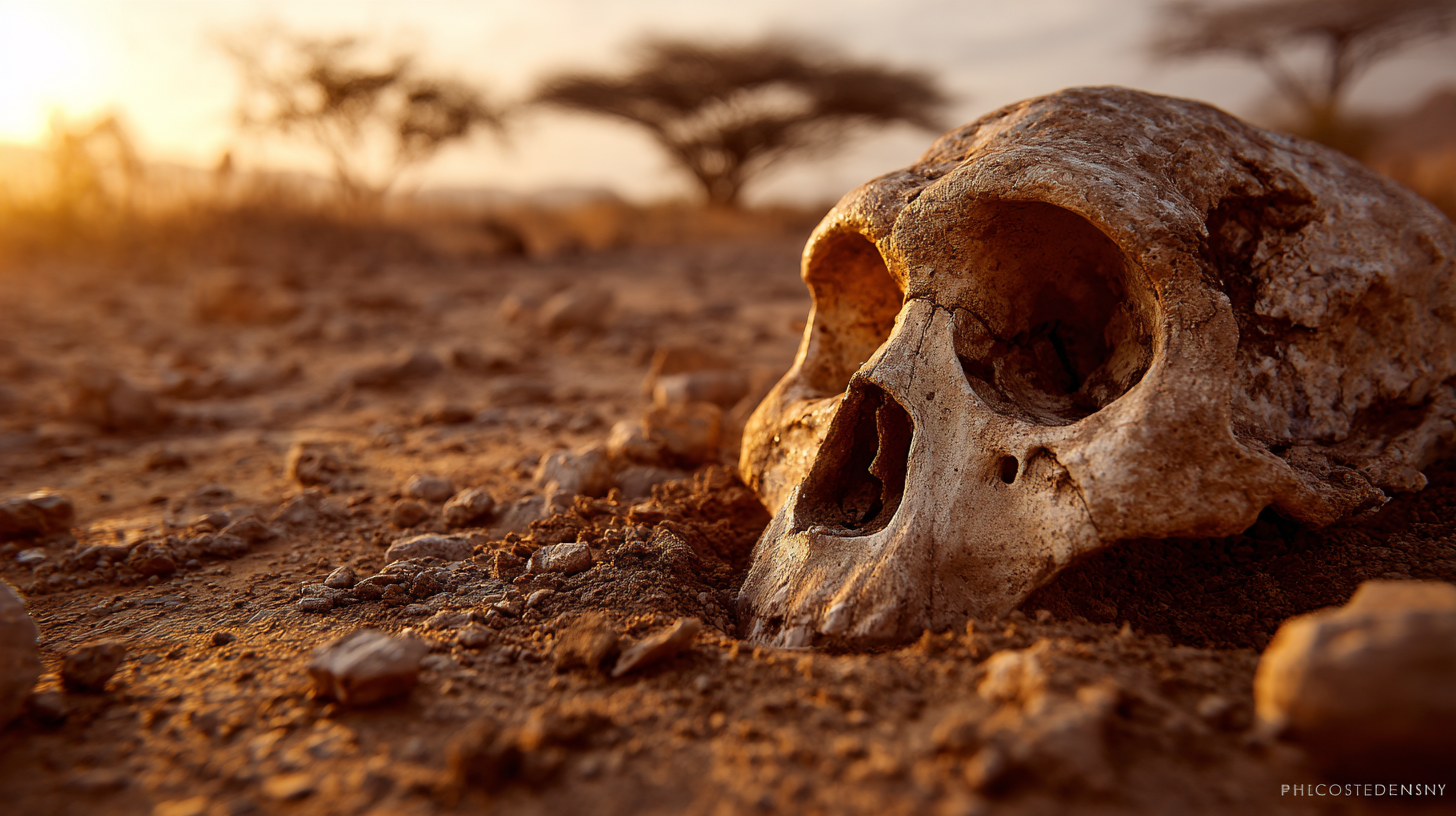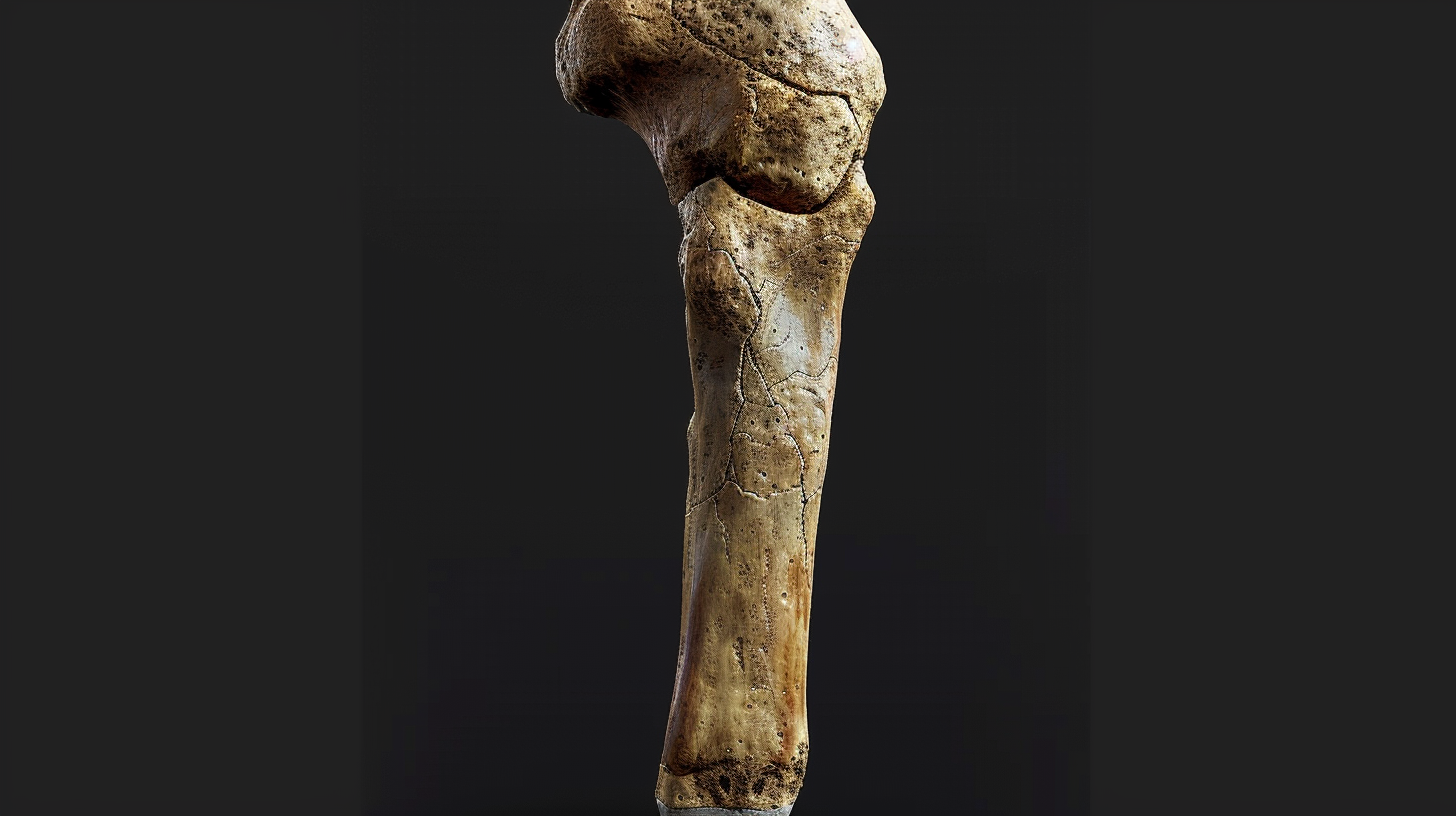

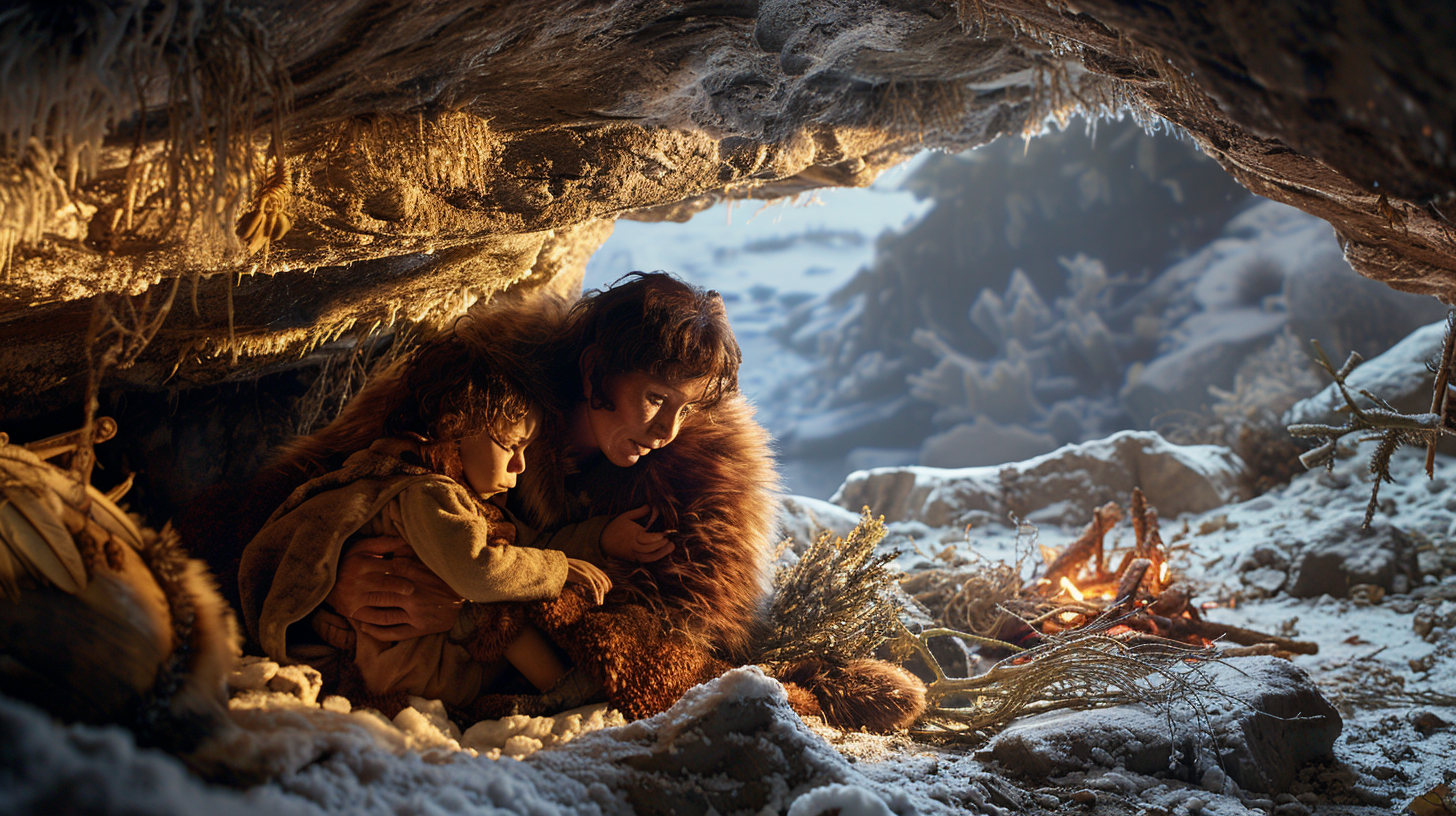
Once, we called them ‘dim-witted primitives.’ We imagined them with stooped backs, hairy appearances, and beast-like intelligence. However, amazing studies published over the last decade have completely overturned this old prejudice.
They spoke, enjoyed art, and cared for their sick families with great devotion. Today, I will tell you the real story of our brothers who disappeared 40,000 years ago, Neanderthals (Homo neanderthalensis).
Q1. Did they really look like beasts?
You can forget the image of the ‘hairy primitive’ you might be imagining. Neanderthals were ‘survival masters’ perfectly adapted to the harsh environment of Ice Age Europe.
- Bodies Optimized for the Cold: Although slightly shorter than modern humans, they possessed a much more robust and powerful physique. In particular, their wide pelvis and short limbs were evolutionary results designed to reduce body heat loss and survive in cold climates. Their large noses and wide chests were also advantageous for warming cold air before sending it to the lungs .
- White Skin and Red Hair: According to genetic research, it is highly likely that some Neanderthals had white skin like modern Europeans. Variations in genes related to skin pigmentation (such as TRPM1) have been identified, which were likely adaptations to help synthesize Vitamin D in high-latitude regions with low sunlight .
Q2. Did they only live with stones? (Amazing Tools and Technology)
Neanderthals were not beings who simply smashed stones to use; they were sophisticated toolmakers and engineers.
- Masters of the Mousterian Culture: They possessed a unique stone tool production technology called the Mousterian industry.
- The First Humans to Use Adhesives: Recent studies have revealed that when making stone spears, they heated resin or birch bark pitch to create natural adhesives. This means they knew how to control fire freely and utilize chemical properties.
Q3. Did they have ‘Art’ and ‘Culture’?
Yes. They engaged in artistic activities long before modern humans (Homo sapiens) arrived in Europe.
- The World’s First Cave Painters: Dating of carbonate crusts on cave paintings in La Pasiega, Maltravieso, and Ardales in Spain revealed that these paintings were created at least 64,800 years ago . This is more than 20,000 years before modern humans set foot in Europe, proving that Neanderthals were humanity’s first artists .
- Jewelry Designers of 130,000 Years Ago: At the Krapina site in Croatia, eight white-tailed eagle talons were found containing smoothed cut marks and polishing facets. This indicates they were not used for food, but collected to be made into jewelry such as necklaces or bracelets .
- Mysterious Underground Architects: Deep inside Bruniquel Cave in France (336m from the entrance), in total darkness where not a single ray of light reaches, they broke stalagmites 176,000 years ago to build massive circular structures. This is incredible evidence that they used artificial lighting and engaged in complex cooperative tasks .
Q4. Did they abandon sick family members? (Evidence of Warm Care)
The most touching discovery is their ‘humanity.’ Neanderthals did not abandon the sick and weak in a world of survival of the fittest.
- Love that Raised a Child with Down Syndrome: At the Cova Negra site in Spain, a fossil of a Neanderthal child aged about 6 years old (CN-46700) was found to have suffered from a congenital inner ear malformation, suggesting Down syndrome. This child would have suffered from severe hearing loss and poor balance, making walking alone difficult. The fact that this child survived past the age of 6 implies that not just the mother, but the entire group cared for this child with great devotion .
- Wisdom of Self-Medication: Analysis of dental calculus from a Neanderthal at El Sidrón, Spain, revealed traces of poplar (which contains salicylic acid, a painkiller component) and Penicillium mold (which produces antibiotic components). They were also ‘doctors’ who knew what to consume when they were sick .
Q5. Does their blood flow in our bodies?
They disappeared from Europe about 40,000 years ago . However, they are not completely gone.
- Genetic Legacy: Genome analysis in 2010 revealed that modern Eurasians (Europeans, Asians), excluding sub-Saharan Africans, inherited about 1-4% of their genes from Neanderthals . Before they went extinct, they fell in love with modern humans and left descendants.
- Language Ability: They possessed the same language gene (FOXP2) as us, and the structure of their hyoid bone (tongue bone) was also identical to that of modern humans, confirming that they were capable of complex speech .
Closing: Gone, But Living Within Us
The Neanderthals revealed by the latest science were by no means failed humans. They were resilient pioneers who conquered harsh environments, intellectuals who created art, and warm beings who did not give up on sick children to the very end.
They disappeared into history, pushed out by competition with Homo sapiens who had larger populations and more efficient resource utilization capabilities. But please remember them whenever you look in the mirror. Perhaps that 2% of Neanderthal DNA remaining within us is not just a biological trace, but the ‘warm heart of solidarity and love’ they bequeathed to us.
References
- Arsuaga, J. L., et al. (2014). Neandertal roots: Cranial and chronological evidence from Sima de los Huesos. Science, 344(6190), 1358–1363.
- Conde-Valverde, M., et al. (2024). The child who lived: Down syndrome among Neanderthals? Science Advances, 10(26), eadn9310.
- D’Anastasio, R., et al. (2013). Micro-biomechanics of the Kebara 2 hyoid and its implications for speech in Neanderthals. PLOS ONE, 8(12), e82261.
- Green, R. E., et al. (2010). A draft sequence of the Neandertal genome. Science, 328(5979), 710–722.
- Higham, T., et al. (2014). The timing and spatiotemporal patterning of Neanderthal disappearance. Nature, 512, 306–309.
- Hoffmann, D. L., et al. (2018). Response to Comment on “U-Th dating of carbonate crusts reveals Neandertal origin of Iberian cave -art”. Science, 362(6411), eaau1736.
- Hoffmann, D. L., et al. (2018). U-Th dating of carbonate crusts reveals Neandertal origin of Iberian cave art. Science, 359(6378), 912–915.
- Hublin, J.-J., et al. (2017). New fossils from Jebel Irhoud, Morocco and the pan-African origin of Homo sapiens. Nature, 546, 289–292.
- Jaubert, J., et al. (2016). Early Neanderthal constructions deep in Bruniquel Cave in southwestern France. Nature, 534, 111–114.
- Krause, J., et al. (2007). The derived FOXP2 variant of modern humans was shared with Neandertals. Current Biology, 17(21), 1908–1912.
- Prüfer, K., et al. (2014). The complete genome sequence of a Neanderthal from the Altai Mountains. Nature, 505, 43–49.
- Radovčić, D., et al. (2015). Evidence for Neandertal jewelry: Modified white-tailed eagle claws at Krapina. PLOS ONE, 10(3), e0119802.
- Slimak, L., et al. (2018). Comment on “U-Th dating of carbonate crusts reveals Neandertal origin of Iberian cave art”. Science, 361(6408), eaau1371.
- Timmermann, A. (2020). Quantifying the potential causes of Neanderthal extinction: Abrupt climate change versus competition and interbreeding. Quaternary Science Reviews, 238, 106331.
- Weyrich, L. S., et al. (2017). Reconstructing Neandertal behavior, diet, and disease using ancient DNA. Nature, 544, 357–361.