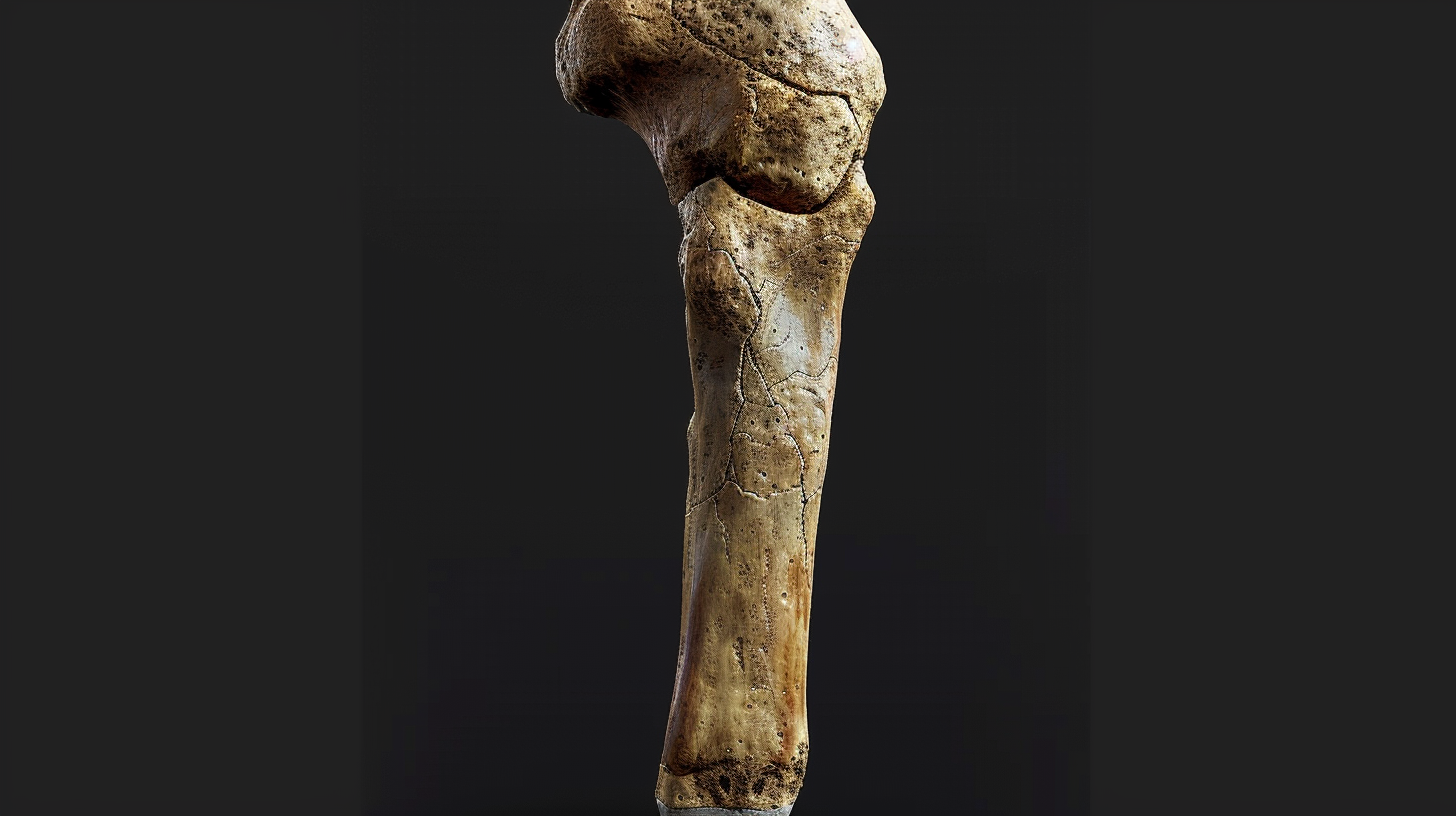


In 2003, a shocking fossil was discovered in a cave on the remote island of Flores, Indonesia, shaking the history of anthropology. This human, small and strange like a ‘Hobbit’ from a fantasy novel, is named Homo floresiensis.
Immediately after the discovery, a fierce debate erupted: “Is this a sick modern human?” vs. “Is this a new species?” What is the true identity of these ‘little giants’? We dig into everything about the Hobbit, synthesizing even the latest research results published in 2024.
1. What did they look like? (Appearance Beyond Imagination)
Scientists nicknamed them ‘Hobbits’ not just because they were small. Analysis of the fossil (LB1) showed their body proportions were completely different from ours (Homo sapiens).
- Height & Brain: Even as an adult, the height was only about 106 cm, and the brain volume was around 400 cc, similar to a chimpanzee.
- Feet (Big-footed Hobbit): The most surprising point is the ‘feet’. The height is small, but the foot length reached a whopping 20 cm. It is a huge foot, 70% of the length of the thigh bone. Because of these large feet and flat feet, they couldn’t run as fast as us and likely walked with a unique gait.
- Face: If we look in the mirror, our chin protrudes, but the Hobbit had a primitive face with no chin and a receding jaw.
- Arms: Compared to height, the arms were unusually long, which seems to have been advantageous for tree climbing.
2. A Lost World: The Bizarre Island Ecosystem
The island of Flores where the Hobbits lived was like ‘Alice in Wonderland’. The isolated environment of the island jumbled the sizes of animals.
- Mini Elephants: An elephant ancestor called Stegodon was trapped on the island and its body size shrank to that of a cow. The small but smart Hobbits made stone tools to hunt these baby elephants.
- Giant Monsters: On the other hand, birds and reptiles with no natural enemies became gigantic. Giant Marabou Storks (1.8 m tall) and today’s Komodo dragons roamed the forest with the Hobbits. The Hobbits probably had to sneak around to avoid these monsters.
3. Wait! Why did they shrink? (The Island Rule)
You might wonder, “Why did a perfectly fine human suddenly become smaller?” Here, the magic of evolution called the ‘Island Rule’ was at work.
In an environment with limited food like an island, large animals like elephants or humans evolve to reduce their body size to save energy. Conversely, small animals like rats or lizards evolve to become larger because there are no predators.
The Hobbit is the most dramatic example of this ‘Island Rule’ applied to humans.
4. Center of Controversy: Sick Human or New Species?
Initially, some scholars did not acknowledge the Hobbit. Claims were fiercely raised that “Using tools with such a small head? This is a sick modern human suffering from Microcephaly or Down syndrome!”.
However, after 20 years of research, this controversy has ended.
- Brain Analysis: Virtual reconstruction of the Hobbit’s brain showed that the frontal lobe (Brodmann area 10), responsible for intelligence, was highly developed and different from a diseased brain.
- Wrist Bones: Decisively, the shape of the Hobbit’s wrist bones was identical to African apes or Australopithecus, rather than modern humans. This is an evolutionary trait determined from birth that cannot be caused by disease.
5. The Secret of the Family Tree Revealed in 2024: The 700,000-Year-Old Ancestor
So where did they come from? In August 2024, the puzzle pieces came together with the release of research results from the Mata Menge site.
Surprisingly, the Hobbit’s ancestor fossil (arm bone) found in a layer from about 700,000 years ago was 9-16% smaller than the 60,000-year-old Hobbit. This proves that the Hobbit’s small body was not due to a recent disease, but a genetic trait that persisted for at least 700,000 years.
Conclusion: About 1 million years ago, a group of Asian Homo erectus drifted to the island of Flores. They adapted to the island environment, rapidly reduced their body size, and survived in that state for nearly 1 million years.
6. Conclusion: Why did they disappear?
The Hobbit disappeared from the earth about 50,000 years ago. Previously, it was thought they lived until 12,000 years ago, but the extinction date was pulled back as a result of correcting the error in the stratum dating.
Why did they suddenly disappear? There are two prime suspects.
- Volcanic Eruption: A thick layer of volcanic ash covers the cave layers where they lived.
- Meeting our Ancestors (Homo sapiens): 50,000 years ago is the time when our modern human ancestors passed through Southeast Asia to go to Australia.
What did our ancestors feel when they encountered small humans of 1 meter in the forest? Did they become friends, or did they become competitors? The truth is buried underground, but the story of the Hobbit, more mysterious than Lord of the Rings, is living proof showing how diverse and amazing human evolution is.
References
- Argue, D., et al. (2017). The affinities of Homo floresiensis based on phylogenetic analyses of cranial, dental, and postcranial characters. Journal of Human Evolution, 107, 107-133.
- Brown, P., et al. (2004). A new small-bodied hominin from the Late Pleistocene of Flores, Indonesia. Nature, 431, 1055-1061.
- Falk, D., et al. (2005). The brain of LB1, Homo floresiensis. Science, 308(5719), 242-245.
- Henneberg, M., et al. (2014). Evolved developmental homeostasis disturbed in LB1 from Flores, Indonesia, denotes Down syndrome and not diagnostic traits of the invalid species Homo floresiensis. Proceedings of the National Academy of Sciences, 111(33), 11967-11972.
- Jacob, T., et al. (2006). Pygmoid Australomelanesian Homo sapiens skeletal remains from Liang Bua, Flores: Population affinities and pathological abnormalities. Proceedings of the National Academy of Sciences, 103(36), 13421-13426.
- Jungers, W. L., et al. (2009). The foot of Homo floresiensis. Nature, 459, 81-84.
- Kaifu, Y., et al. (2011). Craniofacial morphology of Homo floresiensis: Description, taxonomic affinities, and evolutionary implication. Journal of Human Evolution, 61(6), 644-682.
- Kaifu, Y., et al. (2024). Early evolution of small body size in Homo floresiensis. Nature Communications, 15, Article 6381.
- Martin, R. D., et al. (2006). Comment on “The Brain of LB1, Homo floresiensis”. Science, 312(5776), 999.
- Morwood, M. J., et al. (2004). Archaeology and age of a new hominin from Flores in eastern Indonesia. Nature, 431, 1087-1091.
- Sutikna, T., et al. (2016). Revised stratigraphy and chronology for Homo floresiensis at Liang Bua in Indonesia. Nature, 532, 366-369.
- Tocheri, M. W., et al. (2007). The primitive wrist of Homo floresiensis and its implications for hominin evolution. Science, 317(5845), 1743-1745.
- van den Bergh, G. D., et al. (2016). Homo floresiensis-like fossils from the early Middle Pleistocene of Flores. Nature, 534, 245-248.
- Weber, J., et al. (2005). Comment on “The Brain of LB1, Homo floresiensis”. Science, 310(5746), 236.