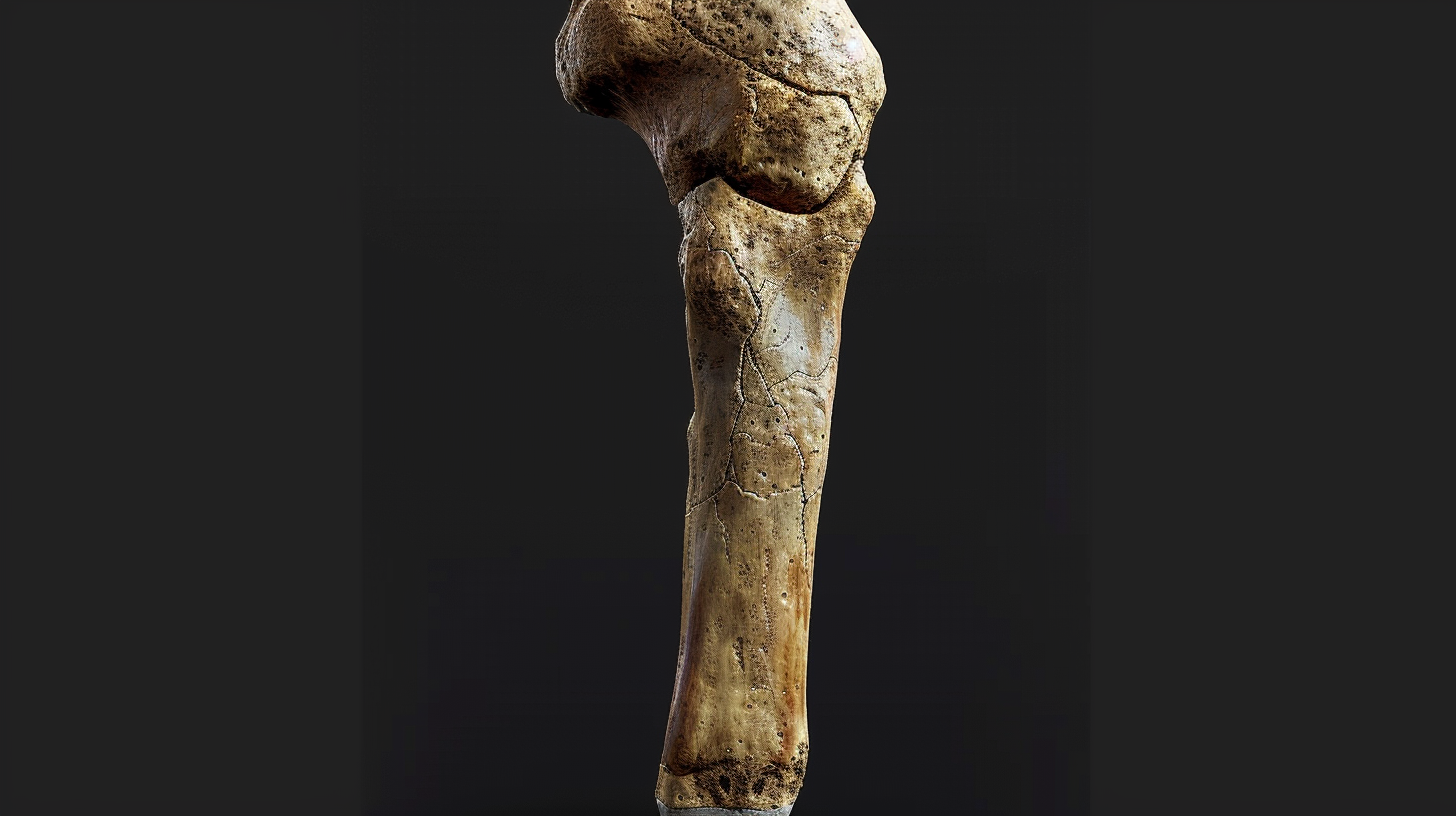

Human evolution was not a straight road leading from apes to humans. It was like a complex maze with numerous branching paths. Discovered in the deep, dark caves of South Africa in 2013, Homo naledi is the most bizarre and shocking existence within this maze.
We explore this mysterious being: a hominin with a brain the size of an orange that may have mourned its dead , and an entity that looked like a 2-million-year-old ancestor yet lived contemporaneously with our grandmother’s generation.
1. The Discovery by Underground Astronauts
The story begins northwest of Johannesburg, in the area known as the ‘Cradle of Humankind,’ at the Rising Star cave system. In a space called the Dinaledi Chamber, located deep within the cave, an enormous amount of fossils—over 1,550 specimens—poured out.
However, accessing this place was nearly impossible. To reach the fossils, one had to pass through a narrow tunnel less than 25cm high called ‘Superman’s Crawl,’ and finally descend a vertical passage (Chute) that is only 18–20cm wide for 12 meters.
To pass through this narrow gap where an average adult male cannot even fit his shoulders, the research team selected slender female scientists called ‘Underground Astronauts’. Thanks to their dedicated exploration, Homo naledi, a species previously unknown to the world, came to light. Later, in a separate space called the Lesedi Chamber, an additional 131 fossils, including a cranium (LES1), were found. This proved that they did not find the cave by chance but inhabited this cave system extensively.
2. The Mosaic Human: A Strange Coexistence of Primitive and Modern
Scientists assembling the bones of Homo naledi fell into confusion. From head to toe, they displayed a ‘mosaic morphology’ where primitive features and modern features were mixed.
- Small Brain: The brain volume is 465–610cc, which is one-third that of modern humans and similar to Australopithecus.
- Modern Hand and Foot: However, the wrists and palms were evolved to use tools intricately , and the feet were adapted for striding bipedalism to the extent that they are hard to distinguish from modern humans.
- Climbing Ability: At the same time, the finger bones were very curved, suggesting they were still adept at climbing trees. The shoulders and pelvis also retained primitive forms.
In other words, Homo naledi was a hybrid hominin that “walked like us on the ground, but climbed trees like apes when necessary”.
3. The Shock of Time: A Ghost Lineage
Based solely on anatomical features, scholars expected them to have lived about 2 million years ago. However, dating results announced in 2017 turned the academic world upside down.
“335,000 to 236,000 years ago”.
This is the time when early Homo sapiens (modern humans) appeared in Africa and Neanderthals were active in Europe. Homo naledi was a ‘Ghost Lineage’ that retained the characteristics of ancient humans thought to be extinct, surviving independently for over a million years without mixing with other humans.
They continued their lives in the forests and caves of Africa during the same period when early humans were making tools and using fire.
4. The Center of Controversy: Did They Hold Funerals?
Did Homo naledi, with its small brain, perform ‘higher behaviors’ previously considered exclusive to humans? In 2023, the Lee Berger team announced a surprising hypothesis.
Deliberate Burial and Art
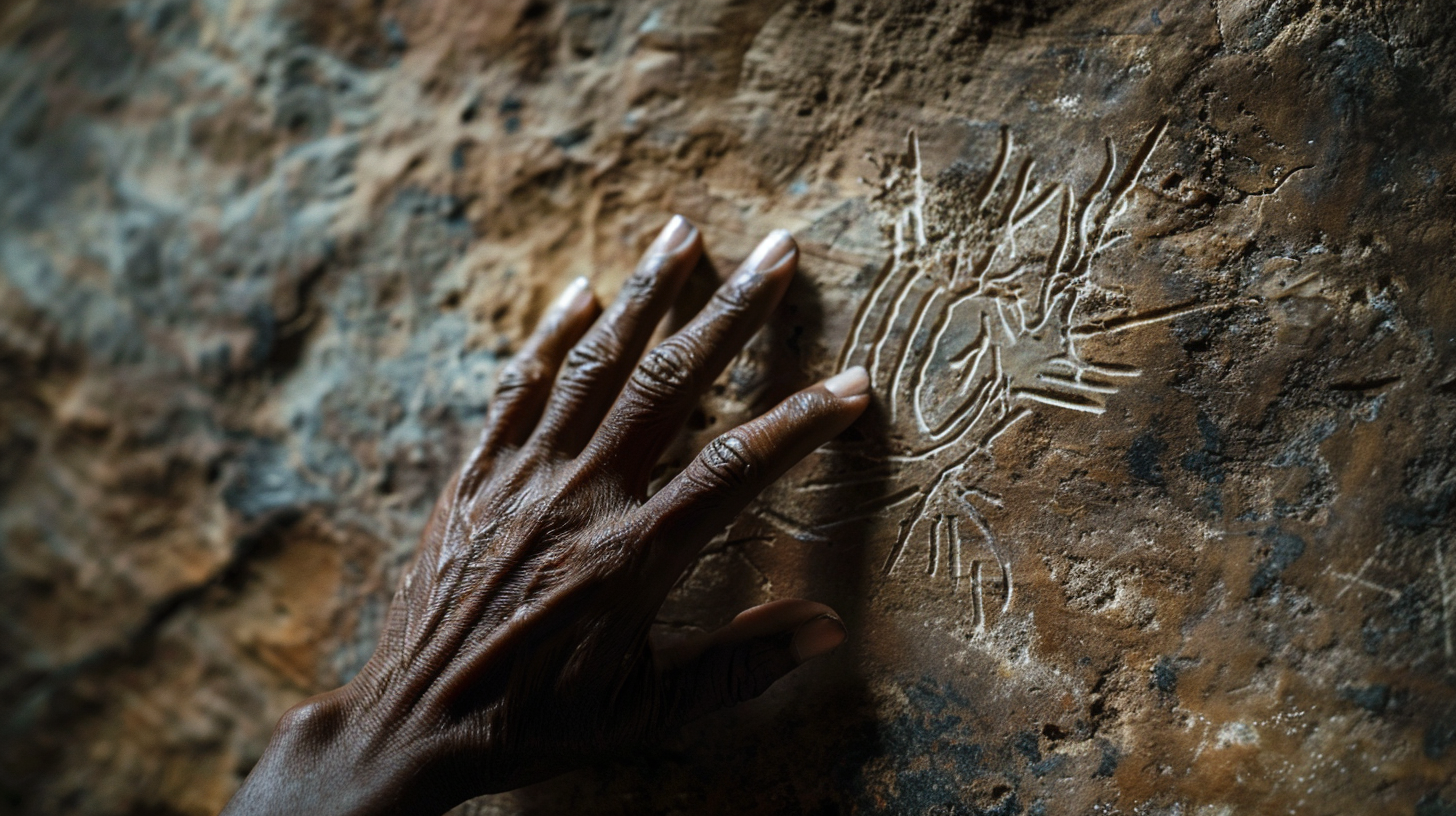
The research team claimed that the pit-like features found on the cave floor were not natural but graves (Features) dug by Homo naledi to bury bodies. They argued that because the bodies were covered with soil, the bones maintained their anatomical connection (articulation). Furthermore, geometric rock art (Engravings), such as cross-hatchings, was discovered on the cave walls, which was interpreted as a symbolic act left by Homo naledi. The possibility was also raised that they used fire to enter deep into the dark cave.
If these claims are true, the existing conventional wisdom that “intelligence and culture are proportional to brain size” completely collapses.
5. Scientific Counterargument: The Blade of Cold Verification
However, science speaks through evidence. In 2024, prominent paleoanthropologists, including Martinón-Torres, raised strong objections, stating there is “no scientific evidence” for these claims.
- Possibility of Natural Phenomena: Critics argue that the features claimed to be ‘graves’ are likely natural geological depressions , and the preservation state of the bodies is a phenomenon that can sufficiently occur during natural decomposition processes.
- Absence of Dating: Crucially, there has been absolutely no scientific dating performed on when the engravings on the cave walls were created. The possibility that they were created by recent explorers who visited the cave or by other factors cannot be ruled out.
- Conclusion: Critics point out that the claims that Homo naledi performed burials or engaged in artistic activities are “premature and an over-interpretation”.
6. Conclusion: The Questions Left by Homo naledi
The debate over whether Homo naledi actually held funerals is ongoing. However, what is clear is that they were ‘another humanity’ that survived until 300,000 years ago.
They had brains different from ours, but grasped things with hands like ours , and walked the African earth with feet like ours. Homo naledi asks us: “What makes a human human? Is it merely the size of the brain, or the mind contained within it?”
The riddles left by these small-brained cousins prove that human evolutionary history was much more diverse and dynamic than we ever imagined.
References:
- Berger et al. (2015). Homo naledi, a new species of the genus Homo… eLife.
- Hawks et al. (2017). New fossil remains of Homo naledi from the Lesedi Chamber… eLife.
- Dirks et al. (2017). The age of Homo naledi and associated sediments… eLife.
- Kivell et al. (2015). The hand of Homo naledi. Nature Communications.
- Harcourt-Smith et al. (2015). The foot of Homo naledi. Nature Communications.
- Berger et al. (2023). Evidence for deliberate burial… & Rock Engravings… eLife.
- Fuentes et al. (2023). Burials and engravings in a small-brained hominin… eLife.
- Martinón-Torres et al. (2024). No scientific evidence that Homo naledi buried their dead… Journal of Human Evolution.