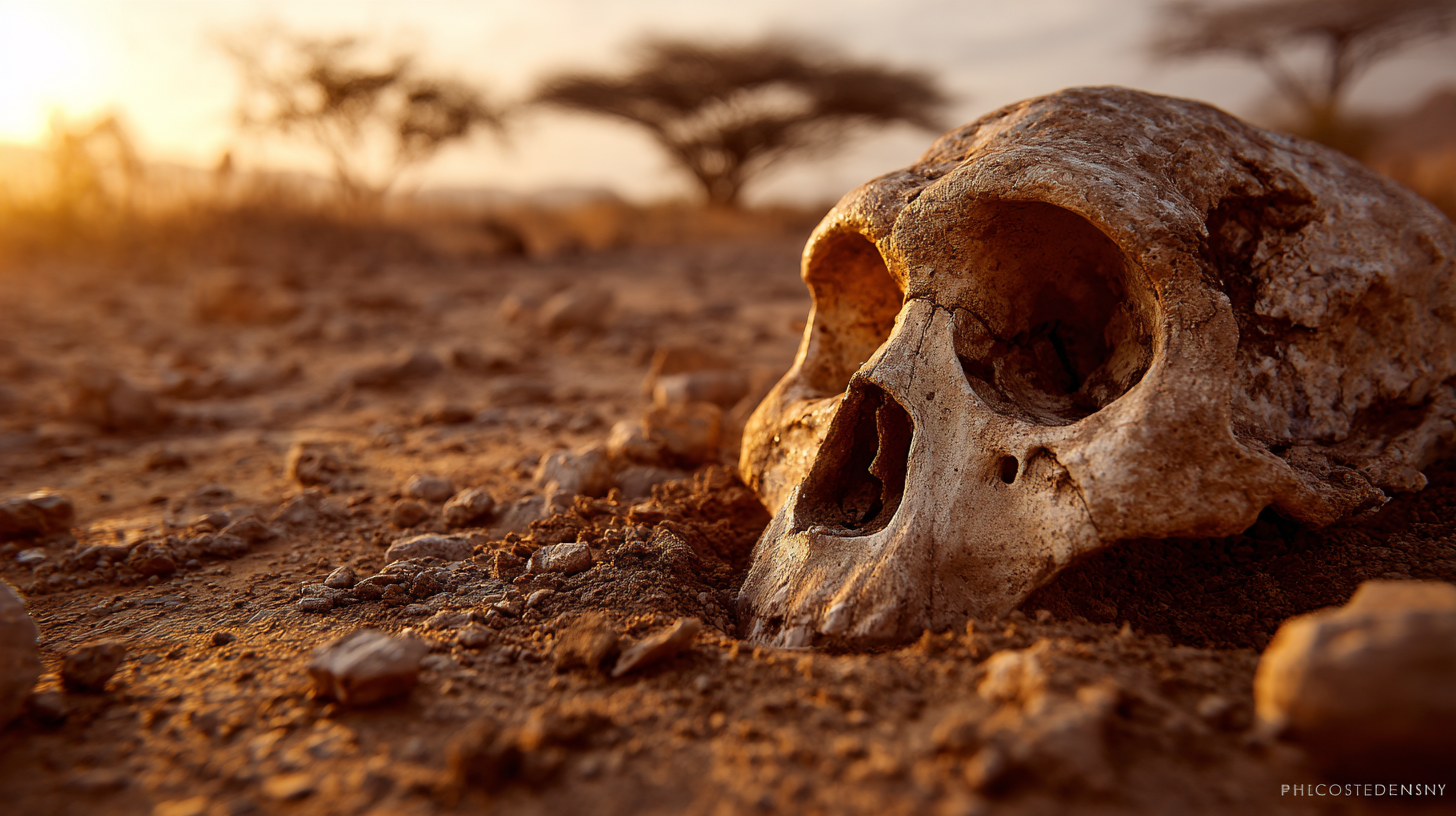

Prologue: The Giants Vanished from the Human Family Tree In 1959, a fossil was discovered in the Olduvai Gorge of Tanzania that shook the field of anthropology. The skull (OH 5), found by Louis Leakey, possessed jaws and molars incomparable in size to modern humans, along with a crest (sagittal crest) soaring from the top of its head. People gave it the nickname “Nutcracker Man.” Its scientific name is Paranthropus.
For a long time, we thought of them as “clumsy giants” who only cracked hard nuts and went extinct because they couldn’t adapt to environmental changes. However, recent research is completely overturning this old prejudice. Today, we meet the true face of humanity’s cousin, Paranthropus.
1. The Beginning of Evolution: “The Black Skull” and Paranthropus aethiopicus
The story begins about 2.7 million years ago. KNM-WT 17000, also known as “The Black Skull,” found west of Lake Turkana in Kenya, is a crucial fossil signaling the start of Paranthropus evolution.
- Primitive Features: The owner of this fossil, Paranthropus aethiopicus, had a protruding mouth (prognathism) and small cranial capacity, closely resembling the features of early Australopithecus.
- The Emergence of Powerful Chewing Muscles: However, the massive sagittal crest rising from the top of the head shows that they had already begun to acquire powerful chewing capabilities. They are the direct ancestors of the later appearing P. boisei and P. robustus, serving as the root of the distinct Paranthropus evolutionary line.
2. A Dietary Twist: They Grazed on ‘Grass,’ Not Nuts
The most shocking reversal occurred at the dinner table. The formula “Huge jaws and teeth = Hard food” was wrong.
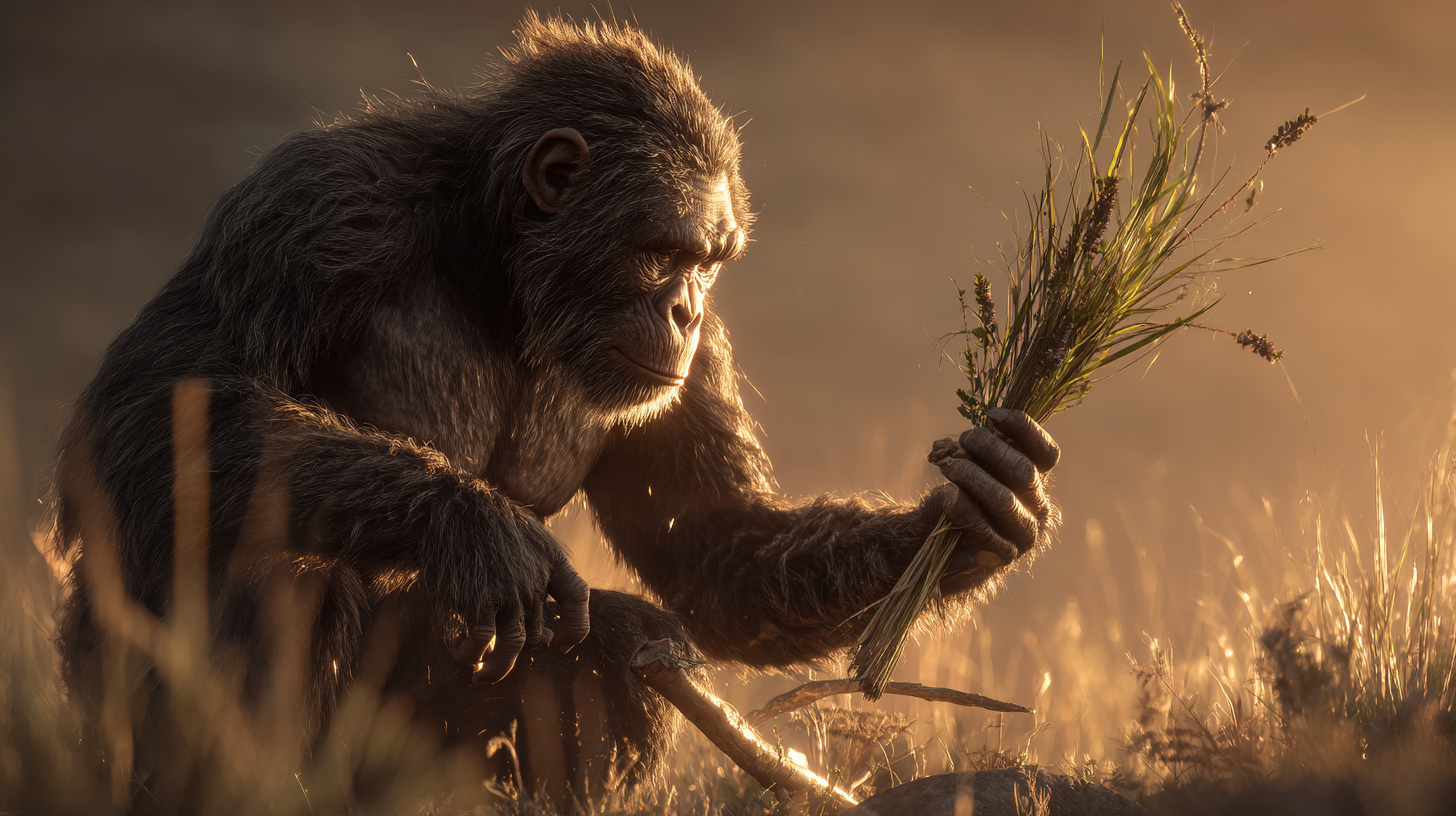
- Testimony of Isotopes: Analysis of carbon isotopes remaining in fossil teeth revealed that the East African P. boisei filled a staggering 77% of its diet with grasses or sedges. This is on a level similar to grazing animals like zebras or cattle.
- The Secret of Clean Teeth: Examining the tooth surface under an electron microscope (microwear analysis) revealed almost no deep pitting, which typically occurs when chewing hard food.
- Conclusion: Their massive jaws were not for crushing hard shells, but were ‘super-powered mills’ designed for chewing massive quantities of tough grass all day long (repetitive loading).
3. It Wasn’t Just ‘Homo’: Precision Hands and Tool Use
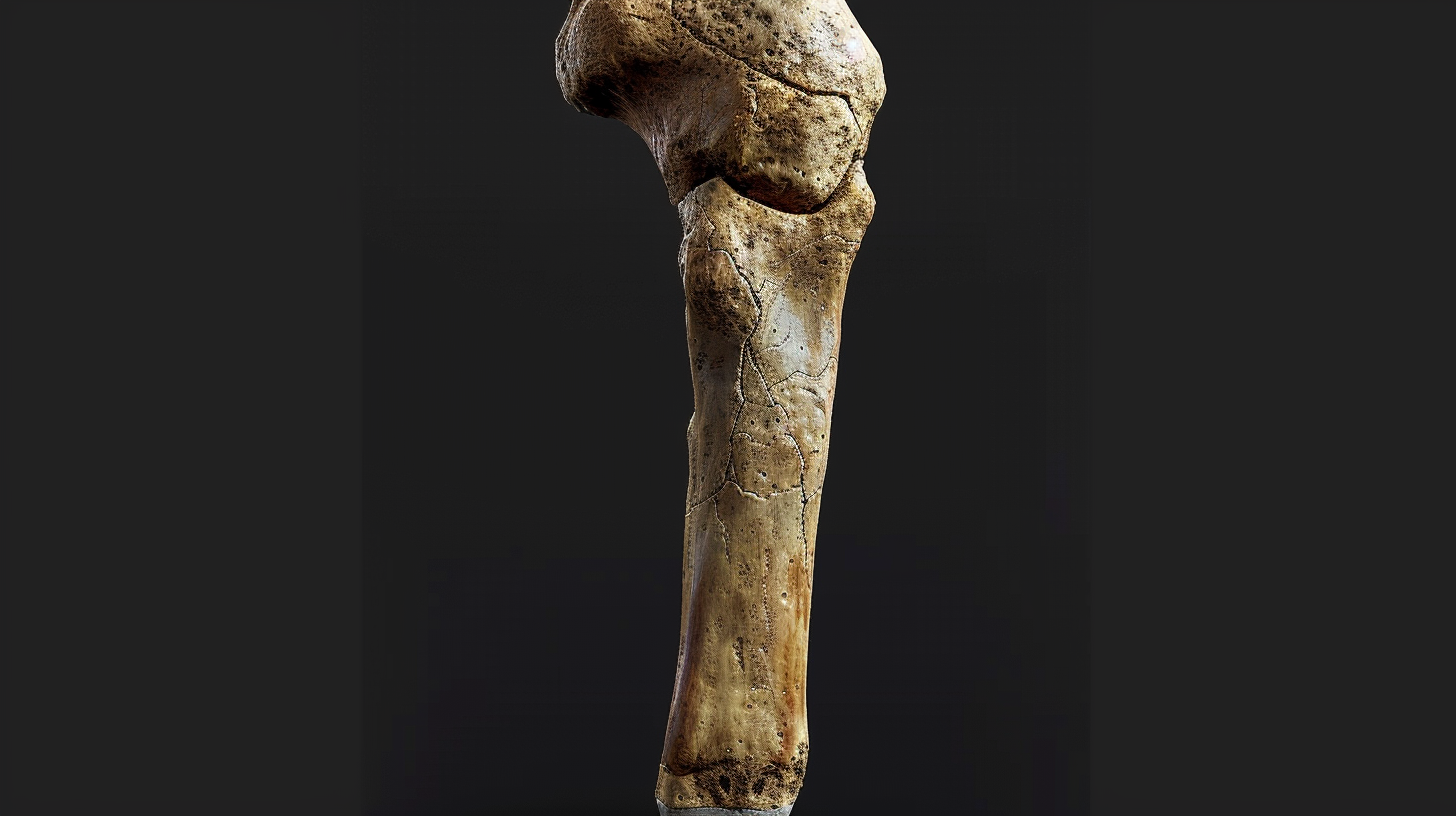
“Are tools exclusive to humans (Homo)?” This conventional wisdom is also being shaken by Paranthropus. The hand fossils of P. robustus found in the Swartkrans cave in South Africa tell a surprising story.
- Delicate Fingertips: The tip of the thumb (apical tuft) was broadly expanded, suggesting a distribution of abundant sensory nerves and blood vessels. This implies the ability to manipulate objects delicately.
- Powerful Grip: Distinct attachment marks for the ‘flexor pollicis longus’—a muscle known to exist in humans—show that they could grip tools tightly.
- What Did They Do?: It is highly likely they used stone or bone tools to dig into the ground for tubers or to extract termites. Tool production was not the sole property of the genus Homo.
4. Their Society and Intelligence: Brains and Gender Differences
There was more to their lives than just eating and sleeping. Fossils also provide hints about their social structure and intelligence.
- Size Difference Between Sexes (Sexual Dimorphism): In Paranthropus, particularly P. boisei, males were significantly larger than females. In modern primates (like gorillas), such differences are usually associated with a social structure where a few males lead multiple females. Paranthropus society might also have been centered around dominant males who survived fierce competition.
- Evolution of Cranial Capacity: Often dismissed as having ‘small brains,’ the cranial capacity of Paranthropus (approx. 400~550cc) actually showed a tendency to increase slightly over time. Although they did not grow as dramatically as the contemporaneous Homo genus, they were evolving sufficient intelligence to use tools and adapt to complex environments.
5. Epilogue: Not a Failure, But a Great Competitor
Paranthropus disappeared from the Earth about 1 million years ago. However, we should not blame their extinction on a ‘lack of intelligence’ or ‘picky eating.’
They were ecological generalists who successfully adapted to various African environments (forests, riversides, grasslands) for over 1.5 million years. Their extinction was likely the result of a combination of factors, including climate change, differences in reproduction rates, and above all, fierce competition with the genus Homo, which armed itself with tools and culture.
Paranthropus is not a ‘wrong answer’ that failed in a dead end of evolution. They were one of the great ‘correct answers’ that stood shoulder to shoulder with our ancestors, competing and demonstrating another possibility for human evolution.
References
- Cerling, T. E., et al. (2011). Diet of Paranthropus boisei from the early Pleistocene of East Africa. Proceedings of the National Academy of Sciences, 108(23), 9337–9341.
- Grine, F. E. (Ed.). (1988). Evolutionary History of the “Robust” Australopithecines. Aldine de Gruyter.
- Leakey, L. S. B. (1959). A new fossil skull from Olduvai. Nature, 184, 491–493.
- Sponheimer, M., et al. (1999). Isotopic evidence for the diet of an early hominid, Australopithecus africanus. Science, 283(5400), 368–370.
- Susman, R. L. (1988). Hand of Paranthropus robustus from Member 1, Swartkrans: Fossil evidence for tool behavior. Science, 240(4853), 781–784.
- Ungar, P. S., et al. (2008). Dental microwear and diet of the Plio-Pleistocene hominin Paranthropus boisei. PLOS ONE, 3(4), e2044.
- Wood, B., et al. (2004). Patterns of resource use in early Homo and Paranthropus. Journal of Human Evolution, 46(2), 119–162.