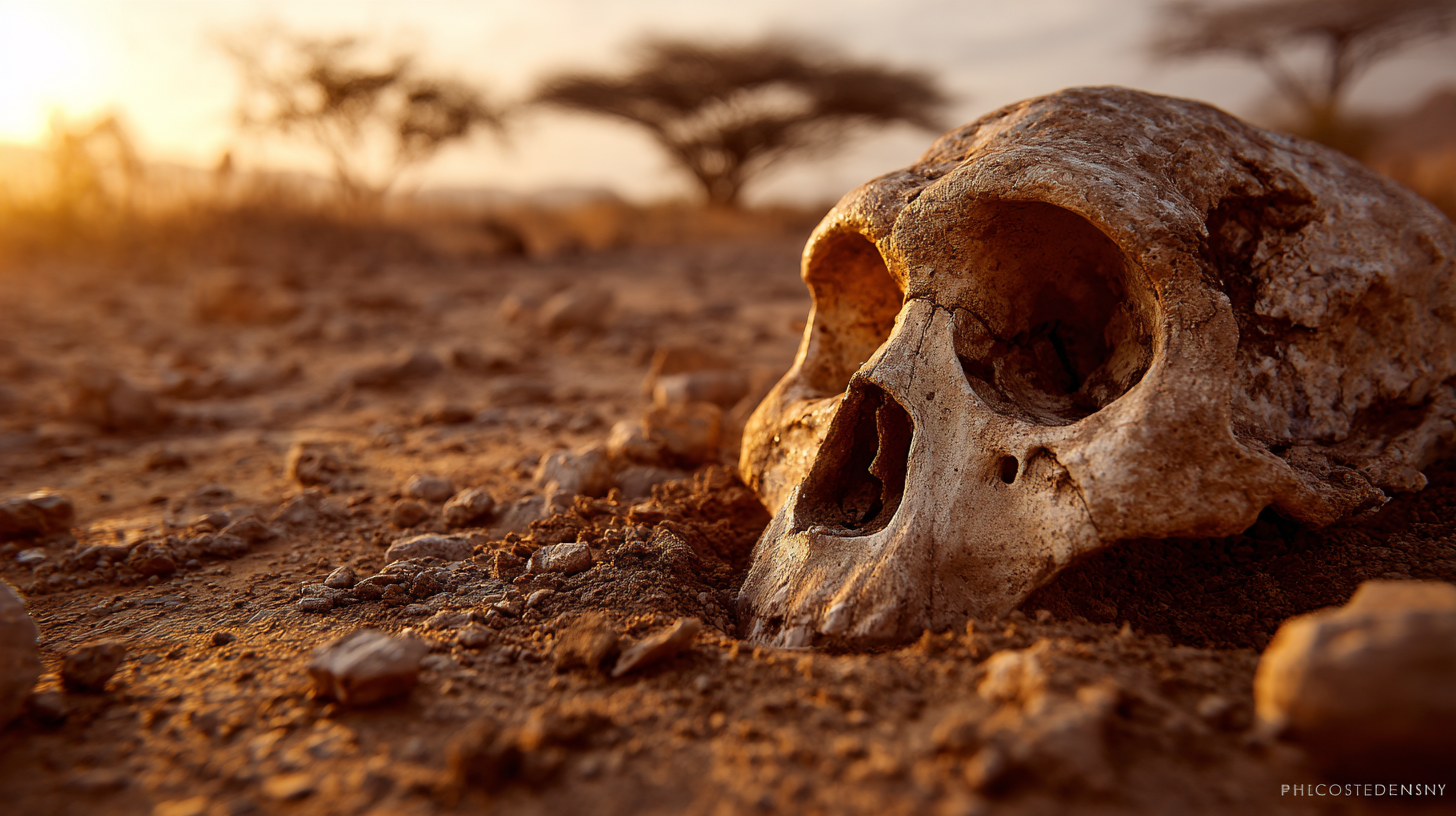

Have you ever seen the movie King Kong? The sight of a colossal creature climbing skyscrapers and fighting dinosaurs is always overwhelming. But surprisingly, did you know that there was a “giant ape that actually existed” which served as the model for this movie monster?
It is Gigantopithecus blacki.
Some people believe that the Himalayan ‘Yeti’ or the American ‘Bigfoot’ are actually Gigantopithecus that survived extinction. What is the truth? Today, we will dig into the true story of this giant found in an apothecary’s drawer, based on the latest scientific papers.
1. The ‘Dragon Bone’ Discovered in an Apothecary’s Drawer
The discovery of this massive animal began like a scene from a movie.
In 1935, German paleontologist Ralph von Koenigswald was rummaging through a shabby apothecary in Hong Kong. He went there after hearing rumors that Chinese apothecaries were selling ancient fossils as “Dragon Bones,” claiming they were a panacea.
Opening a dusty drawer, he was shocked. Inside was a massive molar that looked similar to a human’s but was two to three times larger.
“If he hadn’t discovered it, this primate—the largest in Earth’s history—would have been ground into powder, disappeared into people’s stomachs, and been forgotten forever.”
He named this unknown creature Gigantopithecus, meaning “Giant Ape”.
2. Fact Check ①: Was it a Human Ancestor? (Identity)
Initially, scholars were swept up in excitement. “Could these be the legendary giants and ancestors of humanity?” In fact, until the 1970s, some scholars argued that because the jawbone shape resembled early humans like Australopithecus, they should be viewed as human ancestors.
However, in 2019, cutting-edge science put an end to this controversy. Researchers successfully extracted ancient proteins (proteome) from the dental enamel of a 1.9-million-year-old fossil. By analyzing proteins, which preserve longer than DNA, they uncovered a shocking fact.
- The Truth: Gigantopithecus is not a human ancestor.
- The Result: They were a sister clade (sibling group) to orangutans, having diverged from a common ancestor about 10 to 12 million years ago.
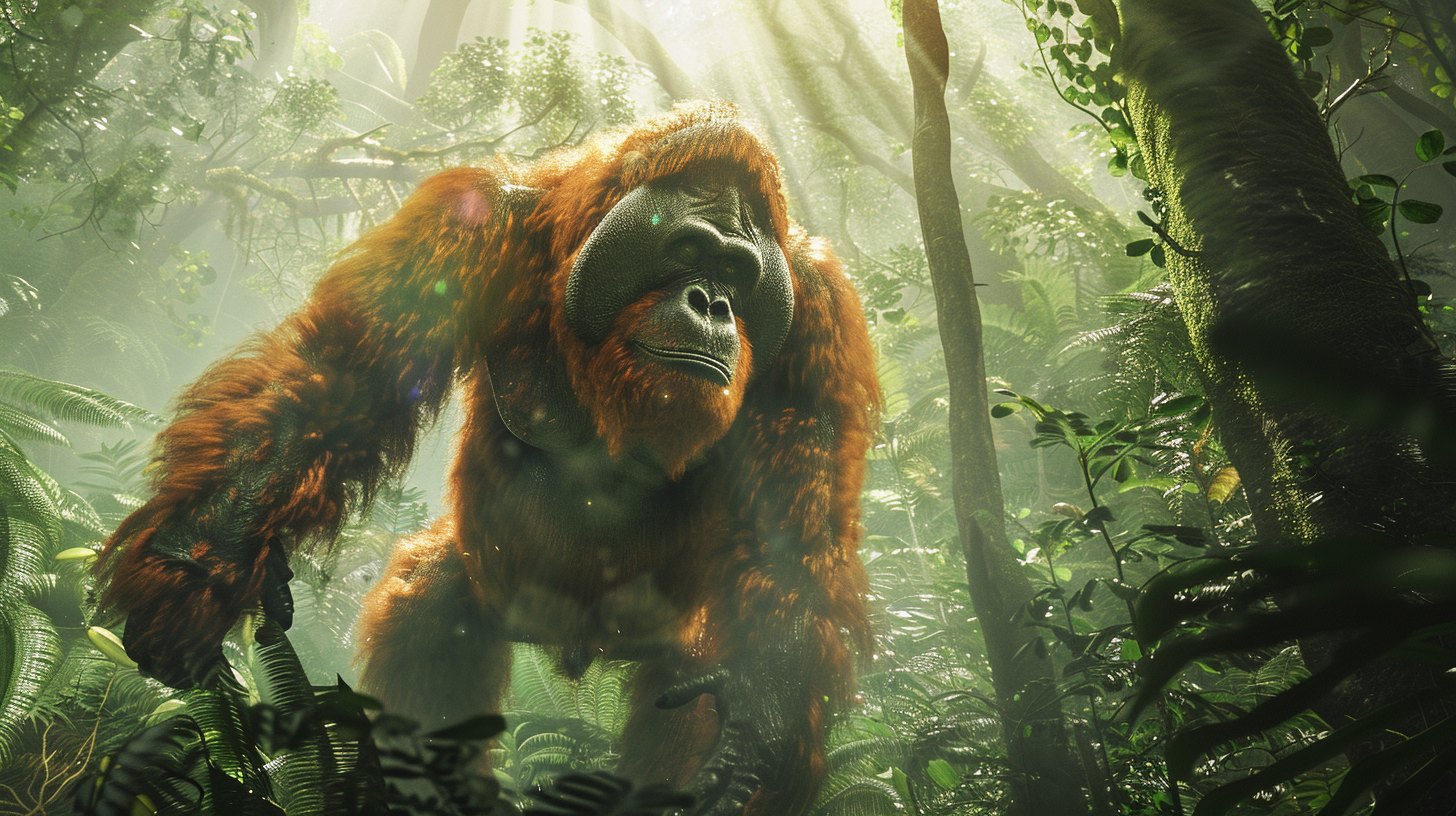
In other words, Gigantopithecus was not a “giant human,” but closer to a “super-sized orangutan.”
3. Fact Check ②: How Big Were They? (Size and Gait)
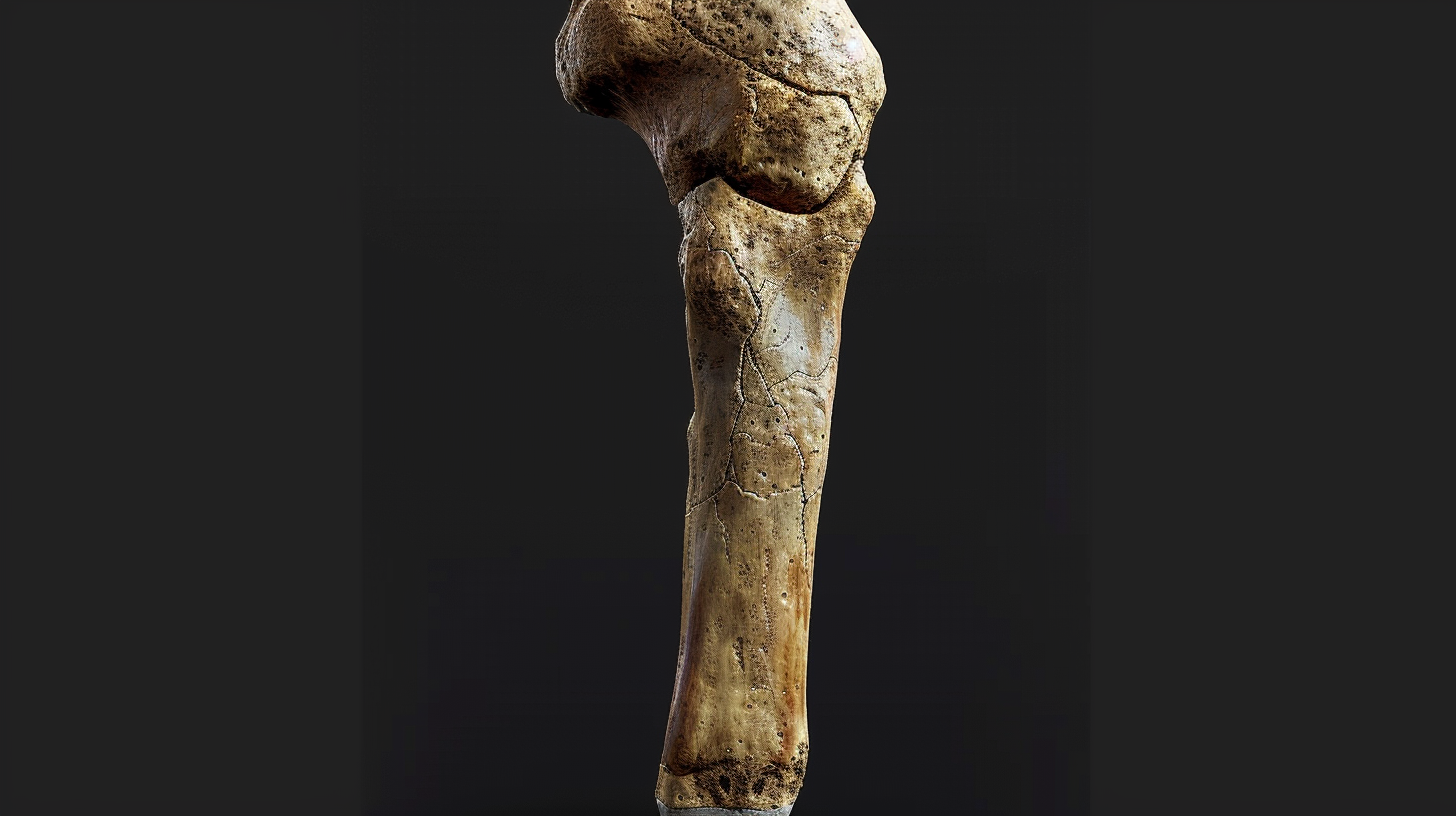
So, how big was this “Real-Life King Kong”? Although no skull or leg bones have been found to give exact measurements, scientists have estimated their size based on their massive teeth and jaws.
- Height: Estimated to be about 3 meters. This is equivalent to the height of the first floor of an apartment building.
- Weight: They weighed approximately 200–300 kg. This is similar to the weight of four adult men or a large vending machine. They were much heavier than modern gorillas (average 169 kg).
“Did they walk on two legs?” In the movies, King Kong walks with long strides on two legs, but the real Gigantopithecus would have been different. It is difficult to support a massive weight of 300 kg on two legs. Academia believes it is highly likely they used their long arms for knuckle-walking (walking on all fours), similar to gorillas.
Is the Bigfoot theory true? I’m sorry, but that is not possible. According to the latest dating research, Gigantopithecus went completely extinct between approximately 290,000 and 210,000 years ago.
4. Fact Check ③: What Did They Eat? (Diet)
” Since they were huge, wouldn’t they have eaten only bamboo like pandas?” That was the thought in the past. However, analyzing the carbon isotopes remaining in their teeth revealed unexpected results.
- Forest Gourmets: They ate almost all plants found in the forest, including bamboo, fruits, leaves, stems, and roots.
- Cavities: Interestingly, many traces of cavities (caries) were found on their teeth, which is evidence they frequently ate sweet fruits or starchy foods.
- Key Point: They were picky eaters that insisted only on food sources found within the ‘dense forest’.
5. Mystery Solved: Why Did They Disappear? (Extinction)
These giants, who dominated the Asian forests for 2 million years, suddenly disappeared between about 290,000 and 210,000 years ago. With no natural predators, why did they go extinct?
A study published in 2024 identifies ‘failure to adapt’ as the cause.
- Environmental Change: The climate changed, causing dense forests to shrink and sparsely wooded grasslands (savanna) to expand.
- Stubborn Diet: Even as the forests disappeared and grass became available, Gigantopithecus stubbornly stuck to forest foods until the end.
- Tragedy of the Giant Body: To maintain a 300 kg body, they needed massive amounts of food. With food sources shrinking and their picky eating habits, they couldn’t endure it.
- Stress: Analysis of the fossils revealed that individuals just before extinction suffered from chronic stress and even lacked proper water intake.
In contrast, their cousin, the orangutan, survived by evolving to reduce its body size and adapting to eat anything available. Ultimately, nature proved the law of evolution: it is not the ‘strongest’ that survives, but the ‘most adaptable.’
6. Conclusion: The Giant is Gone, But…
Gigantopithecus blacki nearly disappeared as medicine in an apothecary, but thanks to the persistent tracking of scientists, it has reclaimed its appearance from 2 million years ago.
Although they disappeared into history because they could not adapt to change, the fossil teeth they left behind teach us an important lesson: “If you cannot adapt to a changing environment, even the most powerful giant cannot survive.”
That’s it for today’s paleontology story. I’ll be back with more interesting stories about Earth’s history next time!
References
- Zhang et al. (2024). The demise of the giant ape Gigantopithecus blacki. Nature.
- Welker et al. (2019). Enamel proteome shows that Gigantopithecus was an early diverging pongine. Nature.
- Zhang & Harrison (2017). Gigantopithecus blacki: a giant ape from the Pleistocene of Asia revisited. AJPA.
- Bocherens et al. (2017). Flexibility of diet and habitat… Quaternary International.
- Frayer (1973). Gigantopithecus and its relationship to Australopithecus. AJPA.
- Weidenreich (1945). Giant Early Man from Java and South China. Science.