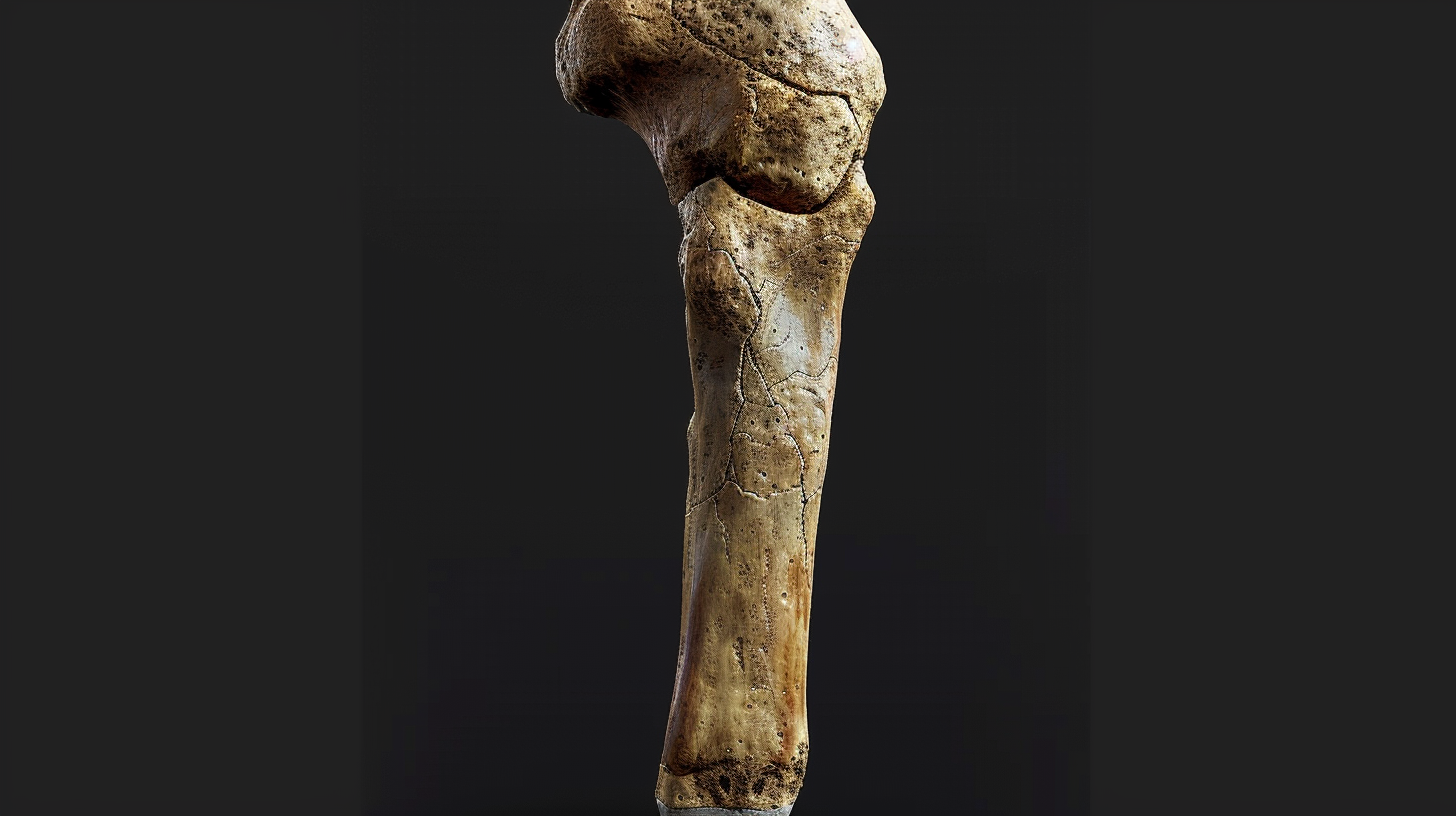


We often think that humanity suddenly became “modern” in Europe around 40,000 to 50,000 years ago, with the abrupt appearance of art and sophisticated tools. This event, often called the “Human Revolution,” has long been the orthodox view in academia. But is that really the case?
Remarkable discoveries pouring out of Africa recently show that this “revolution” was, in fact, the result of “persistent accumulation and gradual evolution” spanning hundreds of thousands of years. From the very first stirrings of human technology to the completion of modern culture, we reconstruct the epic drama that unfolded on the African continent in chronological order.
1. The Birth of Tools: Before Becoming Human, We Already Wielded Tools (3.3 Ma)
The first chapter of human history begins at Lomekwi in Kenya. Surprisingly, stone tools discovered here date back 3.3 million years.
- A Shocking Truth: This period predates the emergence of our direct ancestor, the genus Homo. This implies that early hominins like Kenyanthropus or Australopithecus were already using tools.
- How They Were Made: They used “passive hammer” or “bipolar” techniques, holding a large stone with both hands and striking it against an anvil on the ground to create crude but powerful tools.
2. Standardization of Technology: Mastering Stone Knapping (2.6 Ma)
About 700,000 years later, hominins in the Gona region of Ethiopia took a leap forward. Oldowan stone tools found here, dating to 2.6 million years ago, demonstrate that humanity had perfectly understood the principles of stone fracture mechanics.
- Sophisticated Control: They knew how to select good raw materials and could calculate angles to mass-produce sharp flakes. This technology was so efficient that it established itself as the standard human technology for the next million years.
3. Fire and Handaxes: Erectus, Lighting the Night and Roasting Meat (1.76 Ma ~ 1.0 Ma)
With the dawn of the Homo erectus era, humanity acquired two powerful weapons: the “Acheulean Handaxe” and “Fire.”
- The Arrival of the Swiss Army Knife (1.76 Ma): At the Kokiselei 4 site in Kenya, Acheulean stone tools dating back 1.76 million years were discovered. The finely trimmed, bilaterally symmetrical handaxes show that humans at the time applied the concept of “design” to their tools. Interestingly, Oldowan and Acheulean technologies coexisted here, suggesting that technologies were not replaced in a linear fashion but were used selectively depending on the situation.
- The First Cooks (1.0 Ma): Wonderwerk Cave in South Africa provided decisive evidence that humans controlled fire as early as 1 million years ago. Burned bones and plant ash found deep inside the cave are evidence of fire use that cannot be explained by natural wildfires. Cooked food increased digestive efficiency, serving as the foundation for explosive brain growth.
4. The Birth of Homo sapiens: Not 200,000, But 300,000 Years Ago (300 ka)
When did “we” become “us”? For a long time, it was believed that anatomically modern humans (Homo sapiens) appeared in East Africa about 200,000 years ago. However, the discovery of fossils at Jebel Irhoud in Morocco forced textbooks to be rewritten.
- A New Origin: The fossils discovered here are those of early Homo sapiens dating back a staggering 315,000 years. This pushes back the origin of humanity by 100,000 years.
- Pan-African Evolution: This discovery implies that humanity did not suddenly appear in a specific region of Africa but evolved gradually through complex interactions across the entire continent. Their faces were already similar to modern humans, but their brains were still evolving.
5. The Dawn of Culture and Symbolism: Red Ochre and the First Chemists (100 ka)
At Blombos Cave in South Africa, the scent of “culture” beyond mere survival begins to waft. By 100,000 years ago, humans here were already chemists and artists.
- The First Chemical Process: They used abalone shells as containers to create a red pigment mixture by combining ochre, bone, charcoal, and liquid. Using bone marrow fat as a binder required a high level of knowledge, proving they possessed the long-term planning abilities and chemical knowledge to source, mix, and store materials.
- Abstract Thought: Geometric patterns engraved on pieces of ochre are decisive evidence that humans had begun to use abstract thought and symbols.
6. Completion of Modern Behavior: Poison Arrows and Ancestors of the San (44 ka)
Before Upper Paleolithic culture bloomed in Europe, the lives of modern hunter-gatherers were already fully realized at Border Cave in southern Africa.
- Advanced Hunting Technology: Wooden sticks found here contained traces of ricinoleic acid, indicating that poison arrows were already in use.
- Recording and Adornment: Notched bones used to record numbers, beads made from ostrich eggshells, and other artifacts are strikingly similar to the culture of the modern San people. This suggests that by 44,000 years ago, modern patterns of human behavior were already established in Africa.
Conclusion: There Was No Revolution, Only Great Accumulation
Through this long journey, we arrive at one conclusion. Human “modernity” did not fall from the sky one day, nor was it the result of a sudden genetic mutation or a “revolution”.
From the moment we first broke stones 3.3 million years ago, to taming fire, evolving across the continent, and finally creating complex tools and symbols. The Paleolithic era in Africa was a history of gradual and magnificent accumulation (Mosaic Evolution) built upon millions of years of innovation and wisdom. We are the descendants of that persistent innovation.
References
- Berna, F., et al. (2012). Microstratigraphic evidence of in situ fire in the Acheulean strata of Wonderwerk Cave, Northern Cape province, South Africa. Proceedings of the National Academy of Sciences, 109(20), E1215–E1220.
- d’Errico, F., et al. (2012). Early evidence of San material culture represented by organic artifacts from Border Cave, South Africa. Proceedings of the National Academy of Sciences, 109(33), 13214–13219.
- Harmand, S., et al. (2015). 3.3-million-year-old stone tools from Lomekwi 3, West Turkana, Kenya. Nature, 521, 310–315.
- Henshilwood, C. S., et al. (2011). A 100,000-year-old ochre-processing workshop at Blombos Cave, South Africa. Science, 334(6053), 219–222.
- Hublin, J. J., et al. (2017). New fossils from Jebel Irhoud, Morocco and the pan-African origin of Homo sapiens. Nature, 546, 289–292.
- Lepre, C. J., et al. (2011). An earlier origin for the Acheulian. Nature, 477, 82–85.
- McBrearty, S., et al. (2000). The revolution that wasn’t: a new interpretation of the origin of modern human behavior. Journal of Human Evolution, 39(5), 453–563.
- Semaw, S., et al. (1997). 2.5-million-year-old stone tools from Gona, Ethiopia. Nature, 385, 333–336.