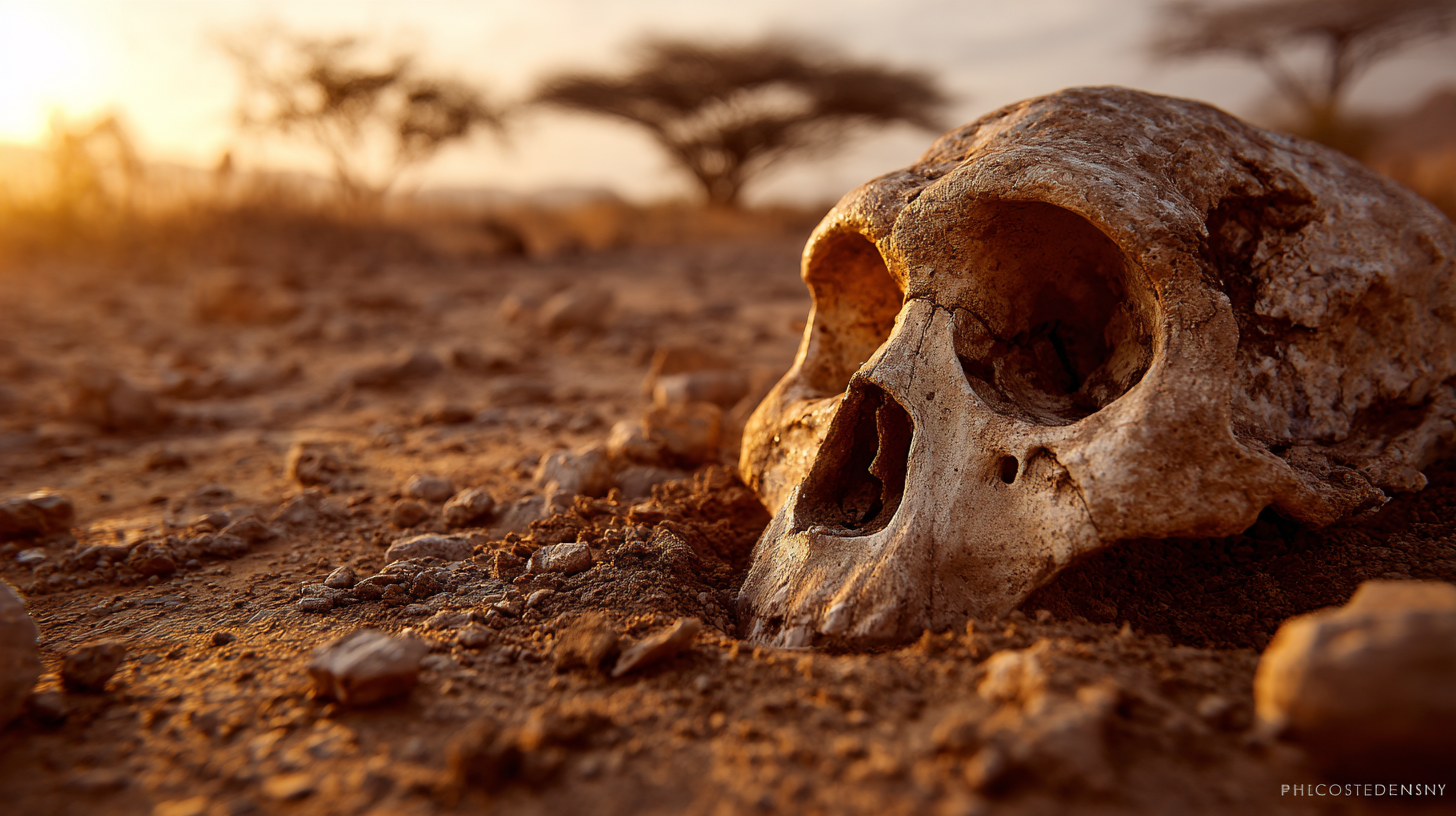

About 40,000 years ago, strange beings appeared on the frozen continent of Europe. They possessed brains and bodies identical to ours, and they brought with them “high-tech weapons” and “beautiful music” that had never existed before.
Just as the Neanderthals, who had long ruled Europe, were disappearing, how did our direct ancestors—called the Aurignacians—endure the harsh Ice Age and survive? Let’s dig into their hidden stories through the latest research papers.
1. Mystery Solved: The Shocking Truth Revealed by a Baby’s Tooth
For a long time, there was an unsolved mystery in archaeology: Who was the owner of the transitional artifacts (the Uluzzian culture) found in the ‘Grotta del Cavallo’ cave in Italy? Academia long believed these belonged to Neanderthals.
But in 2011, a twist occurred.
Using advanced Micro-CT technology to precisely analyze the infant teeth (Cavallo-B, C) found in the cave, it was revealed that these teeth belonged not to Neanderthals but to ‘Anatomically Modern Humans (Homo sapiens)’ . Furthermore, dating results showed they were living in Italy as early as 45,000 years ago.
This is decisive evidence breaking the conventional wisdom that “modern humans entered Europe with the Aurignacian culture,” showing they infiltrated Europe much earlier and more secretly than previously thought.
2. High-Tech Survival: Carving Bone Instead of Stone
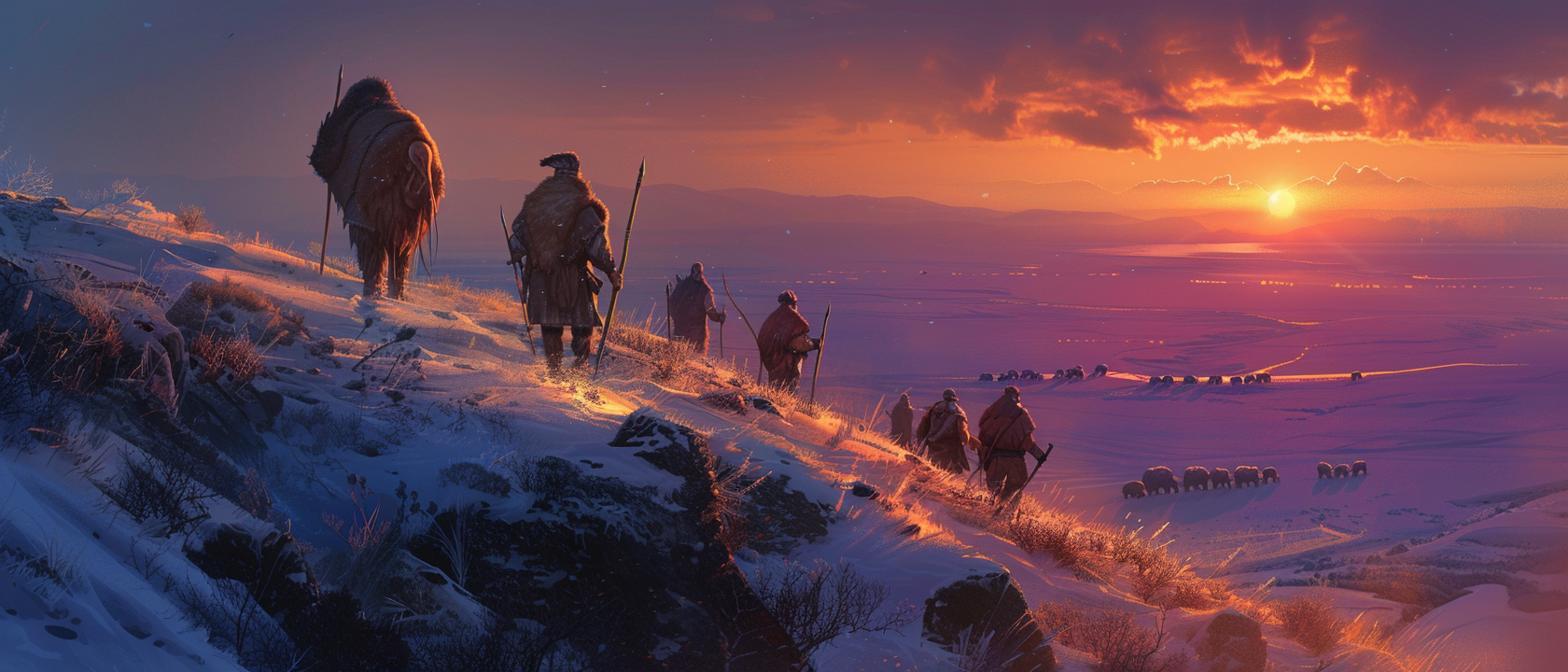
Europe at that time was a Tundra and Steppe environment, much colder and drier than today. Giant mammoths, woolly rhinoceroses, and the Aurignacians’ staple foods, reindeer and wild horses, roamed these lands .
To hunt these fast and massive animals, Aurignacians sparked a ‘technological revolution’ unprecedented in human history.
① The Pinnacle of Engineering Design: Split-based Point
They went beyond chipping stones and began to freely manipulate animal bones and antlers. The representative invention is the ‘Split-based Point.’
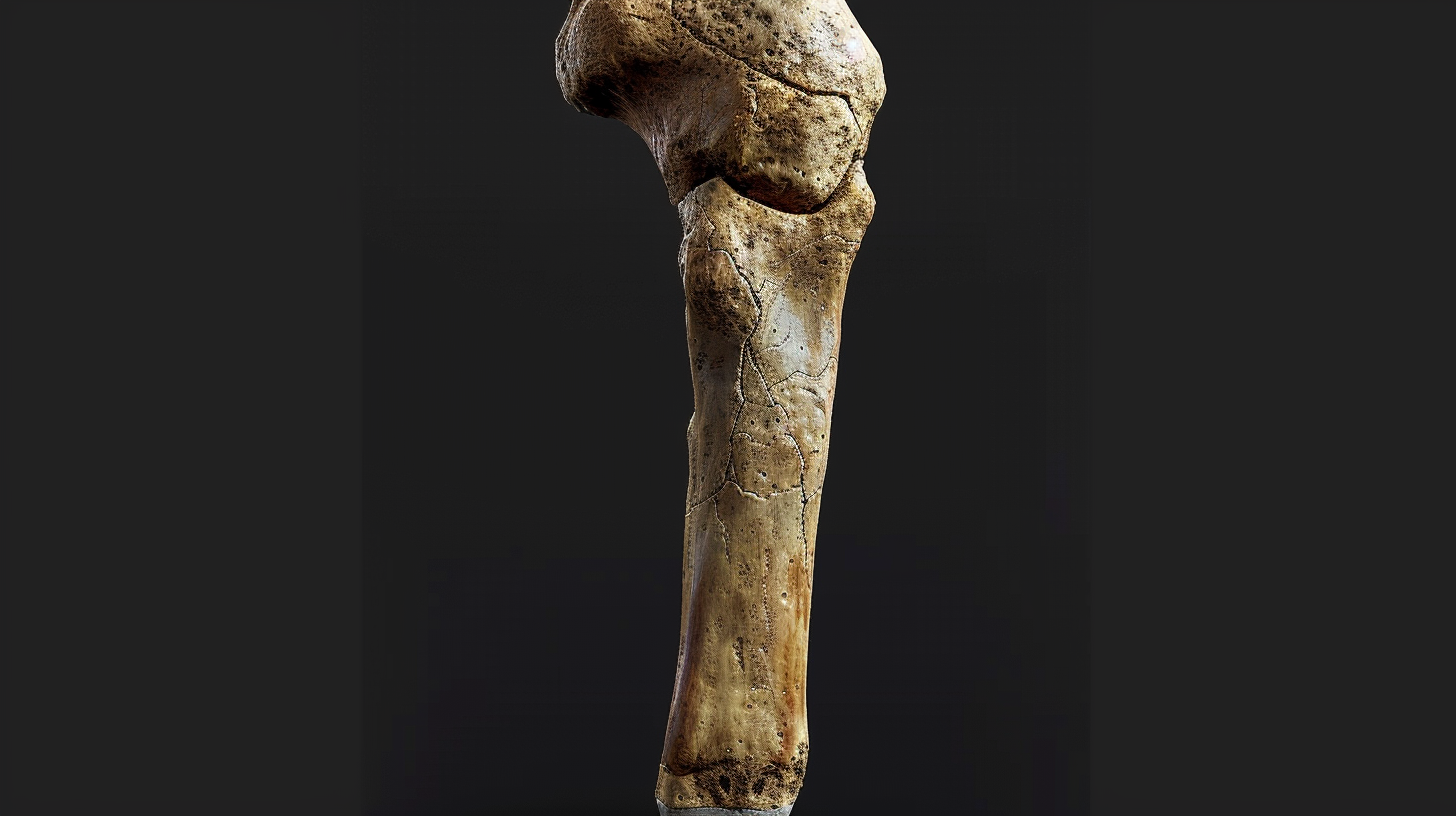
This wasn’t made simply by grinding bone. According to research, they understood the elasticity of reindeer antlers and used a ‘Wedge’ technique to split the base precisely, employing an engineering method . By inserting and fixing a wooden handle into this gap, a spear resistant to impact and with excellent destructive power was completed .
② The Smartphone of the Paleolithic: Bladelet
Even more amazing is the ‘Bladelet’ technology. According to the analysis of artifacts from Fumane Cave, they mass-produced tiny, sharp stone blades less than 3cm long .
These small stone fragments were not used on their own but were lined up and embedded into wooden spears or arrowheads to create Composite Tools like saw blades. It was, for the time, an innovative ‘modular weapon system’ where only the chipped fragment needed to be replaced if the edge became dull.
3. Artistic Humans: Beyond Survival to Empathy
The reason Aurignacians are great is not just because they were good at hunting. They created ‘Symbols’ for the first time in human history.
🎵 A Concert 35,000 Years Ago
A flute made of eagle bone was found in the Hohle Fels cave in Germany . This flute, with 5 holes, was not a simple noise-making tool but a real instrument capable of playing sophisticated melodies .
🗿 The Oldest Venus
The ‘Venus of Hohle Fels’ found in the same place is estimated to be about 35,000 years old, making it one of the oldest figurative artworks in human history . With a ring instead of a head, suggesting it was worn as a pendant, this figurine shows they shared deep beliefs about fertility and life .
This art and music likely bound people together around campfires on cold winter nights. This powerful ‘social cohesion’ might have been the real weapon that allowed them to prevail in competition with Neanderthals .
4. Where Did They Go? The Genealogy Told by DNA
So, are they the direct ancestors of modern Europeans? The results of ancient DNA analysis are like a drama.
Sadly, the very early pioneers who entered Europe (e.g., Oase 1 in Romania) left no descendants and went extinct. However, Aurignacians who lived between about 37,000 and 14,000 years ago formed a single Founder Population, becoming the genetic root of modern Europeans .
An interesting point is the encounter with Neanderthals. The genome of humans from the Aurignacian period contained about 3-6% Neanderthal genes. This means the two species met and shared blood. However, over time, genes disadvantageous for survival were removed by natural selection, leaving only about 2% in our bodies today .
5. Closing: The Legacy Left by the Aurignacian
The Aurignacian culture was not simply an era of ‘stone tools.’ It was a history of great challenges where humanity conquered nature with technology, comforted each other with art, and took root in a new continent.
The handprints left on cave walls and the melodies of bone flutes from 40,000 years ago still speak to us today. Saying, “From this time on, we finally became truly human.”
References
- Benazzi, S., et al. (2011). Early dispersal of modern humans in Europe and implications for Neanderthal behaviour. Nature.
- Higham, T., et al. (2011). The earliest evidence for anatomically modern humans in northwestern Europe. Nature.
- Kitagawa, K., & Conard, N. J. (2020). Split-based points from the Swabian Jura highlight Aurignacian regional signatures. PLOS ONE.
- Falcucci, A., & Peresani, M. (2022). The contribution of integrated 3D model analysis to Protoaurignacian stone tool design. PLOS -ONE.
- Conard, N. J. (2009). A female figurine from the basal Aurignacian of Hohle Fels Cave in southwestern Germany. Nature.
- Conard, N. J., et al. (2009). New flutes document the earliest musical tradition in southwestern Germany. Nature.
- Fu, Q., et al. (2016). The genetic history of Ice Age Europe. Nature.