
About 33,000 years ago, Europe was a completely different world. In this harsh environment of endless glaciers and tundra, the Gravettian Culture, one of the most artistic and innovative cultures in human history, was born.
Do you imagine primitive humans simply hiding in caves? The real picture revealed by recent archaeological papers and genetic analysis is shocking. They were a highly developed civilization that built apartments out of mammoth bones, wove textiles to make clothes, and cared for disabled family members.
Let’s dig into everything about the Gravettian culture.
1. The Basics: What is ‘Gravettian’?
Origin of the Name and Period
The Gravettian culture dominated Europe between approx. 33,000 and 21,000 BC, just before the peak cold of the Last Glacial Maximum. It is named after the ‘La Gravette’ rock shelter site in France, where it was first identified in the 1880s.
Symbol of Innovation: The Gravette Point
The definitive evidence of this era is their stone tools. They created small, sharp tools called ‘Gravette Points’.
- Features: One edge is extremely sharp, while the opposite back edge is blunted (backed) to make it easier to handle.
- Usage: It was the ‘high-tech’ tool of the time, optimized for holding in the hand or attaching to a wooden shaft to use as a knife or spear tip.
2. Where Did They Live?: Architecture Built of Mammoth Bones
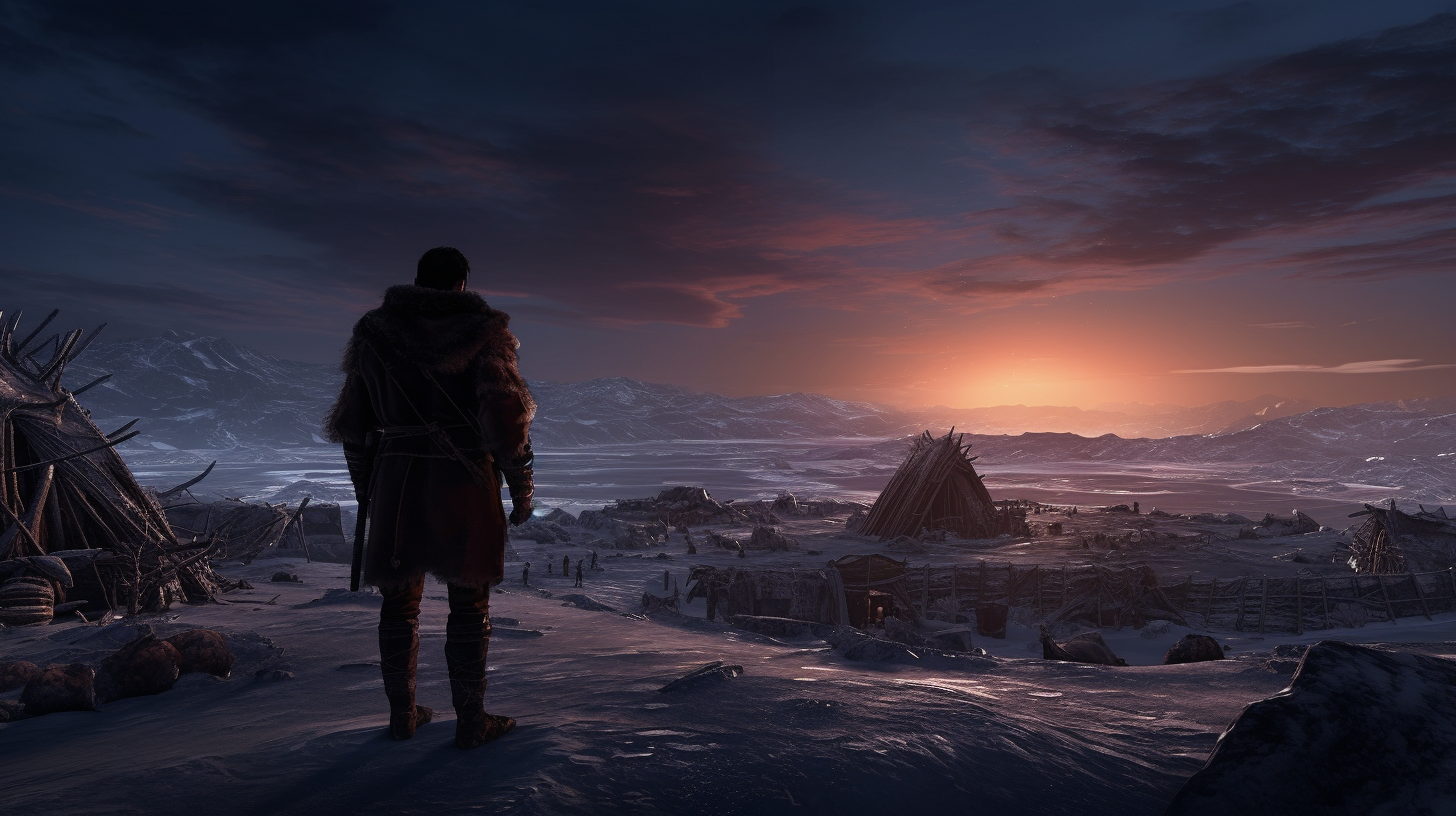
In the tundra regions of Eastern Europe (Russia, Ukraine, Czechia, etc.), where trees were scarce, Gravettians demonstrated amazing architectural skills. They used mammoth bones as building materials.
- Giant Bone Houses: They built fences with huge mammoth jawbones, constructed roof frames with long tusks, and covered them with hides. This was not a simple tent, but a long-term residential structure designed to withstand the severe cold.
- Sedentary Life: According to dental cementum analysis (Nývltová Fišáková, 2013), large sites like Dolní Věstonice were permanent settlements occupied year-round. They were not merely wandering nomads.
3. Hunting Revolution: Spears? No, They Threw ‘Nets’
We often imagine primitive humans chasing mammoths with spears. But the real secret to the Gravettian population explosion was ‘Nets’.
- Discovery of Textile Traces: According to research by Professor O. Soffer, impressions of sophisticated knots and textiles have been found on clay fragments from this period.
- Mass Capture Technology: They wove nets from plant fibers to catch small animals like hares and foxes in large quantities. This stabilized the food supply and played a decisive role in increasing the population.
4. Who Were the Gravettians?: The Truth Revealed by Genetics
A recent ancient DNA analysis published in Nature (Posth et al., 2023) reveals that Gravettians were not a single ethnic group.
- Two Families: They are genetically divided into the ‘Fournol cluster’ who lived in Western Europe (France/Spain) and the ‘Věstonice cluster’ who lived in Central/Eastern Europe (Czechia/Italy). They shared a culture, but their bloodlines were different.
- Erasing Neanderthal Traces: Interestingly, during this period, the proportion of Neanderthal DNA in the human genome decreased from 3–6% to the 2% range. Natural selection was gradually erasing Neanderthal genes from our bodies.
5. Art and Soul: Venus and Handprints
The Gravettian culture was also an ‘Era of Art’.
(1) The Secret of the Venus Figurines: Fat was Hope
Voluptuous female figurines, represented by the Venus of Willendorf, are icons of the Gravettian.
- Symbol of Survival: According to Dixson’s research (2011), the exaggerated hips and breasts likely symbolized the desire and hope for ‘nutritional status’ (survival and longevity) that enabled survival and childbirth in the harsh cold, rather than contemporary aesthetic standards.
- The Venus Wore Clothes: Surprisingly, precise analysis of the Venus figurines reveals they were not naked but wearing elaborate woven garments such as hats, bandeaux, and skirts.
(2) Handprints on Cave Walls (Hand Stencils)
In caves like Gargas or Cosquer in France, hand stencils made by blowing pigment over hands against the wall remain.
- Mystery of the Missing Fingers: Many handprints show missing finger joints or shortened fingers. Whether this was due to frostbite or body modification for religious rituals remains a mystery, stimulating the imagination of modern readers.
6. Mystery: The Triple Burial of Dolní Věstonice
The grave of three individuals found at Dolní Věstonice, Czechia, was the greatest mystery in archaeology.
- Bizarre Posture: Three young people were buried side-by-side. The central figure had severe physical deformities, and the left figure’s hand was reaching towards the central figure’s pubic region.
- The Truth Revealed by DNA: In the past, the central figure was presumed to be female due to pathology, but 2016 molecular genetic analysis confirmed that all three were male. Furthermore, DNA analysis suggests they were likely brothers sharing a maternal lineage.
- Meaning: Is it a story of brothers who cared for a disabled sibling to the end, dying together in a tragic event?
7. Conclusion: The Gone but Eternal Innovators
Around 21,000 BC, as the Ice Age became extremely cold (LGM), the Gravettian population declined sharply, and the culture disappeared. But the legacy they left behind is amazing.
They built houses and settled instead of just chasing animals. They spun thread to weave clothes instead of just wrapping themselves in skins, and baked clay to create the first ceramics. Above all, they possessed the warm humanity to care for sick family members and mourn the dead.
The Gravettian culture is the greatest testament to how humanity overcame extreme environments through technology, art, and the power of community.
References:
- Fu, Q., et al. (2016). The genetic history of Ice Age Europe. Nature.
- Mittnik, A., et al. (2016). A Molecular Approach to the Sexing of the Triple Burial…. PLOS ONE.
- Formicola, V., et al. (2001). The Upper Paleolithic Triple Burial of Dolní Věstonice…. AJPA.
- Svoboda, J., et al. (2015). Dolní Věstonice IIa: Gravettian microstratigraphy…. Quaternary International.
- Maier, A., & Zimmermann, A. (2017). Populations headed south?…. Antiquity.
- Nývltová Fišáková, M. (2013). Seasonality of Gravettian sites…. Quaternary International.
- Dixson, A. F., & Dixson, B. J. (2011). Venus Figurines… Symbols of Fertility or Attractiveness?. Journal of Anthropology.
- Soffer, O., et al. (2000). The “Venus” Figurines: Textiles, Basketry, Gender…. Current Anthropology.
- Posth, C., et al. (2023). Palaeogenomics of Upper Palaeolithic to Neolithic European hunter-gatherers. Nature.