
Hello! Today, we are going to dig deep into the Magdalenian Culture, often called the ‘Renaissance’ of the Paleolithic era.
It is easy to imagine ‘primitive people’ crouching in caves, but the Magdalenian people living in Europe about 17,000 years ago possessed technology, artistry, and complex mental worlds that exceed our imagination.
Based on the latest academic papers and archaeological discoveries, here is the A-to-Z of the real Magdalenian culture.
1. Origin of the Name: Why ‘Magdalenian’?
The name of this culture is derived from the rock shelter site ‘La Madeleine’ in the Dordogne region of France. It was named in 1863 after paleontologist Édouard Lartet discovered exquisitely carved bone tools and artworks there.
The Magdalenian culture flourished across Western Europe from approximately 17,000 BP to 12,000 BP, towards the end of the Last Glacial Maximum.
2. Who Were They?: Masters of Europe Through Genetics
Recent ancient DNA analysis technology has revealed the identity of the Magdalenian people in a new light.
- The Returned Lineage: The genetic signature of ancient humans living in Belgium about 35,000 years ago (Goyet Q116-1) seemed to disappear from Europe during the peak of the Ice Age. However, around 19,000 years ago, this lineage reappeared in the Iberian Peninsula as the ‘El Mirón Cluster’, spreading to become the dominant population leading the Magdalenian culture.
- A New Wave: Around 14,000 years ago, as the climate warmed (the Bølling-Allerød interstadial), a new group (Villabruna Cluster) with genetic affinities to the Near East entered Europe, causing a population turnover.
3. The Revolution of Food, Clothing, and Shelter: Survival Technologies
The Magdalenian people were not simple hunters but strategists who perfectly utilized their environment.
🏠 Housing: People Who Came Out of Caves
It is a common misconception that Paleolithic people lived only in caves. The Pincevent site in France is a representative open-air site. They pitched sophisticated tents covered with reindeer skins near rivers or hunting grounds. Inside the tents, spaces were divided around a hearth into sleeping areas and workspaces, remarkably similar to modern camping.
👗 Fashion: The First ‘Needle’ and Tailored Clothing
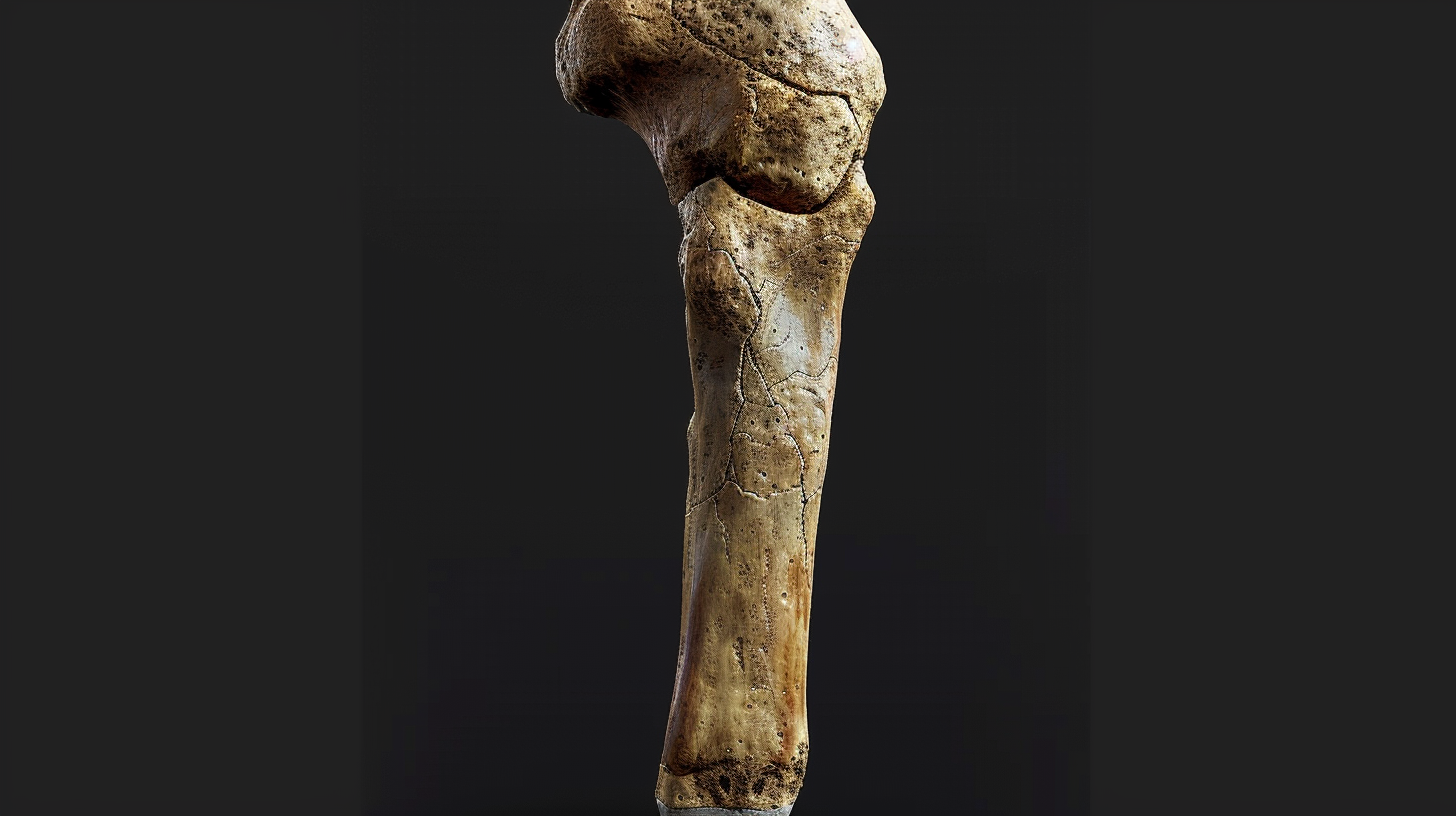
One of the greatest inventions of the Magdalenian culture is the ‘needle’. Bone needles have been discovered in places like Gough’s Cave in the UK. This is evidence that they did not simply drape furs but sewed them with thread to create tailored clothing that fit the body. Thanks to this technology, they were able to withstand the severe cold.
🍖 Diet: Advanced Hunting Strategies
- Reindeer Hunting Experts: According to studies of the Verberie site in France, they conducted large-scale hunts precisely during the autumn migration of reindeer. They showed the astuteness of selectively hunting young males rich in fat for the winter.
- Hunters Who Went to Sea: Large weapons and tools made of whale bone were discovered in the Isturitz cave in France. The fact that they transported whale bone from the coast to the inland to process it professionally shows how extensive their range of activity was.
4. Art and Society: The Prehistoric Renaissance
The Magdalenian period was the first golden age of human art history.
🎨 Cave Paintings: Lascaux and Altamira
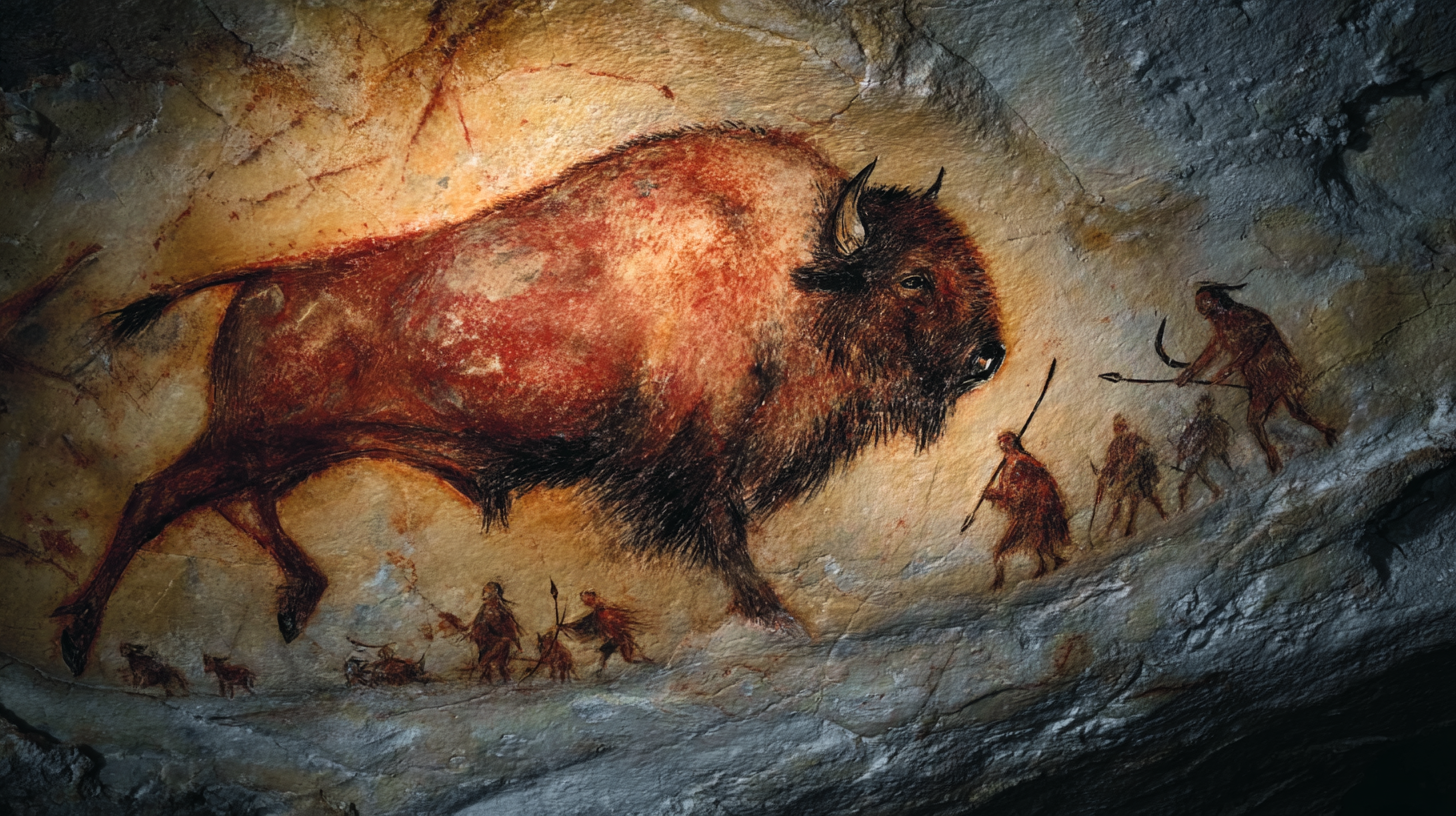
The peak of art in this period is represented by the Lascaux and Altamira cave paintings. The dynamic drawings of bulls, horses, and deer are not simple doodles but masterpieces containing the worldview of the people at the time. Recent U-series dating results show that the origins of some artistic activities date back to 40,000 years ago (Aurignacian culture), much earlier than the Magdalenian, indicating that the techniques were perfected by the Magdalenian period.
🤝 Social Aggregation
Analysis of artifacts from the Altamira cave in Spain suggests that this place was likely an ‘Aggregation Site’ where scattered people gathered at specific times. The discovery of bone tools with different patterns in one place suggests that various groups gathered here to find mates, exchange information, and perform rituals.
5. Death and Mystery: Shocking Funeral Rites
The Magdalenian culture also had complex and solemn rituals that are difficult to understand from a modern perspective.
💀 Skull-Cups and Cannibalism
Human bones discovered in Gough’s Cave in the UK show clear signs of cannibalism (tooth marks on bones, traces of marrow extraction). However, this was not simply due to starvation.
They processed skulls very intricately to create bowl-like ‘Skull-cups’. Peeling off the scalp and precisely breaking and trimming the lower part of the skull was a highly ritualistic act to honor the dead or to gain special power.
6. Conclusion: Blooming Culture Beyond Survival
The Magdalenian people were innovators who invented needles to make clothes, built tents to provide comfortable shelter, and utilized even whale bones in the harsh environment of the Ice Age. They poured their artistic soul into Altamira and Lascaux, and performed complex rituals of making skull-cups in the face of death.
They were not simple ‘primitives’ but protagonists who possessed intelligence and sensibility identical to ours and brilliantly blossomed the last hunter-gatherer civilization in Europe.
References
- Bello, S. M. et al. (2011). Earliest Directly-Dated Human Skull-Cups. PLoS ONE, 6(2), e17026.
- Bello, S. M. et al. (2015). Upper Palaeolithic ritualistic cannibalism at Gough’s Cave (Somerset, UK): The human remains from head to toe. Journal of Human Evolution, 82, 170–189.
- Catz, N. et al. (2020). Reindeer feeding ecology and hunting strategies by Magdalenians from Pincevent (Paris Basin, France): New insights from dental microwear textural analyses. International Journal of Osteoarchaeology, 30(4), 519–528.
- Conkey, M. W. (1980). The Identification of Prehistoric Hunter-Gatherer Aggregation Sites: The Case of Altamira. Current Anthropology, 21(5), 609–630.
- Enloe, J. G. (1997). Seasonality and age structure in remains of Rangifer tarandus: Magdalenian hunting strategy at Verberie. Anthropozoologica, 25-26, 95-102.
- Fu, Q. et al. (2016). The genetic history of Ice Age Europe. Nature, 534, 200–205.
- Pétillon, J.-M. (2008). First evidence of a whale bone industry in the western European Upper Paleolithic: Magdalenian artifacts from Isturitz (Pyrénées-Atlantiques, France). Journal of Human Evolution, 54(5), 720–726.
- Pike, A. W. G. et al. (2012). U-Series Dating of Paleolithic Art in 11 Caves in Spain. Science, 336(6087), 1409–1413.