
🚪 Intro: A City Without Doors or Streets?
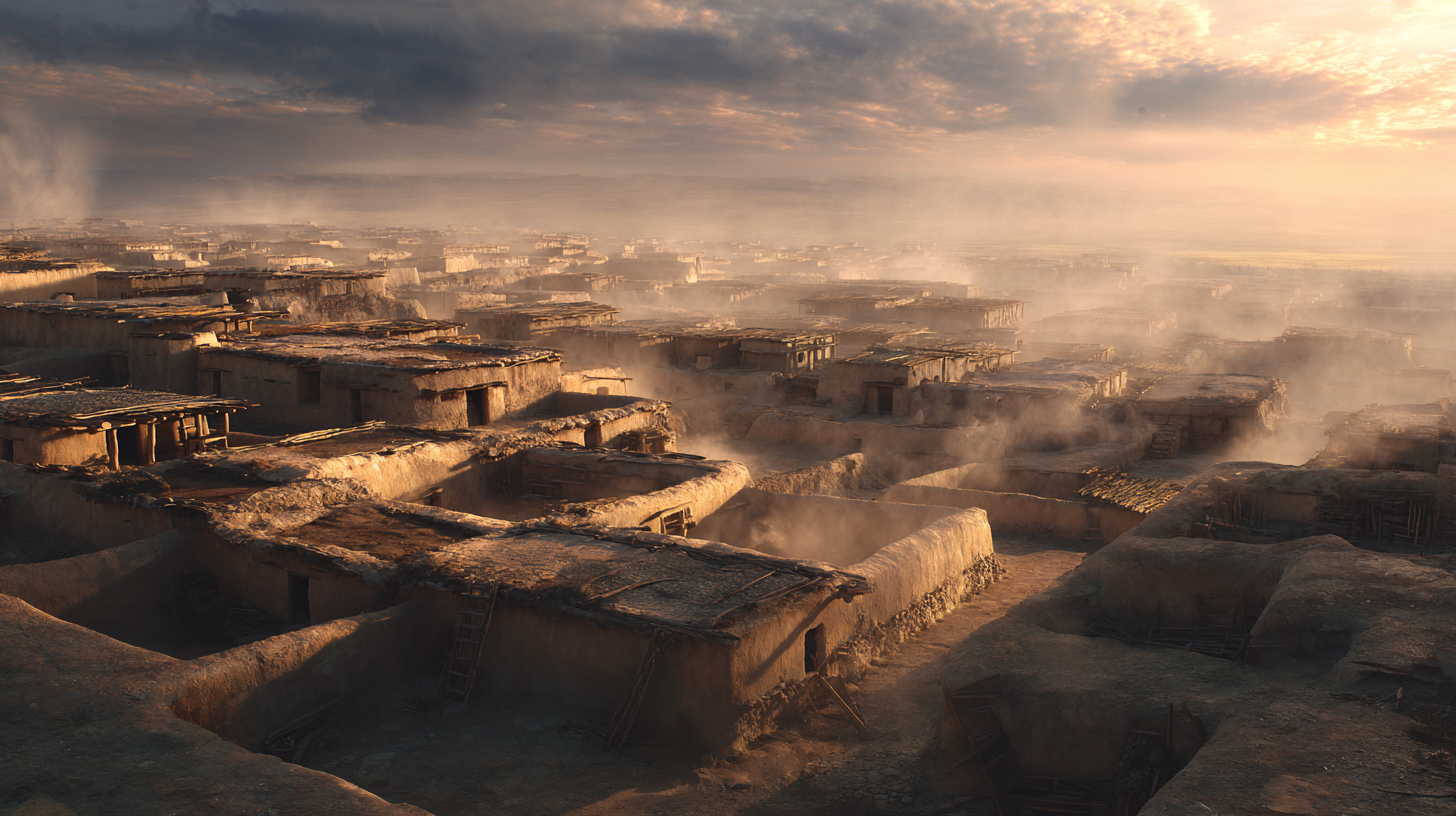
Imagine a city with no front doors, no windows, and not even alleyways connecting the houses. To visit a neighbor, you have to walk across the roofs. To enter your own home, you must climb down a ladder through a hole in the ceiling.
This isn’t a story from a science fiction movie. This is the reality of Çatalhöyük, humanity’s first mega-city, which existed 9,000 years ago on the Konya Plain in Turkey.
Listed as a UNESCO World Heritage site in 2012, this place is more than just a pile of old stones. Hidden here are amazing lifestyles that defy modern common sense and a drama of fierce survival. Let’s dig into the real face of Çatalhöyük that we never knew.
1. 🏠 Living: “We Meet on the Roof”
There was no concept of a ‘street’ in Çatalhöyük. This was because the houses were stuck together like a honeycomb. People walked on the roofs like roads, and much of daily life took place on these rooftops.
The only entrance into the house was a hole pierced through the ceiling. This hole served as a chimney to let smoke out and as a door to climb up and down a ladder. The inside of the house was dark, but the walls were plastered white. On these walls, people painted geometric patterns in red or carved images of beasts like leopards and bears.
2. 🍖 The Dining Twist: “Beef Only on Special Days”
When early excavators saw the massive bull horns hanging on the walls, they assumed these people were like ‘cowboys’ who ate beef as a staple. However, the truth revealed by the latest technology—stable isotope analysis—was different.
Analysis of their bones showed that their main source of protein was not cattle, but sheep and goats. The giant wild bull (Aurochs) was a terrifying existence that required risking one’s life to hunt. They were only caught and shared during special festivals or rituals. On ordinary days, they were simple farmers and herders raising flocks of sheep in the wetlands around the village.
3. 💀 Death and Memory: “My Ancestors Sleeping Beneath My Bed”
For the people of Çatalhöyük, death was not far away. When a family member died, they buried them beneath the floor of the house. Then, they slept and ate on top of them, continuing their daily lives.
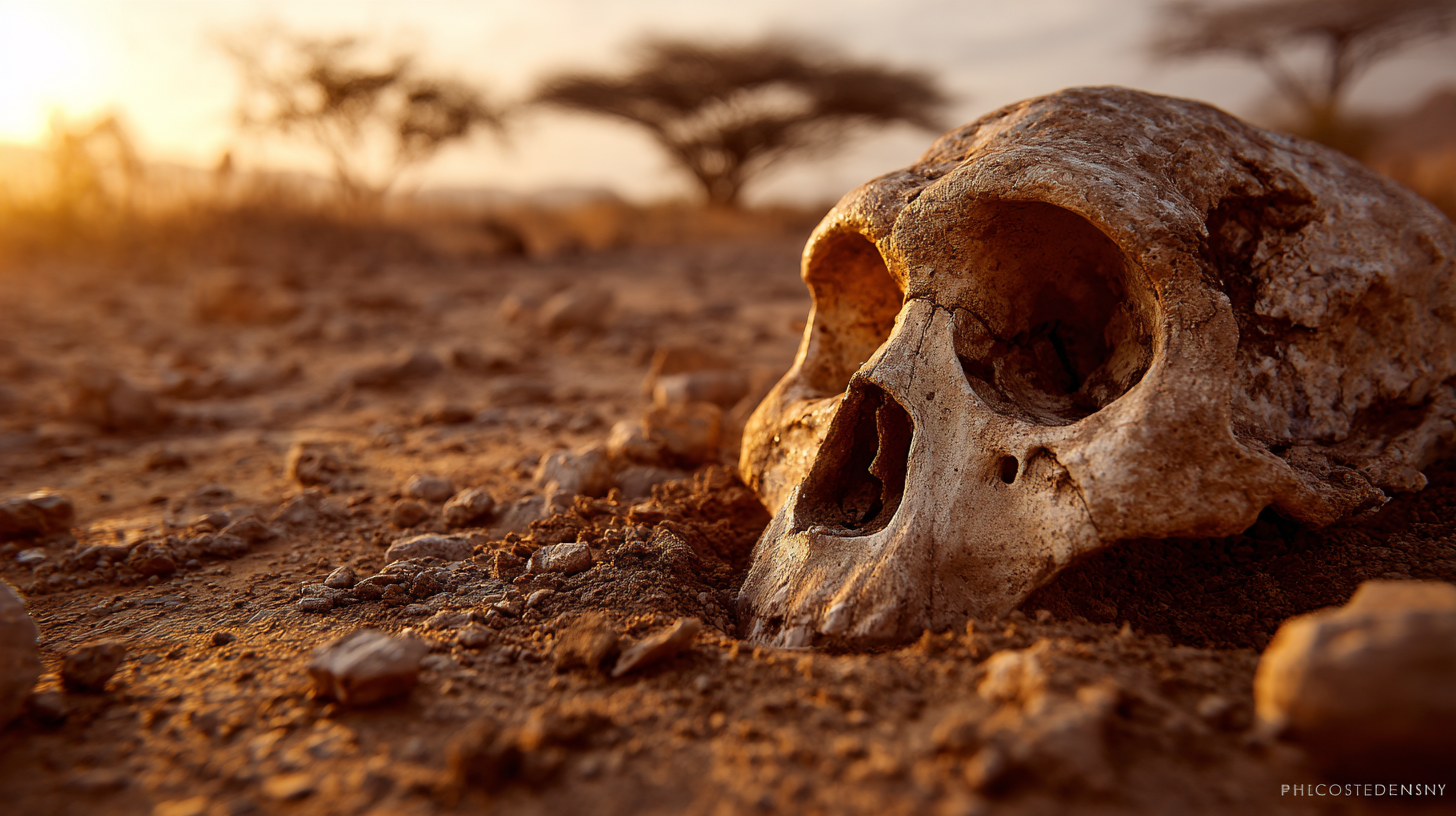
Even more shocking is that after some time, when the body had decayed, they would dig up the grave again and remove only the skull. They would decorate the skull inside the house or remodel the face with clay and paint it red. Wall paintings often depict giant vultures circling headless bodies. This reflects their funeral custom of returning the flesh to nature (excarnation) and their belief in birds carrying souls. This was not a barbaric act, but a desperate ritual to keep the memory of ancestors within the home and strengthen the bond of the family.
4. 🐆 The World of Symbols: Goddess or Grandmother?
Çatalhöyük is famous for the statue of a voluptuous woman sitting with leopards on both sides, known as the ‘Seated Woman.’ In the past, it was believed that she was worshipped as a ‘Mother Goddess.’
However, recent studies have revealed that these figurines were found in everyday places like trash heaps or grain bins, not in temples. Scholars now weigh the possibility that rather than an omnipotent goddess, this figure represents an elderly female ancestor symbolizing the authority of the family, or a magical tool to ward off bad luck. Additionally, a mural believed to depict the eruption of Mount Hasan (Hasan Dağı) is evaluated as humanity’s first landscape painting and map.
5. ⏳ Change and Decline: “Changes Brought by Population Explosion”
Around 6500 BC, a crisis hit the peaceful city. As the population grew, houses became denser, and disease, stress, and domestic labor increased explosively.
Eventually, people changed their way of life to survive.
- Independence: Moving away from the style of sharing everything with neighbors, each household began to produce and store independently.
- Mobility: They drove their sheep herds further afield to find resources.
- Transformation: Instead of heavy bull horn installations fixed to walls, portable art like stamps (Stamp seals) and pottery decorations developed.
🏁 Conclusion: A ‘City of Humans’ That Lived Fiercely
Çatalhöyük was not a mysterious city of goddesses. It was a site of fierce survival where people relied on and remembered each other to sustain a civilization for over 1,000 years, even amidst the threats of wild beasts and the stress of overcrowding.
✈️ Travel Tip: Çatalhöyük is about a 40-minute drive from Konya in central Turkey. The historic site features model houses that reproduce the homes of that time, where you can directly experience their unique life of entering through the roof and living with ancestors beneath the floor.
References
Book
- Mellaart, J. (1967). Çatal Hüyük: A Neolithic Town in Anatolia. Thames and Hudson.
Edited Book (Used for the main collected volume)
- Hodder, I. (Ed.). (2010). Religion in the emergence of civilization: Çatalhöyük as a case study. Cambridge University Press.
Journal Articles
- Hodder, I. (1999). Symbolism at Çatalhöyük. Proceedings of the British Academy, 101, 1–17.
- Hodder, I. (2014). Çatalhöyük: The leopard changes its spots: A summary of recent work. Anatolian Studies, 64, 1–22.
- Richards, M. P. (2003). Stable isotope evidence of diet at Neolithic Çatalhöyük, Turkey. Journal of Archaeological Science, 30(1), 67–76.
- Sjögren, K-G. (2020). Kinship and social organization in Copper Age Europe. PLoS ONE, 15(11), e0241278.
- Twiss, K. C. (2010). Taking the bull by the horns: Ideology, masculinity, and cattle horns at Çatalhöyük (Turkey). Paléorient, 35(2), 19–32.
Book Reviews
- Russel. (2007). [Review of the book The leopard’s tale: Revealing the mysteries of Çatalhöyük]. American Anthropologist, 109(2), 386–387.
- Thorpe, N. (2011). [Review of the book Religion in the emergence of civilization: Çatalhöyük as a case study]. The Antiquaries Journal, 91(2), 351–352.