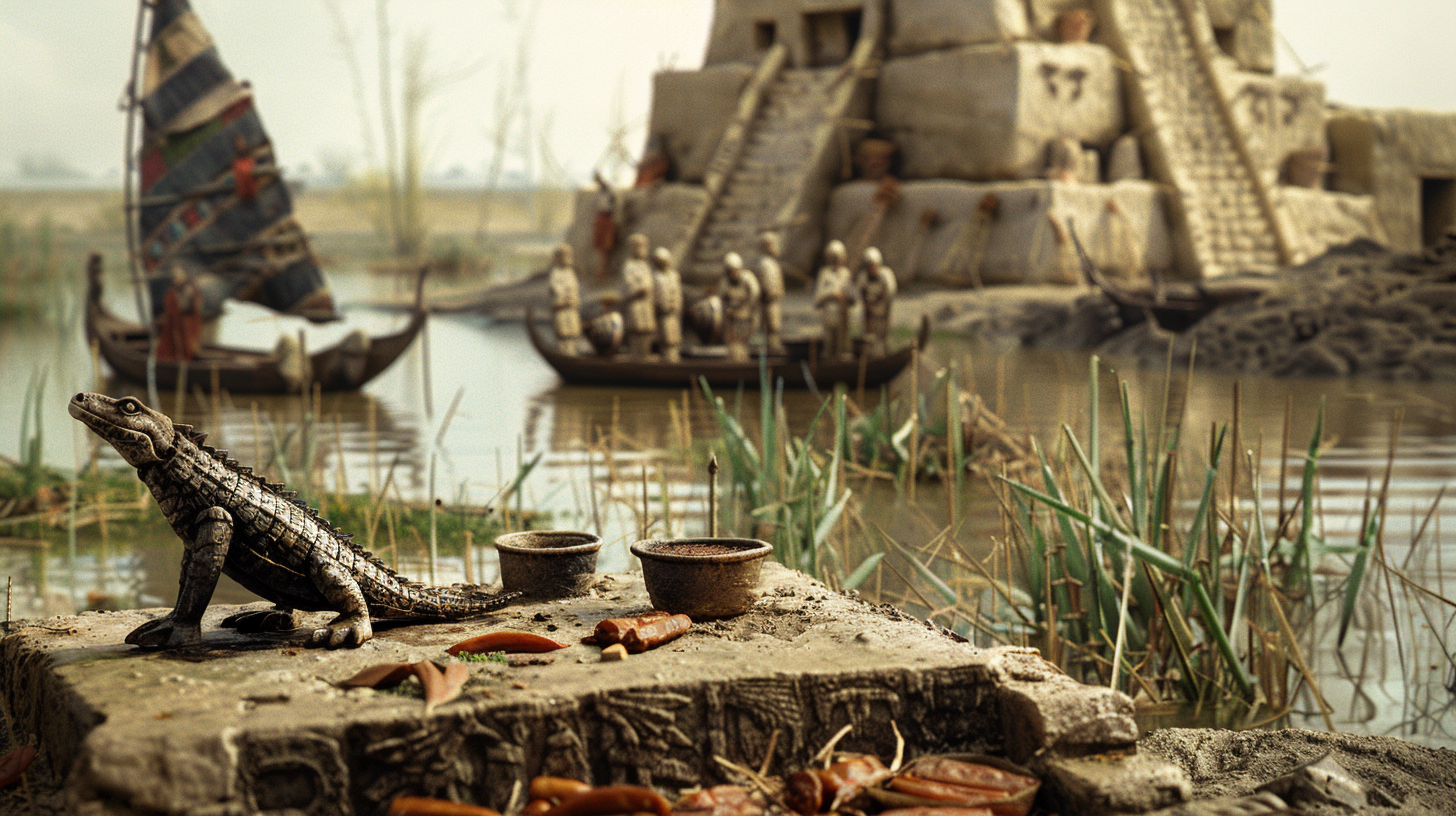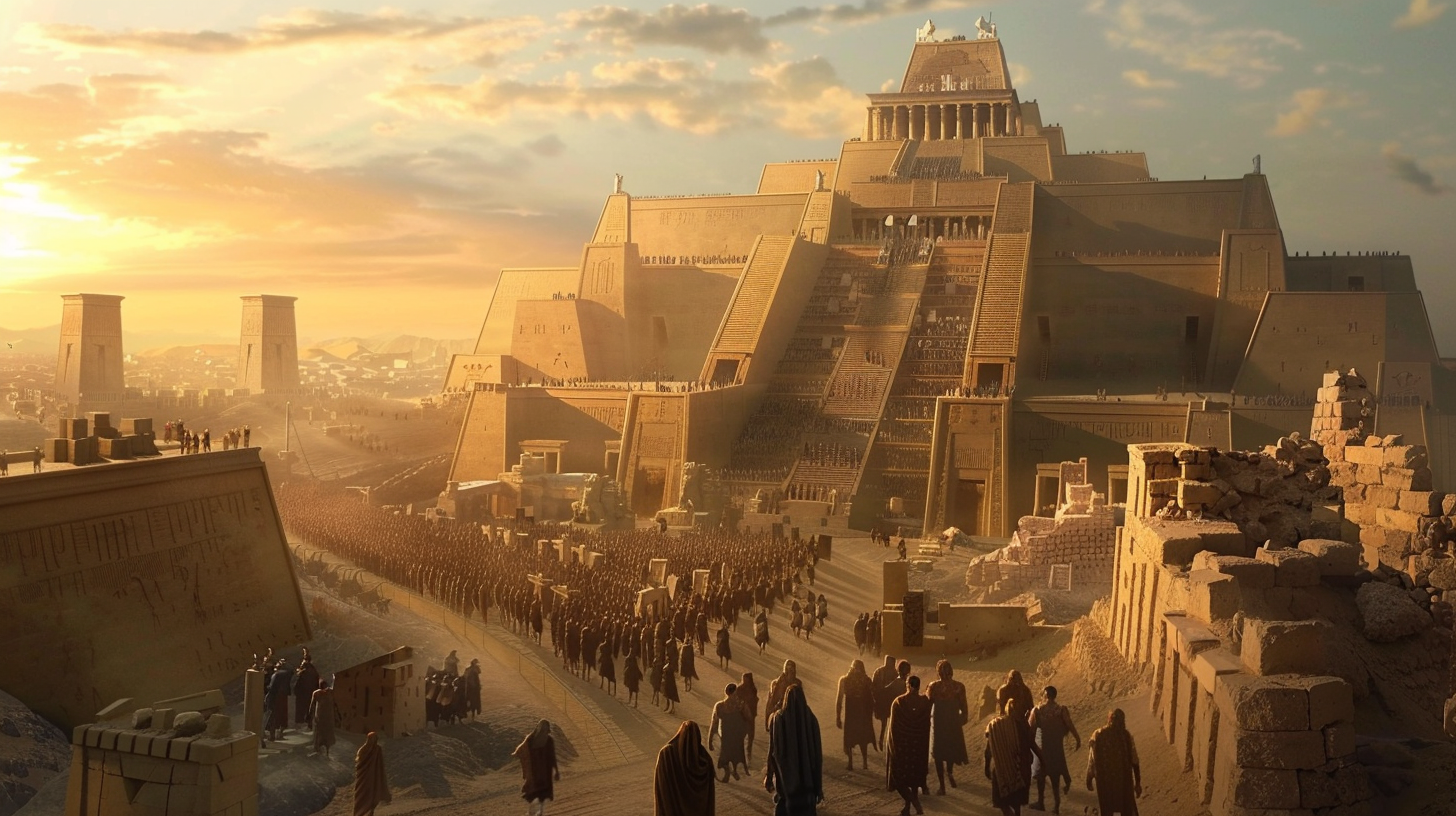

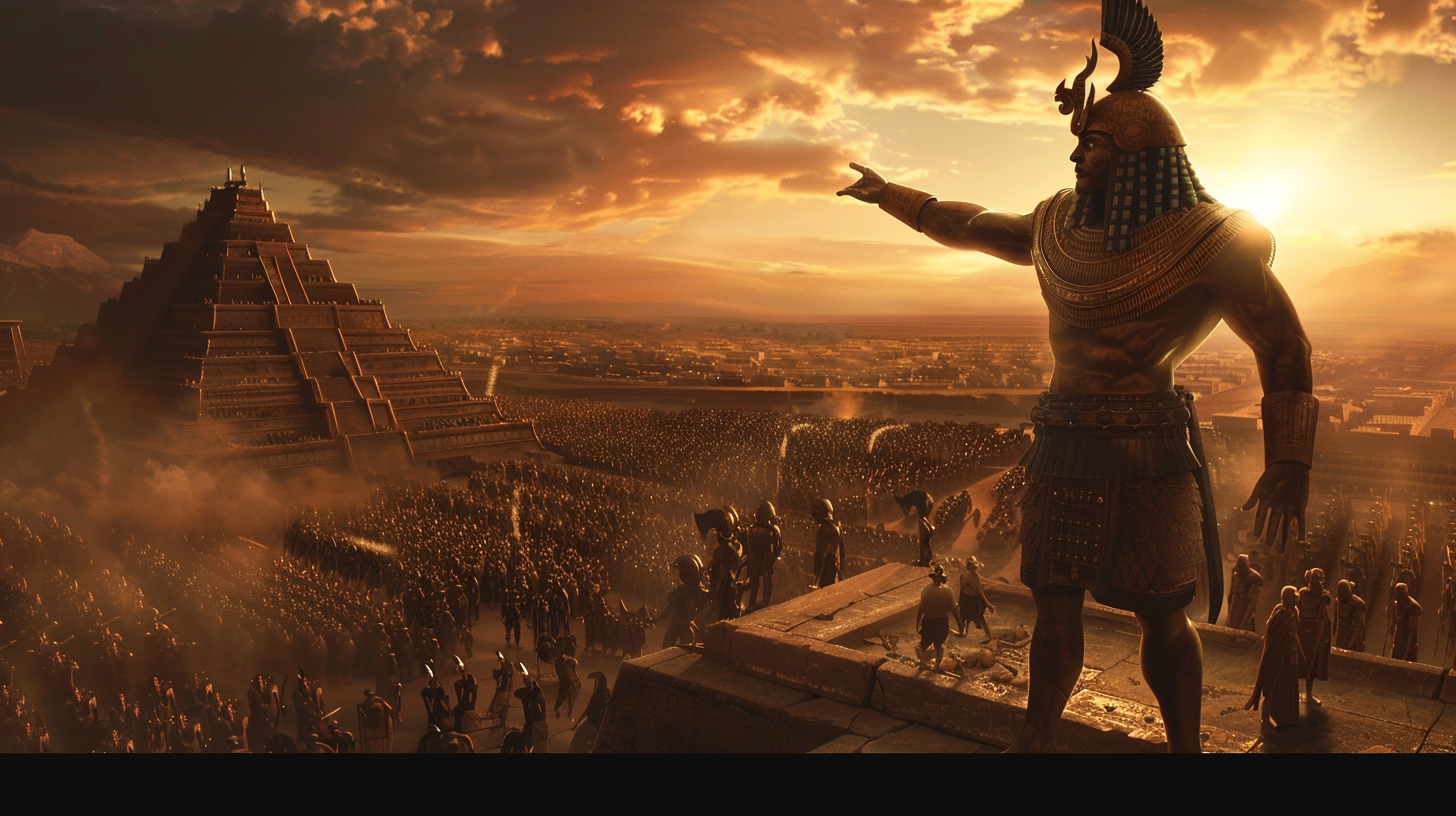
When you hear the word ‘Empire,’ what comes to mind? The Roman Empire? The Mongol Empire? Or perhaps the Galactic Empire from Star Wars? But the ‘original’ of all these empires stands apart. It is the Akkadian Empire that emerged on the Mesopotamian plains 4,300 years ago.
Today, I will unravel the rise and fall of this fascinating empire, where myth and history intertwine, through 5 key points.
1. Founding Myth: A Baby Floating on the River Becomes King
The secret birth of Sargon, the founder of the Akkadian Empire, is reminiscent of the biblical story of Moses. According to legend, his mother was a high priestess who secretly gave birth to him, placed him in a reed basket, and set him adrift on the Euphrates River.
The baby floating down the river was rescued by a gardener named ‘Akki.’ Sargon grew up as a gardener, became the king’s cup-bearer, and was finally chosen by the goddess Ishtar to ascend to the throne. This dramatic ‘self-made’ story paradoxically showed that he was of common origin rather than royal blood, serving as sophisticated political propaganda to find the legitimacy of his rule in divine selection.
2. Was History’s First Author a ‘Princess’?
There is a figure in the Akkadian Empire as important as Sargon: his daughter, Enheduanna.
She is recorded as the first author in human history to sign her name to her work. To unify the empire, Sargon appointed his daughter as the high priestess of Nanna, the moon god, in the southern city of Ur. Enheduanna composed hymns that fused Sumerian and Akkadian gods, playing a decisive role in completing the empire’s religious ideology. 4,300 years ago, a princess holding a brush (reed pen) was the spiritual pillar of the empire.
3. The King Who Became a ‘God,’ and a Revolution in Art
Under Sargon’s grandson, Naram-Sin, the empire reached its peak. He was the first human king to attach the divine determinative (Dingir) before his name, proclaiming himself the “God of Agade”.
This confidence is also evident in art. Akkadian art broke away from the static style of the previous Sumerian era, evolving into a dynamic and realistic (Naturalism) style. Notably, the famous Victory Stele of Naram-Sin depicts the king wearing a ‘horned helmet’—reserved only for gods—scaling a mountain and trampling his enemies. The depiction of musculature and his heroic pose are considered masterpieces of ancient Near Eastern art.
4. Secrets of Imperial Management: Buying Land and Unifying Weights
An empire cannot be maintained by warfare alone. The Akkadian Empire established a sophisticated administrative system.
- Unification of Weights and Measures: To facilitate economic activity throughout the empire, a standard unit of grain measurement called the ‘Akkadian gur’ was introduced.
- Land Purchase: Surprisingly, the kings of the time did not simply seize land by force. The Obelisk of Manishtusu records that the king legally purchased 3,430 hectares of land by paying vast amounts of grain and gifts. This was a calculated economic policy to expand royal power while distributing land to supporters.
5. A Mysterious End: Great Drought or Divine Curse?
The Akkadian Empire, which seemed eternal, suddenly collapsed around 2200 B.C. Why? There are two versions of the story: one from science and one from legend.
- The Scientific Explanation (Climate Collapse): Recent research suggests that a massive drought and dust storms, accompanied by volcanic eruptions, persisted for nearly 300 years during this period. As the northern breadbaskets were devastated, refugees flooded the south, and the resulting social chaos brought down the empire.
- Their Belief (The Curse of Agade): However, the people of the time thought differently. The Sumerian literary work The Curse of Agade records that Naram-Sin committed sacrilege by destroying the Ekur temple in Nippur, causing Enlil, the king of the gods, to send the barbarous ‘Gutian’ people to destroy the empire.
Conclusion
The Akkadian Empire vanished into history due to a combination of climate disaster and internal contradictions, but the ‘imperial’ system and cultural legacy they created continued into Babylonia and Assyria, forming the backbone of ancient Near Eastern history.
References
- Foster, B. R. (2016). The age of Agade: Inventing empire in ancient Mesopotamia. Routledge.
- Weiss, H., et al. (1993). The genesis and collapse of third millennium North Mesopotamian civilization. Science, 261(5124), 995–1004.
- Westenholz, J. G. (1997). Legends of the Kings of Akkade: The texts. Pennsylvania State University Press.
- Hasselbach, R. (2005). Sargonic Akkadian: A historical and comparative study of the syllabic texts. Harrassowitz Verlag.
- Van De Mieroop, M. (2007). A history of the ancient Near East, ca. 3000–323 BC (2nd ed.). Blackwell Publishing.