
We often think of ‘Sumer’ when we talk about the ‘first civilization of humanity.’ But the Sumerians didn’t just fall from the sky one day. Thousands of years before they invented writing and built massive ziggurats, there were people who had already completed the ‘software’ of civilization upon the mud of Mesopotamia.
They were the people of the Ubaid Period (c. 6500–3800 BC).
Today, we dig into the mysteries and innovations of the Ubaid period, a chapter often skipped in textbooks but actually one of the most important in human history.
1. The Mystery: People with Lizard Faces
When speaking of the Ubaid period, we must start with the most bizarre and intriguing artifacts. Archaeologists excavating the Eridu Cemetery in southern Iraq discovered strange terracotta figurines inside the graves.
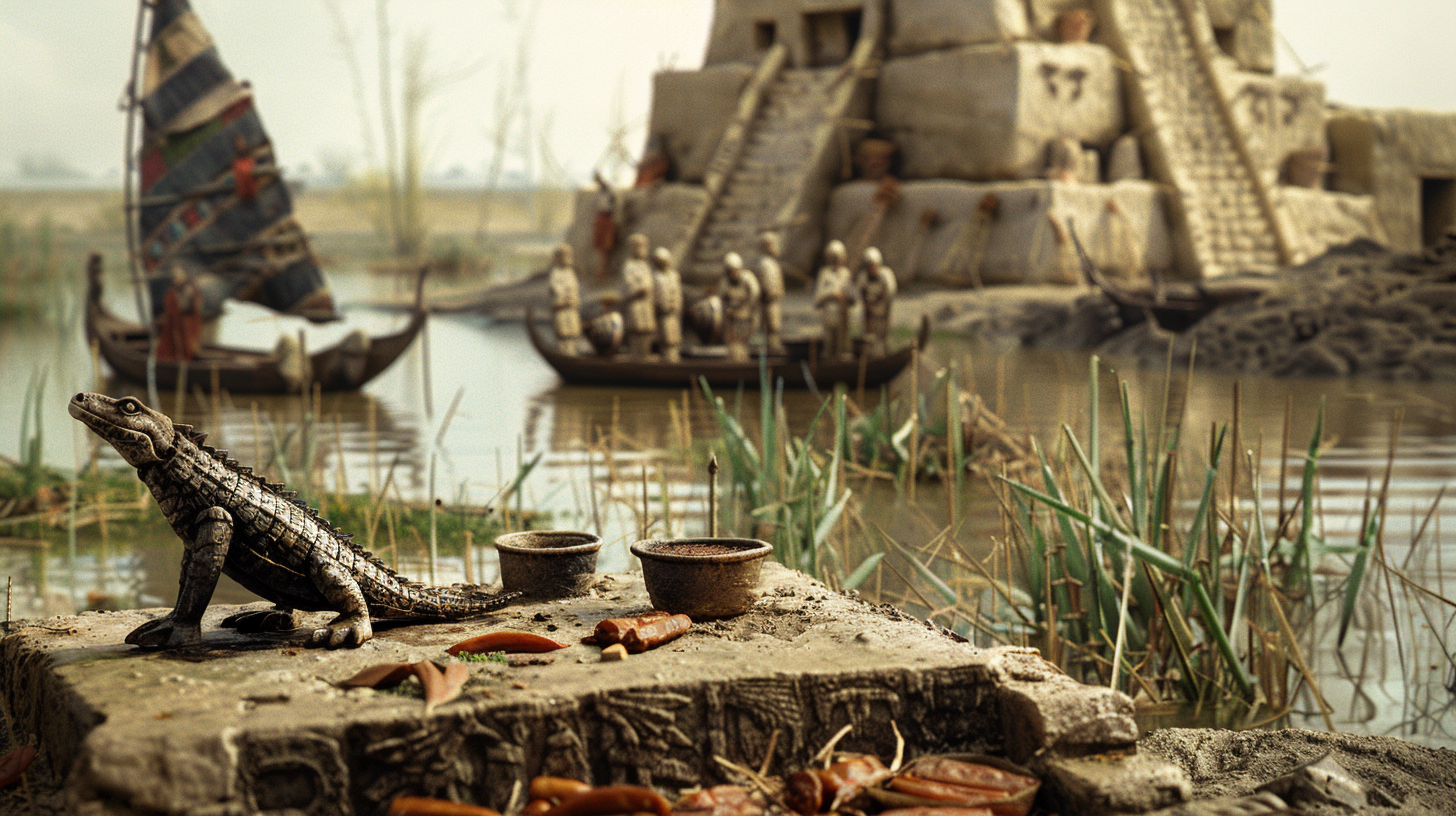
These figurines clearly have human bodies, but their faces are not human. Elongated eyes, protruding snouts without noses, and broad shoulders. They look reminiscent of lizards or snakes (Ophidian). Even a statue of a mother nursing a child has a lizard face.
Why did they depict themselves this way?
- Hypothesis 1: Did they depict aliens or a reptilian race? (A favorite of conspiracy theorists, though not accepted in academia.)
- Hypothesis 2: Do they symbolize the underworld or water spirits related to the god Enki?
- Hypothesis 3: Is it an exaggerated expression of the custom of skull deformation (head binding)?
There is no certain answer yet. However, this ‘difference’ is strong evidence that the Ubaid people possessed a mental world completely different from the people of the historical eras we are familiar with.
2. Innovation (1): History Stacked Like a Cake, The Temple of Eridu
How did the Ubaid people live? The answer lies in Eridu, the first city in Sumerian mythology. The excavation results here are like a time machine.
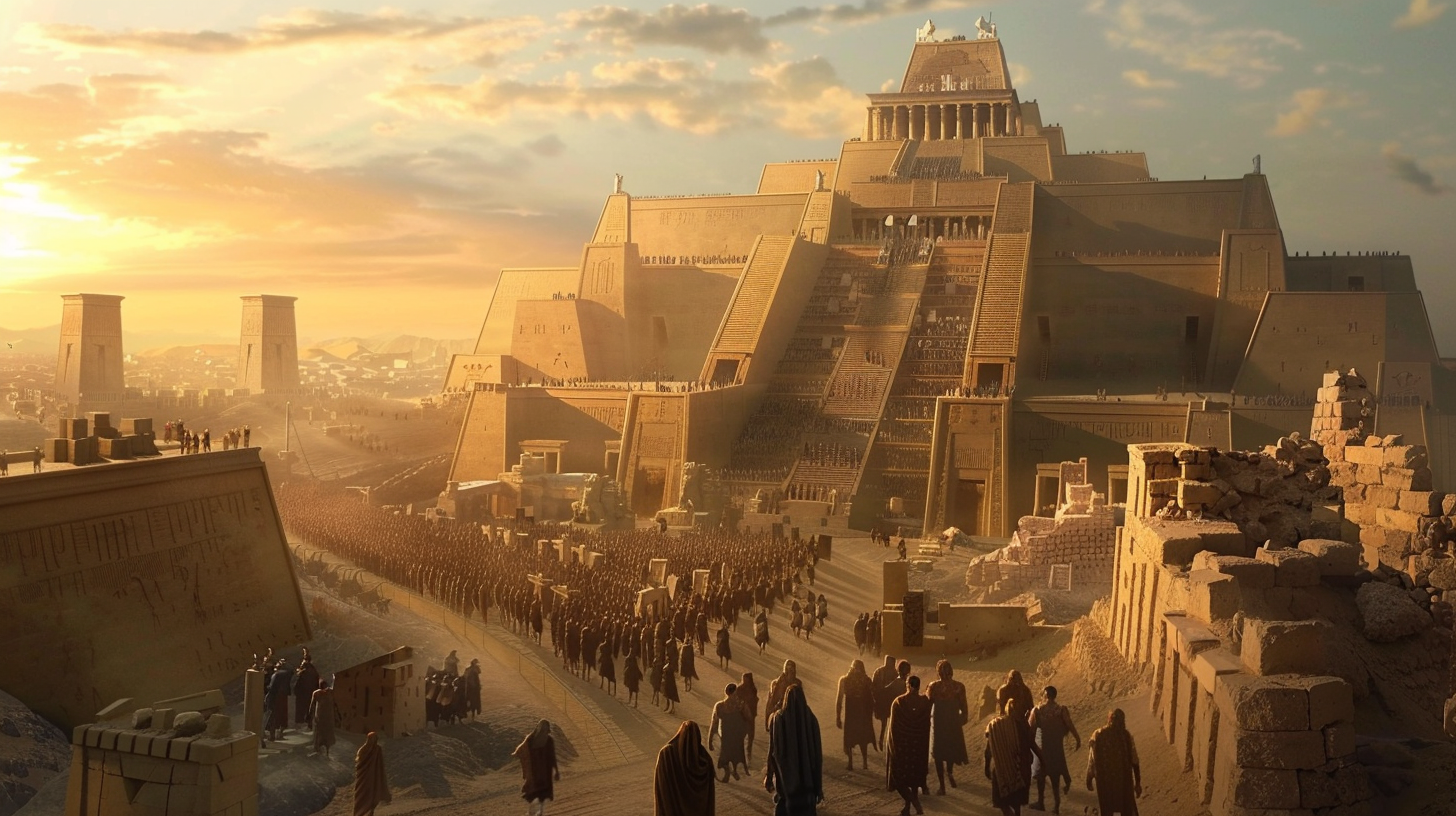
When archaeologists dug down into the temple site at Eridu, they discovered 19 Levels stacked layer by layer.
- The Bottom Layer (Level 16): It began as a tiny, one-room shrine built on the sand. An altar and a table for offerings were all it had.
- The Middle Layers: Over time, the shrine grew larger. Decorative niches appeared on the walls, and the altars became more elaborate.
- The Top Layer (Level 6): Finally, it became the massive temple we recognize. With a central long hall (Cella), side rooms, and a temple standing tall on a massive platform. This became the prototype for the later Ziggurat.
This ‘layer cake’ of ruins tells us a crucial fact: “Civilization was not created overnight by foreign invasion, but built up step-by-step by the local people over thousands of years.” In other words, the Ubaid people are highly likely the direct ancestors of the Sumerians.
3. Innovation (2): The First Adventurers to Sail Reed Boats
The Ubaidians were not simple farmers. They were history’s first ‘open-ocean sailors.’
Surprising evidence emerged at the H3 site in Kuwait. It was chunks of black bitumen. Where the desert meets the sea, Ubaid people wove bundles of reeds to make boats and meticulously coated them with bitumen to make them waterproof.
Barnacles were found attached to fragments of these boats. This is decisive proof that these boats sailed not just in rivers, but in the salty ocean for long periods. They erected ‘bipod masts’ (two-footed masts) on these boats and used the wind to cross the Persian Gulf.
Why did they risk their lives to go out to sea? Their boats carried beautiful pottery instead of grain. They likely gifted this pottery to the nomads of the Arabian Peninsula and, in return, obtained the jewels of the sea, pearls, or precious stones. This was not simple commerce, but a ‘ceremonial adventure’ to forge brotherhoods with strange tribes.
4. Their Day: Labor, Feasts, and the Beginning of Inequality
Now, let’s turn our gaze from grand history to the daily lives of ordinary people. What was a day in the Ubaid like?
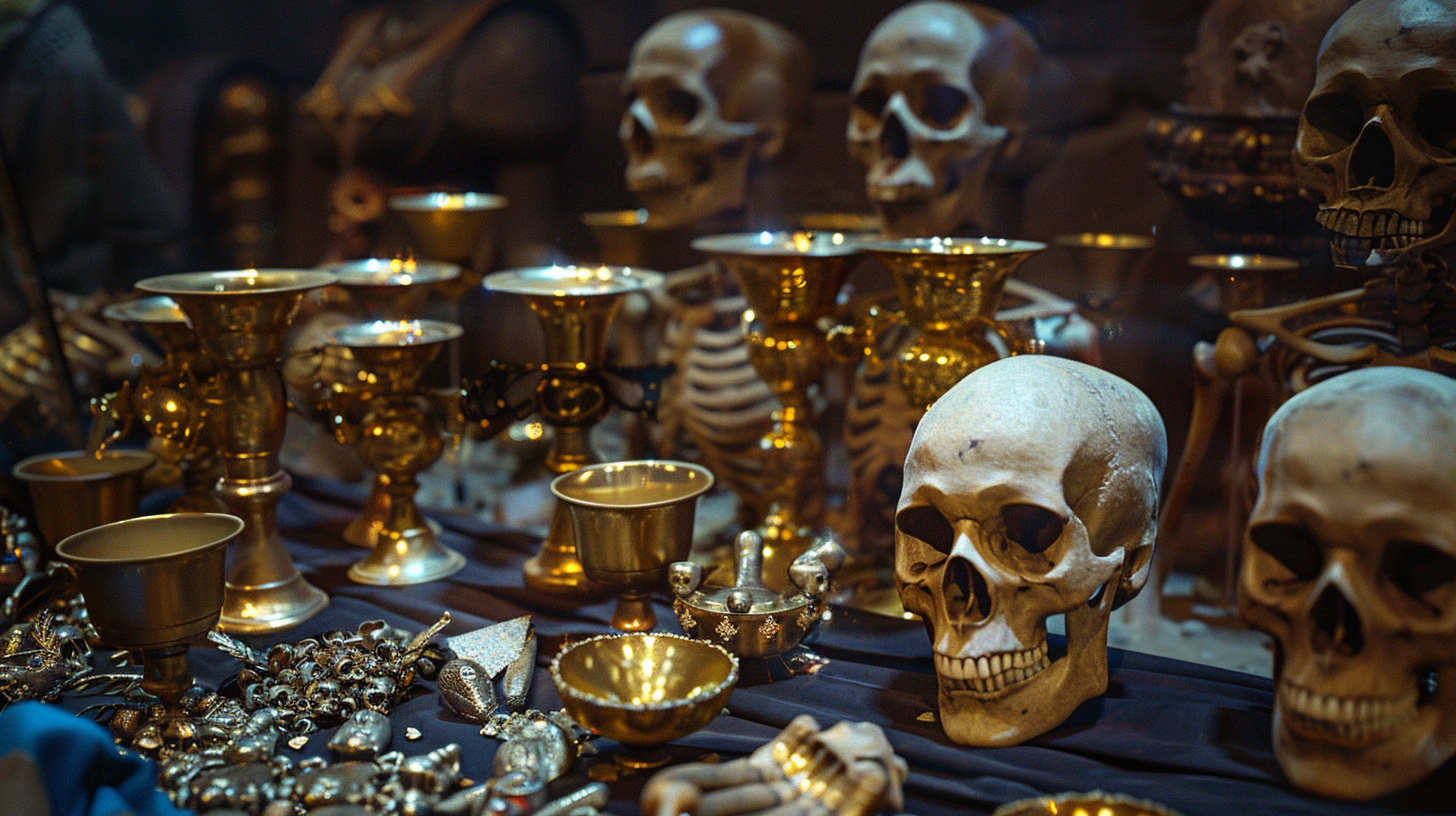
- The Table: Their staples were barley bread, beer, and dates. But the most important source of protein was fish. A massive amount of fish bones—offerings to the god—was found on the floor of the Eridu temple.
- Labor: We cannot look at it only romantically. From this period, society began to divide into classes. Some people had to shape pottery all day, while women had to weave textiles for the temple.
- Economy: There was no money. Instead, a ‘Staple Finance’ system operated. When farmers offered their harvested grain to the temple storehouse, the priests (elites) managed it and distributed it to the people by hosting massive Feasts.
It may look peaceful on the surface, but this marked the beginning of the history of human inequality: “He who controls the surplus production holds the power.”
5. Two Worlds: Ideology in the North, Trade in the South
Ubaid culture started in southern Mesopotamia and expanded North (modern-day Syria, Turkey) and South (Arabian Peninsula). However, the methods were opposites.
- Expansion to the North (Copying): Northerners admired the advanced culture of the southern Ubaid. They copied the southern house structures (tripartite houses), used seals, and adopted the ‘Ubaid Style.’ It was the spread of ‘ideology and fashion,’ not military force.
- Expansion to the South (Trading): On the other hand, in the southern seas, they took boats out and established a direct ‘trade network.’
Thus, the Ubaid completed the ‘First Global Network (Oikumene)’ connected by culture and economy without the use of force.
[Conclusion] Ubaid, Completing the DNA of Civilization
The Ubaid period is classified as ‘pre-historic’ because there was no writing. However, the legacy they left behind—temple-centric urban structures, class society, long-distance trade, and irrigation agriculture—became the DNA of Mesopotamian civilization for the next 5,000 years.
The glory of Sumer that we know stands upon the foundations built of mud and reeds by the nameless people of the Ubaid.
‘The Idea Project’ continues to analyze the ‘real stories’ of history hidden between the lines of textbooks.
References
- Carter, R. (2006). “Boat remains and maritime trade in the Persian Gulf during the sixth and fifth millennia BC.” Antiquity, 80.
- Carter, R. A., & Philip, G. (Eds.). (2010). Beyond the Ubaid: Transformation and Integration in the Prehistoric Societies of the Middle East. Oriental Institute of the University of Chicago.
- Oates, J. (1960). “Ur and Eridu, the Prehistory.” Iraq, 22.
- Pollock, S. (1999). Ancient Mesopotamia: The Eden that Never Was. Cambridge University Press.
- Safar, F., Mustafa, M. A., & Lloyd, S. (1981). Eridu. Republic of Iraq, Ministry of Culture and Information.
- Stein, G. J. (1994). “Economy, Ritual, and Power in Ubaid Mesopotamia.” In Chiefdoms and Early States in the Near East.
- Stein, G. J., & Özbal, R. (2007). “A Tale of Two Oikumenai: The Excavations at Tell Zeidan and the Dynamics of Ubaid Coupling.”
- Uerpmann, M., & Uerpmann, H.-P. (1996). “‘Ubaid pottery in the eastern Gulf – new evidence from Umm al-Qaiwain (U.A.E.).” Arabian Archaeology and Epigraphy, 7