
What image comes to mind when you usually think of ‘Babylon’? Perhaps the Tower of Babel crumbling while trying to reach the sky, or the cruel “eye for an eye, tooth for a tooth” laws. However, the true face of the Old Babylonian Period (approx. 2000-1595 BCE), as revealed by recent academic research, is much more multidimensional and modern.
Today, based on 9 of the latest research papers, we dig into everything about the history, society, and intellectual heritage of Old Babylonia.
1. The Rise of a Hero: Hammurabi, the Prince from the Periphery, Unifies Mesopotamia
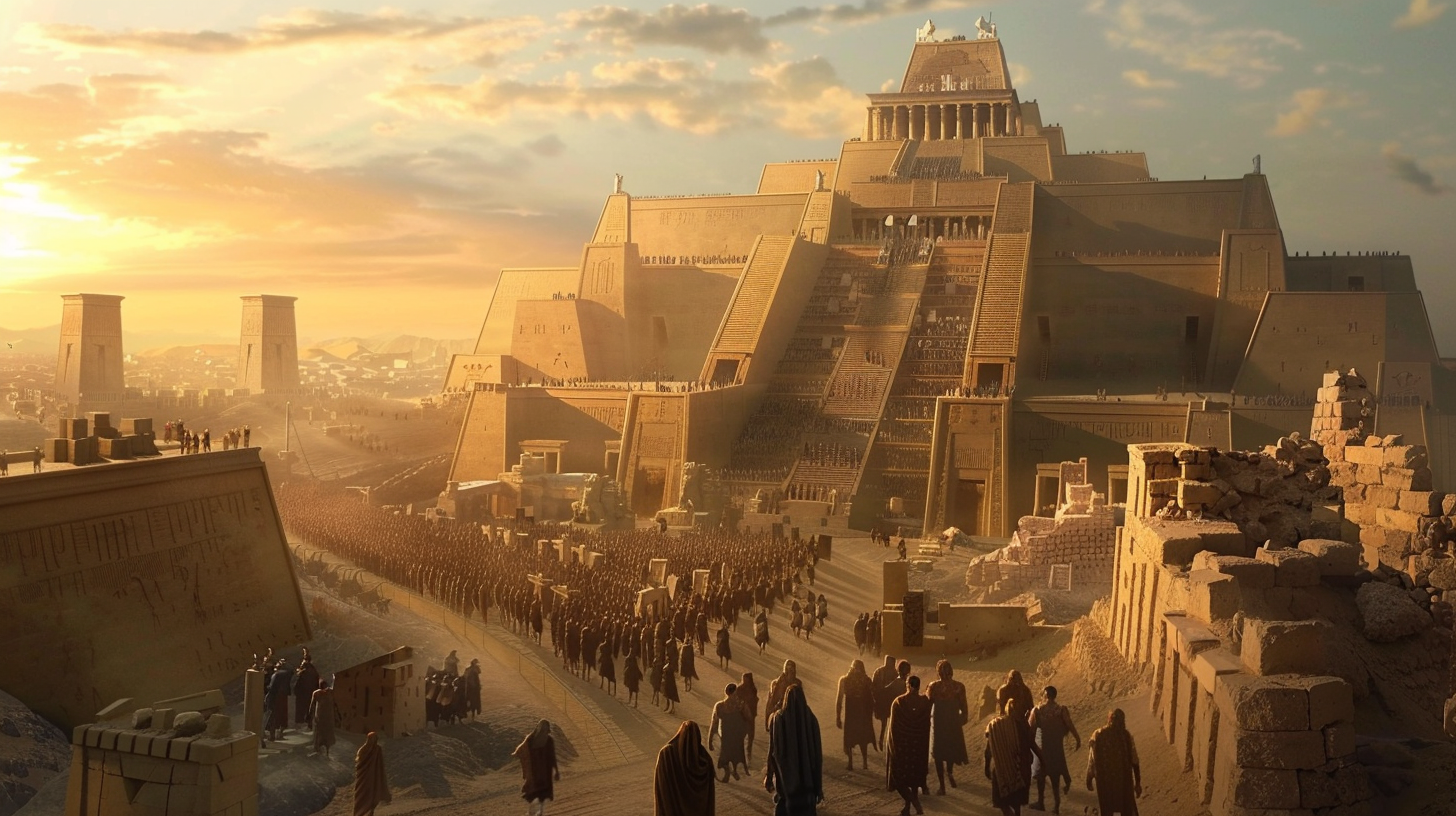
In the early 18th century BCE, Mesopotamia was in a chaotic period where various city-states were vying for dominance. At the time, Babylon was not a particularly strong nation. However, history changed when the young king Hammurabi ascended the throne in 1792 BCE.
In the early years of his reign, Hammurabi engaged in cautious diplomacy amidst powerful neighbors like Larsa, Eshnunna, and Mari. It was only after 30 years of building strength that he began his wars of conquest, eventually establishing a great empire that unified all of Mesopotamia. He was not merely a conqueror, but an exceptional ruler who established Akkadian as the official administrative language and integrated cultures.
2. Law and Justice: Was the Code of Hammurabi Merely Cruel?
The 『Laws of Hammurabi』 is one of the most famous artifacts in the history of human law. While commonly known for the Lex Talionis (law of retaliation), the true purpose of the code was to protect the socially vulnerable and realize economic justice.
- Social Safety Net: The code contains not only provisions protecting widows and orphans but also clauses that forgive the debts of farmers who ruined their harvest due to floods or droughts.
- Water Management and Agriculture: Babylonia’s prosperity came from ‘canals’. Hammurabi constructed massive canals to fertilize barren lands. The code contains detailed regulations supporting the agricultural economy, such as liability for damages when renting an ox or breaking farming tools.
3. Mystery Solved: The Truth Behind the ‘Plimpton 322’ Tablet of Math Geniuses
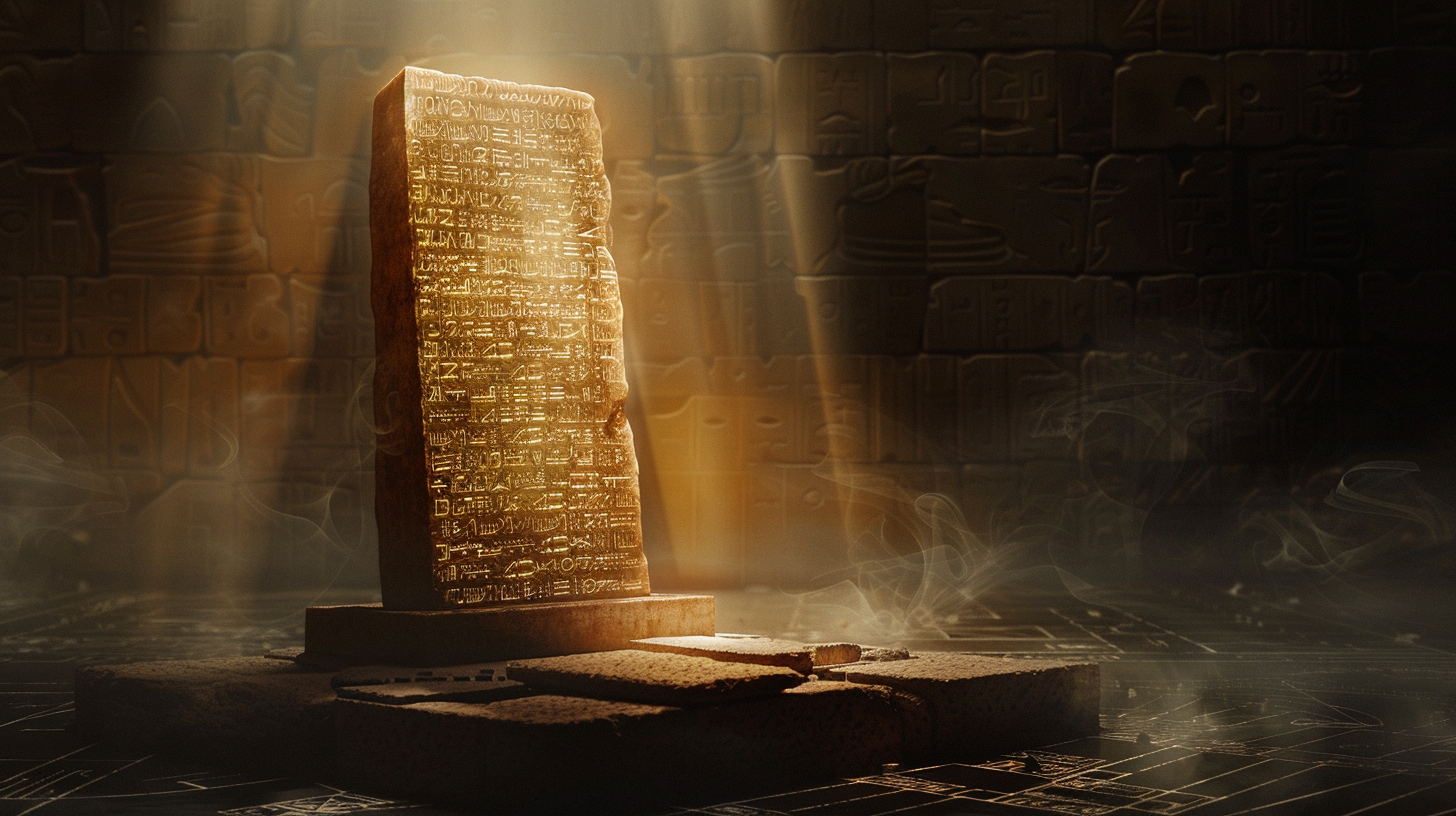
Did you know that Babylonians knew the ‘Pythagorean theorem’ 1,000 years before Pythagoras? At the center of this debate is a clay tablet called ‘Plimpton 322’.
For a long time, scholars thought this was a sophisticated trigonometric table. However, according to recent research by Eleanor Robson, the concept of ‘angle’ did not even exist in Babylonia. So, what is this?
Analysis reveals that this tablet was a ‘Teacher’s aid’ containing pre-calculated numbers for a teacher to set right-angled triangle problems for students. The teacher had compiled a list of ‘Pythagorean triples’ in advance so that students’ calculations would result in clean integers. This is evidence of how systematic the Babylonian mathematics education system was.
4. Hidden Protagonists: The ‘Naditu’ Priestesses (Financial Tycoons) and Queens
In Old Babylonian society, women were not merely passive figures. In particular, the class of priestesses known as ‘Naditu’ was unique.
- Career Women, Naditu: Serving the sun god Shamash and living celibate lives, they used the massive dowries received from their families to invest in trade and buy and sell land, engaging in active economic activities. Hammurabi’s sister was also a Naditu, and they formed one of the wealthiest groups of the time.
- Ruling Queens: Thousands of letters left in the Mari archives vividly show that queens acted as regents during the king’s absence and led diplomacy and religious rituals.
5. Culture and Religion: The Anguish of Gilgamesh
This period was also a golden age for literature. It was exactly at this time that the 『Epic of Gilgamesh』, which had been passed down in Sumerian tradition, was integrated into a single grand narrative structure. The Babylonian version contains not only the adventures of a hero but also deep philosophical anguish about the human destiny of inevitable death, resonating deeply even today. Furthermore, the creation myth 『Enuma Elish』, in which the chief god Marduk defeats chaos and creates the world, justified Babylon’s political hegemony on a cosmic level.
6. The Twilight of the Empire: The Fall of Babylon in 1595 BCE
Even Hammurabi’s seemingly eternal empire met its end. After Hammurabi’s death, from the era of his son Samsuiluna, national power began to slowly decline. Rebellions arose in the south, and the economy struggled.
Finally, in 1595 BCE, Mursili I, king of the Hittites, who possessed a powerful iron civilization, invaded Babylon. Babylon was sacked, and the splendid Amorite dynasty disappeared into history. Although the dynasty perished, the legacy of law, mathematics, and literature they left behind became the roots of Western civilization.
References
- Charpin, D. (2012). Hammu-rabi of Babylon. I.B. Tauris.
- George, A. R. (2003). The Babylonian Gilgamesh epic: Introduction, critical edition and cuneiform texts (Vols. 1–2). Oxford University Press.
- Lambert, W. G. (2013). Babylonian creation myths. Eisenbrauns.
- Robson, E. (2001). Neither Sherlock Holmes nor Babylon: A reassessment of Plimpton 322. Historia Mathematica, 28(3), 167–206.
- Roth, M. T. (1995). Law collections from Mesopotamia and Asia Minor. Scholars Press.
- Sasson, J. M. (2015). From the Mari archives: An anthology of Old Babylonian letters. Eisenbrauns.
- Van De Mieroop, M. (2005). King Hammurabi of Babylon: A biography. Blackwell Publishing.
- Westbrook, R. (Ed.). (2003). A history of ancient Near Eastern law (Vol. 1). Brill.