
In September 1991, a German couple climbing the Tisenjoch pass in the Ötztal Alps stumbled upon a corpse protruding from the snow. At first, they thought it was a modern mountaineer who had met an unfortunate end. However, this body turned out to be a man from the Copper Age who lived 5,300 years ago.
We call him “Ötzi the Iceman.”
Ötzi is one of the best-preserved mummies in human history, serving as a time capsule that vividly testifies to prehistoric life. In particular, recent genomic analysis published in 2023 and various cutting-edge studies have completely overturned our previous understanding of him.
Today, The Idea Project digs into the true face of Ötzi as revealed by modern science, his final meal, and the mysterious murder case that led to his death.
1. The Face We Knew Was Wrong: Ötzi’s Real Appearance
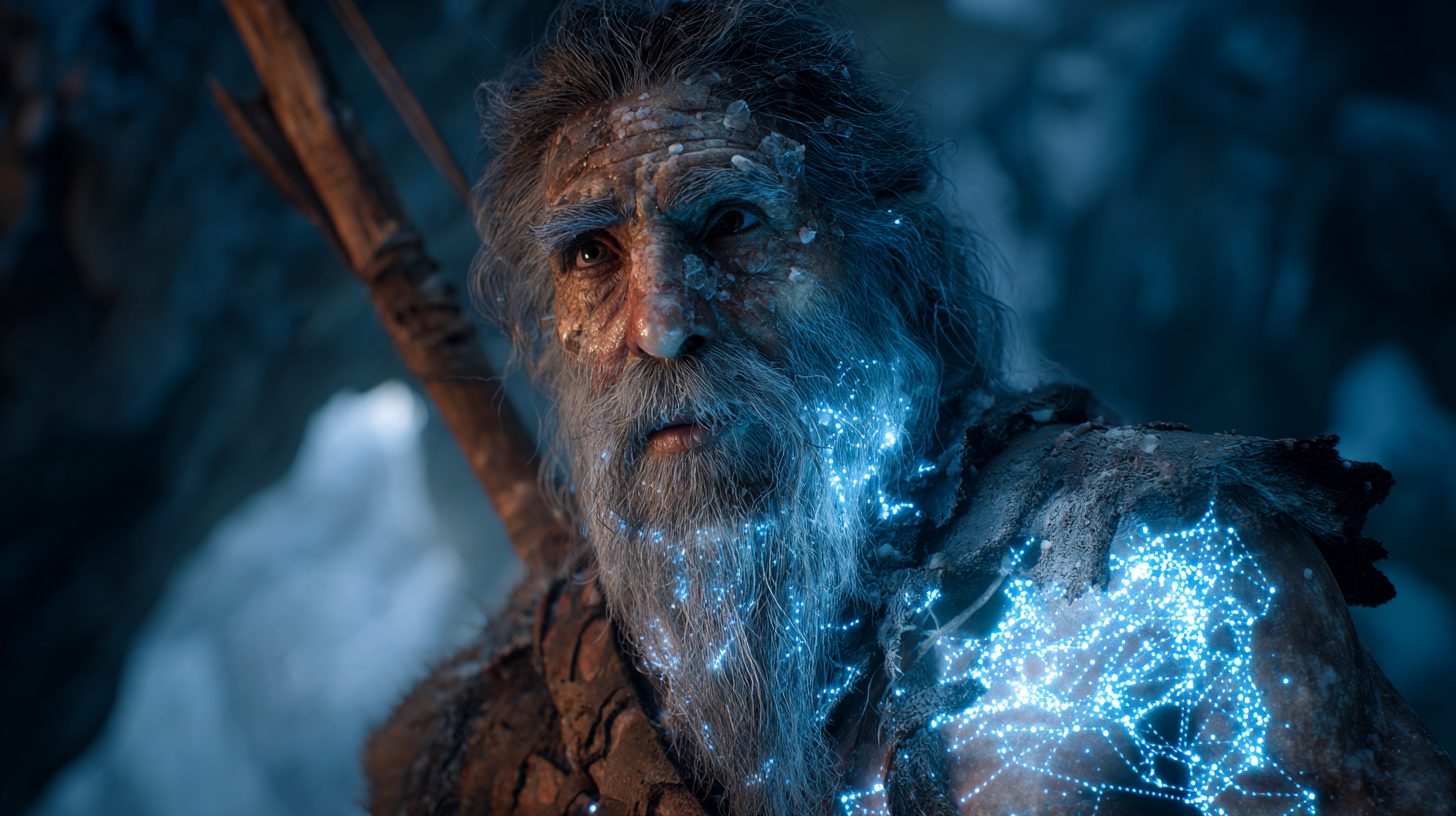
Do you remember the reconstructions of Ötzi seen in museums or textbooks? He was typically depicted as a light-skinned man with shaggy hair. However, the latest genome analysis released in 2023 delivered a shock.
- Skin Tone: He had a much darker skin tone (High skin pigmentation) than present-day southern Europeans.
- Baldness: The lack of hair on the mummy at the time of discovery wasn’t just due to the passage of time. Genetic analysis revealed he had a predisposition for male-pattern baldness, suggesting he likely had very little hair while alive.
- Ancestry: He belonged to an isolated Alpine tribe that preserved over 90% of the genes of early Anatolian farmers, with little admixture from other European groups of the time.
In short, he was a “middle-aged, bald man with dark skin.”
2. A Prehistoric “MacGyver”: His Cutting-Edge Gear
When Ötzi was found, he wasn’t empty-handed. The equipment he carried demonstrates how highly developed human technology was in overcoming the harsh Alpine environment.
- Fashion for Waterproofing and Warmth: He wore a bearskin hat and leggings made of goat hide. Over this, he wore a woven grass cloak which provided a waterproofing effect.
- Sophisticated Hiking Boots: His shoes were as intricate as modern hiking boots. The soles were made of durable bearskin, the uppers of soft deer hide, and the interior was stuffed with hay to maximize insulation.
- The Secret of the Copper Axe: The copper axe he carried was a “high-tech” item and a status symbol for the time. Surprisingly, isotope analysis revealed that the copper originated not from the Alpine region, but from Southern Tuscany, hundreds of kilometers away. This proves that extensive long-distance trade networks across Europe already existed 5,300 years ago.
3. The Last Supper: What Did He Eat?
Ötzi was climbing rugged mountains right up until his death. What was his energy source? In 2018, scientists meticulously analyzed his stomach contents to reconstruct his final menu.
- High-Fat Diet: Surprisingly, nearly half (approx. 46%) of the stomach content was fat. He had consumed the fat of a wild goat, the Ibex. This is interpreted as an intentional high-calorie diet to survive in the cold high-altitude environment.
- Main Dish: Along with the fat, he ate red deer meat and einkorn wheat. Analysis of the meat’s muscle fiber structure suggests it wasn’t roasted over a fire but was likely dried or smoked, similar to modern jerky.
- Poisonous Plant or Medicine?: Large amounts of bracken fern spores were found in his stomach. It is presumed he might have eaten them to treat parasites, or that fern leaves used to wrap his food were ingested accidentally.
4. A Walking Hospital: Ötzi’s Health
Though he appeared to be a tough mountaineer on the outside, inside he was a middle-aged man suffering from all sorts of ailments.
- Stomach Issues: The Helicobacter pylori bacterium, which causes gastritis and ulcers, was found in his stomach. He likely suffered from heartburn.
- Arteriosclerosis: Despite living a very active life with much walking, he carried genetic factors for heart disease. CT scans confirmed severe arteriosclerosis (calcification) in his heart and various joints.
- Tattoos for Treatment: A total of 61 tattoos were found on his body. These were made by rubbing charcoal into incisions. Since the locations of the tattoos correspond exactly to areas of arthritic pain (lower back, knees, ankles), they were likely a form of medical treatment similar to acupuncture.
5. CSI Alps: The Murder Mystery
Ötzi did not die from natural causes or an accident. He was murdered.
- Evidence of Assassination: In 2001, X-rays revealed a stone arrowhead lodged deep in his left shoulder.
- Reconstructing the Crime: The killer shot an arrow at Ötzi from behind. The arrow pierced his shoulder blade and severed the subclavian artery. This fatal wound would have caused Ötzi to die from excessive blood loss within a short time.
- An Off-Guard Moment: The fact that he had eaten a full meal 30 minutes to an hour before dying implies he was not in a desperate chase. He was likely resting in a perceived safe spot when he was struck by a surprise attack, ending his life.
6. Behind the Scenes: Austria vs. Italy
The discovery of Ötzi even sparked a modern-day “border dispute.” Initially, Austrian police recovered the body, and it was moved to the University of Innsbruck. However, a precise survey revealed that the discovery site was just 92 meters inside Italian territory. Consequently, Ötzi was returned to Italy and currently rests at the South Tyrol Museum of Archaeology in Bolzano.
Some have spread rumors of an “Ötzi’s Curse” after several people involved in the discovery and research, including Helmut Simon (the discoverer), died in accidents, but these are merely coincidences with no scientific basis.
Conclusion: An Anthropological Treasure
Ötzi is not just a mummy. He is the most perfect textbook showing us what humans 5,300 years ago wore, what they ate, what diseases they suffered from, and how they treated them.
Having waited 5,000 years inside the Alpine ice, he continues to tell us stories of a lost ancient time. The Human Odyssey will continue to deliver fascinating stories hidden in history based on scientific facts.
References
- Artioli, G. (2017). Long-distance connections in the Copper Age: New evidence from the Alpine Iceman’s copper axe. PLoS ONE, 12(7), e0179263.
- Gostner, P. (2002). INSIGHT: Report of Radiological-Forensic Findings on the Iceman. Journal of Archaeological Science, 29(3), 323–326.
- Gostner, P. (2011). New radiological insights into the life and death of the Tyrolean Iceman. Journal of Archaeological Science, 38(12), 3425–3431.
- Keller, A. (2012). New insights into the Tyrolean Iceman’s origin and phenotype as inferred by whole-genome sequencing. Nature Communications, 3, 698.
- Maixner, F. (2016). The 5300-year-old Helicobacter pylori genome of the Iceman. Science, 351(6269), 162–165.
- Maixner, F. (2018). The Iceman’s Last Meal Consisted of Fat, Wild Meat, and Cereals. Current Biology, 28(14), 2313–2325.
- Murphy, W. A. (2003). The Iceman: Discovery and Imaging. Radiology, 226(3), 614–629.
- Samadelli, M. (2015). Complete mapping of the tattoos of the 5300-year-old Tyrolean Iceman. Journal of Cultural Heritage, 16(5), 753–758.
- Wang, K. (2023). High-coverage genome of the Tyrolean Iceman reveals unusually high Anatolian farmer ancestry. Cell Genomics, 3(9), 100377.