
1. Prologue: In Search of the Forgotten Megacity
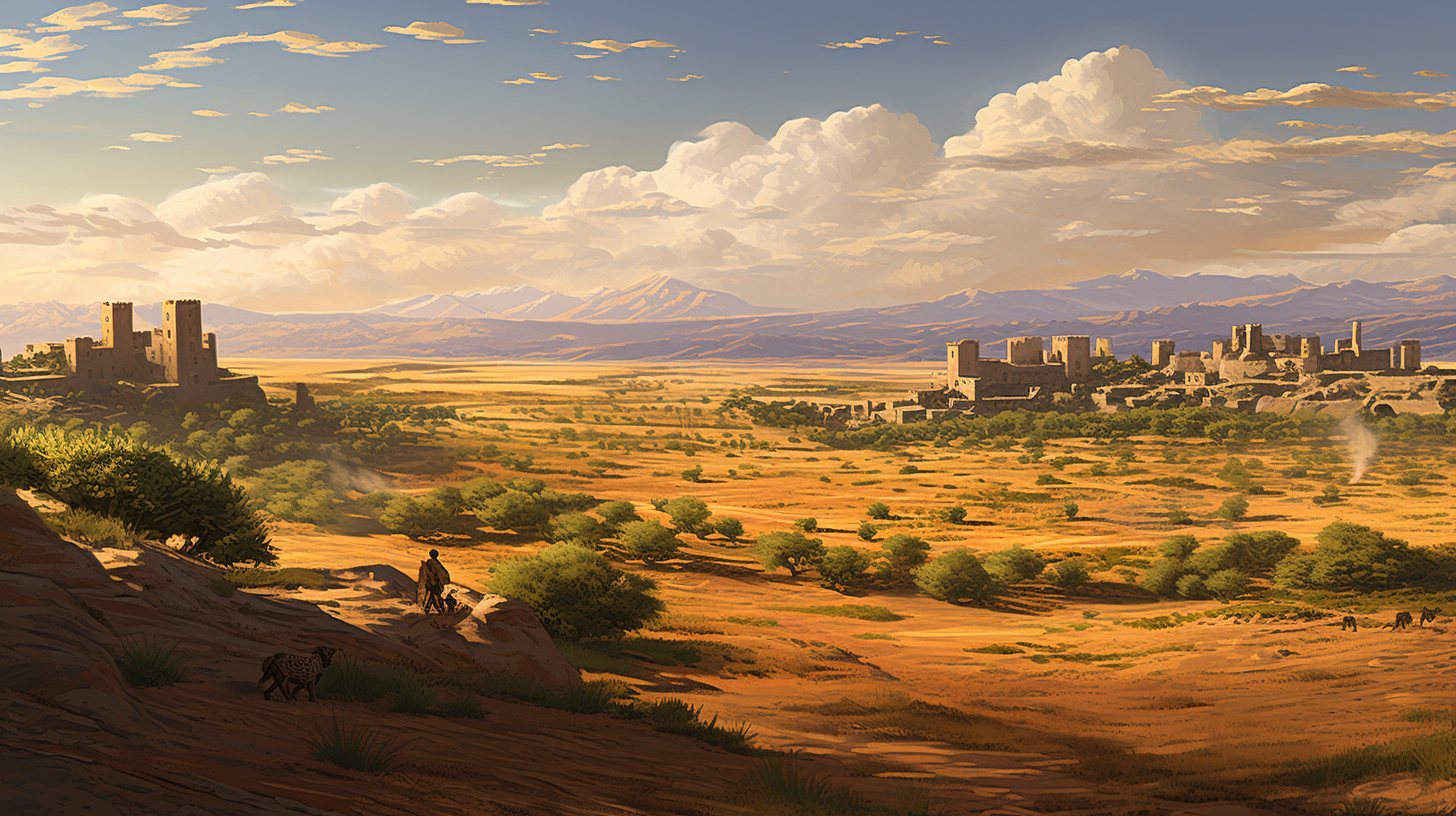
It was 1974 at a highway construction site on the outskirts of Amman, Jordan. As bulldozers dug into the earth, strange artifacts poured out. These were the traces of ‘Ain Ghazal, a Neolithic “megacity” that was three times larger than the biblical Jericho.
About 10,000 years ago, when humanity first began farming and settling down, what kind of lives did the people here lead? Surprisingly, they grappled with concerns similar to ours and possessed technologies that became the seeds of modern civilization.
2. Mystery 1: The Big-Eyed Statues and the Secret of the ‘Six Toes’
The most shocking discovery at ‘Ain Ghazal was the colossal Lime Plaster Statues, some as tall as a person. Constructed by coating a reed frame with plaster, these statues gaze upon the world of 8,000 years ago with intense eyes.
However, there is one bizarre feature in these statues.
🔍 [Interesting Fact] Why 6 Toes? (The Mystery of Polydactyly) Looking closely at the feet of some discovered statues, they are depicted with 6 toes.
- Not a Mistake: Archaeologists do not view this as a simple artistic error. ‘Ain Ghazal was likely a closed society bound by blood ties, and it is highly probable that the powerful families leading the village carried the gene for polydactyly.
- Divine Beings: They might have regarded physical features different from others as symbols of “holiness” or “special authority,” leaving those traits on the statues as they were.
3. Mystery 2: The Seeds of Writing, ‘Tokens’
The people of ‘Ain Ghazal did not just farm. They began “recording.”
📊 [A Page in History] The First Excel File? ‘Tokens’ Small clay pieces in shapes like circles, cones, and discs were found throughout the site. These were not toys, but calculation tools called ‘tokens’.
- Usage: “One jar of grain = one cone,” “One sheep = one circle.” In this way, they recorded the quantity of goods and traded.
- Significance: According to Professor Denise Schmandt-Besserat’s research, these simple tokens evolved into the ‘cuneiform script’—humanity’s first writing system—imprinted on clay tablets thousands of years later. In a way, the ancestors of the letters we use today existed here.
4. The ‘Fashion People’ of 8,000 Years Ago: Makeup and Accessories
They were not primitive humans solely focused on survival. The people of ‘Ain Ghazal were sincere about grooming and adorning their appearance.
- The Origin of Eyeliner: They used black bitumen to emphasize the eyes of the statues. This suggests that people at the time actually enjoyed eye makeup.
- Imported Accessories: Basic bracelets were made of bone, but they also made necklaces from seashells imported from the far-off Red Sea or Mediterranean Sea.
- Jewelry: Pendants carved from green stone or carnelian demonstrate the sophisticated aesthetic sense of the time.
5. A Record of Collapse: The Catastrophe of Environmental Destruction
Why did such a splendid civilization disappear? Surprisingly, the cause was ‘environmental destruction’.
- Wood-Burning Technology: To produce the ‘lime plaster’ used for house floors and statues, massive amounts of wood were required as fuel. It is estimated that 10 trees from the forest disappeared to build a single house.
- The Goat Invasion: Instead of hunting, people began raising goats. However, goats have a habit of eating plant roots, depriving the deforested woods of the chance to regrow.
Eventually, around 6250 BC, the forest within a 3km radius of the village was completely devastated, and the fertile land turned into a desert. People scattered to survive, and the megacity disappeared into history. This throws a chilling warning to modern humanity as well.
6. Travel Info: How to Meet ‘Ain Ghazal
Where are these mysterious artifacts now? If you plan to visit Jordan or museums abroad, be sure to look for them.
- The Jordan Museum (Amman): Houses the largest collection of original plaster statues, tokens, and accessories.
- Louvre Museum (Paris/Abu Dhabi): Some statues are on loan for exhibition at the Louvre in France and Louvre Abu Dhabi (Check exhibition status before visiting).
- Jordan Archaeological Museum: Located within the Amman Citadel, it houses some early excavation finds.
Conclusion ‘Ain Ghazal is not just an archaeological site. It encapsulates the lives of humans 8,000 years ago who resembled us—inventing writing, loving art, and agonizing over environmental problems.
References
- Grissom, C. A. (2000). Neolithic Statues from ‘Ain Ghazal: Construction and Form. American Journal of Archaeology, 104(1), 25–45.
- Kafafi, Z. (2009). Environment and Architectural Change at the Neolithic Site of Ain Ghazal. Neo-Lithics, 1(09), 24–32.
- Köhler-Rollefson, I. (1990). The impact of Neolithic subsistence strategies on the environment: The case of ‘Ain Ghazal, Jordan. In S. Bottema (Ed.), Man’s Role in the Shaping of the Eastern Mediterranean Landscape (pp. 3–14). A.A. Balkema.
- Rollefson, G. O. (1983). Ritual and Ceremony at Neolithic ‘Ain Ghazal (Jordan). Paléorient, 9(2), 29–38.
- Rollefson, G. O. (1985). The 1983 Season at the Early Neolithic Site of Ain Ghazal. National Geographic Research, 1(1), 44–62.
- Rollefson, G. O. (1990). The Uses of Plaster at Neolithic ‘Ain Ghazal, Jordan. Archeomaterials, 4, 33–54.
- Rollefson, G. (1992). Neolithic Cultures at ‘Ain Ghazal, Jordan. Journal of Field Archaeology, 19(4), 443–470.
- Rollefson, G. O. (1997). The 1996 Season at ‘Ayn Ghazal: Preliminary Report. Annual of the Department of Antiquities of Jordan, 41, 27–48.
- Rollefson, G. O. (2000). Ritual and Social Structure at Neolithic ‘Ain Ghazal. In I. Kuijt (Ed.), Life in Neolithic Farming Communities (pp. 165–190). Kluwer Academic/Plenum Publishers.
- Rollefson, G. O. (2013). The Town of ‘Ain Ghazal. In D. Schmandt-Besserat (Ed.), Ain Ghazal Excavation Reports, Vol. 3 (pp. 3–25). Ex Oriente.
- Schmandt-Besserat, D. (1997). Animal Symbols at ‘Ain Ghazal. Expedition, 39(1), 48–57.
- Simmons, A. H. (1988). ‘Ain Ghazal: A Major Neolithic Settlement in Central Jordan. Science, 240(4859), 35–39.