
Around 2100 BC, in Southern Mesopotamia, there existed a nation operated by the most sophisticated system in human history up to that point. This was the Ur III Period (Third Dynasty of Ur, c. 2112–2004 BC).
Without a single computer, they recorded every economic activity of the state on over 100,000 clay tablets. Today, based on the latest research in modern Assyriology (Steinkeller, Garfinkle, Englund, etc.), we dig into the system of this empire—often called the “peak of bureaucracy”—and the stories of the people who lived within it.
1. The Protagonists of the Empire: The 5 Kings
Before understanding this massive system, let’s introduce the five “players” who led this empire.
- 1st: Ur-Nammu: The founder who unified a chaotic Mesopotamia and laid the foundation of the empire. He built the Great Ziggurat and enacted the world’s oldest law code.
- 2nd: Shulgi: The genius monarch who ruled for 48 years. He unified weights and measures, created a calendar, and declared himself a “God,” leading the empire’s golden age.
- 3rd Amar-Suen & 4th Shu-Suen: Successors who maintained the prosperity of their predecessors. Notably, they built a massive wall (the Martu Wall) to block the “barbarians” (Amorites) pressing in from the west.
- 5th: Ibbi-Suen: The tragic last king. He struggled to protect the collapsing empire amidst famine, betrayal, and the Elamite invasion, but was ultimately captured and taken away.
2. Visible Greatness: The Ziggurat and the Law Code
There are two legacies of the Ur III Dynasty that are most well-known to the public.
The Stairway to Heaven: The Great Ziggurat of Ur
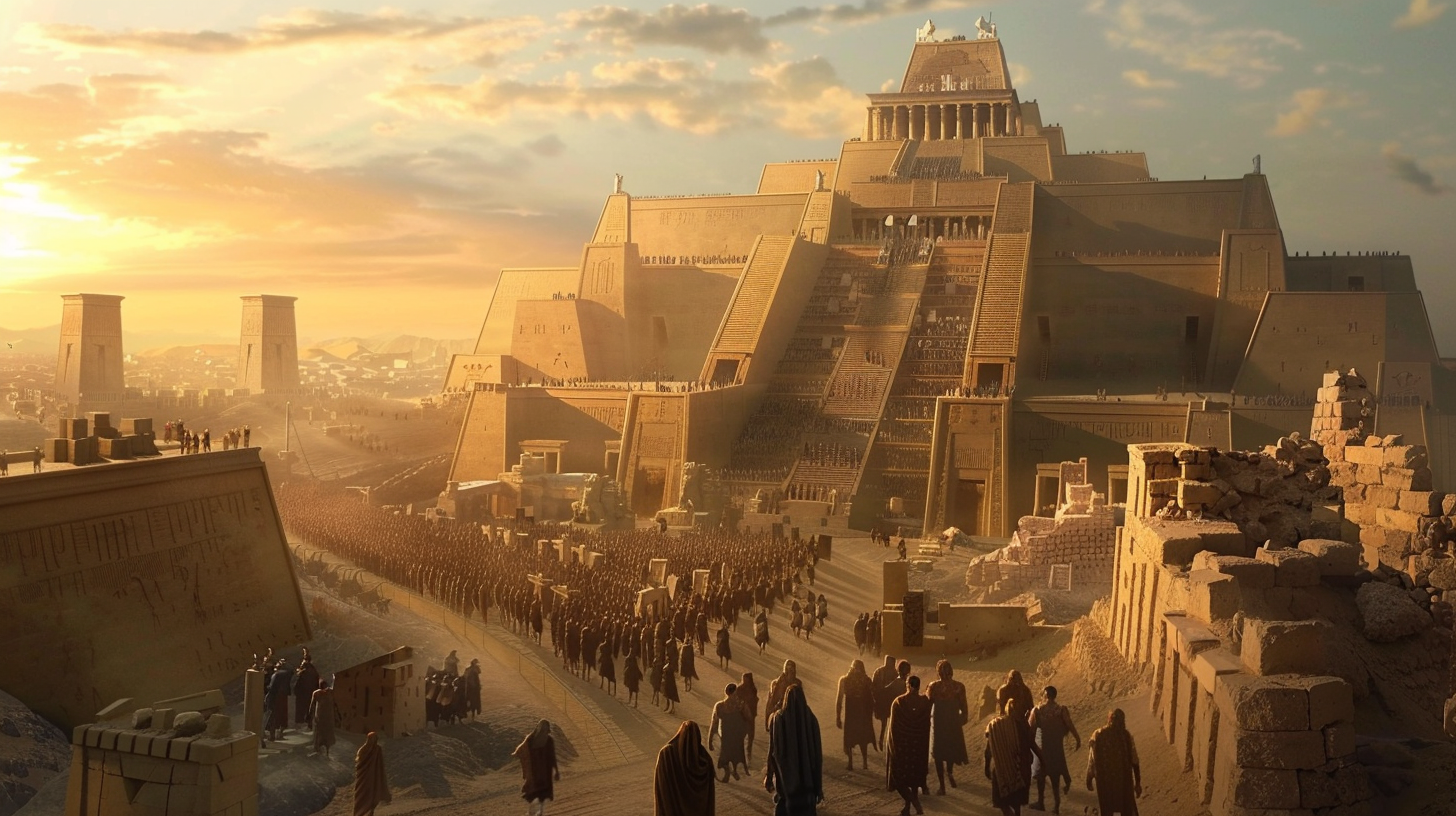
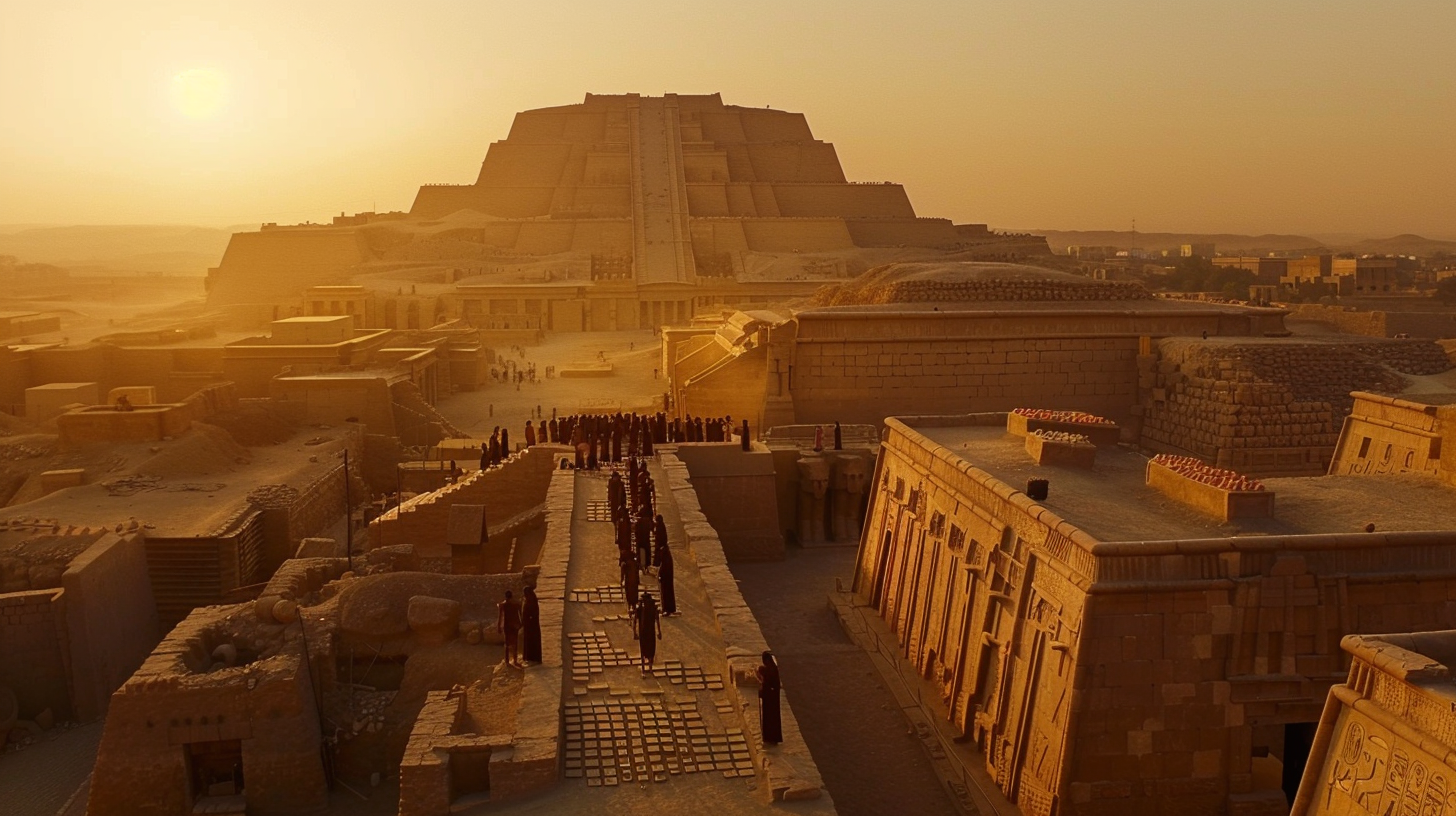
Started by King Ur-Nammu, this massive tower was a sanctuary dedicated to the Moon God ‘Nanna’. This three-tiered structure was a landmark of the empire, visible from anywhere on the plains, symbolizing the union of royal and divine power. It is also famous as the motif for the “Tower of Babel” legend in the Old Testament.
An Eye for an Eye? No, “Fines”: The Code of Ur-Nammu
We often think of the ‘Code of Hammurabi’ as the oldest law, but the ‘Code of Ur-Nammu’ predates it by 300 years. Surprisingly, this law was far more advanced than Hammurabi’s brutal “eye for an eye” (Lex Talionis).
“If a man severs the foot of another man, he shall pay 10 shekels of silver.”
Except for grave crimes like murder, most injuries were compensated with money (silver). This indicates that the economic level of the Ur III Dynasty was very high and that a currency economy was well developed.
3. The Skeleton of the Empire: A Governance System More Precise than Excel
Now, let’s look into the ‘real’ face of the Ur III Dynasty that academia focuses on. According to the analysis by Professor P. Steinkeller, this empire had a very meticulous geopolitical structure.
- The Core: The regions of Sumer and Akkad. These were ruled by governors (Ensi) appointed by the king and were bound by a tax system called ‘Bala’.
- The Periphery: Western Iran and the Upper Tigris. These areas were ruled by generals (Shagin). Instead of the Bala tax, they paid a tribute called ‘Gun₂’ and served as a shield to defend the empire.
The Amazon Fulfillment Center of Antiquity: ‘Drehem’
According to research by M. Hilgert, the heart of the ‘Bala’ system was a city called Drehem (Puzrish-Dagan). Tens of thousands of cattle and sheep paid as taxes by governors from all over the country gathered here. Officials recorded everything on clay tablets—from the arrival and departure of livestock to their death. This was a massive database reminiscent of a modern logistics center.
4. Light and Shadow: The Wealth of Merchants and the Sweat of Laborers
Was this a society where the state controlled everything? Research by Professors S. Garfinkle and R. Englund reveals the two faces of this empire.
People Who Became Rich in the Cracks of the System
Professor Garfinkle analyzed the ledgers of merchants like Turam-ili and Ur-saga. While they acted as trade agents for the state, they also accumulated wealth by lending money (silver) and grain to individuals for interest. “Ancient Capitalists” active outside the state system already existed.
People Who Became Numbers
On the other hand, the lives of laborers were harsh. According to Professor Englund’s analysis, the state managed laborers not by name, but by a numerical value called ‘Workday’.
- “Female labor required to mill 60 liters of barley = 1 day” In this way, all work was quantified, and overseers had to assume the debt if they failed to meet the quota. The hundreds of thousands of clay tablets are evidence of this meticulous and cold control of labor.
5. Collapse and Memory: The City Abandoned by God
The bureaucratic empire that seemed eternal eventually collapsed. In 2004 BC, a combination of famine caused by climate change, the invasion of the ‘Amorites’, and, decisively, internal betrayal brought it down.
The ‘Royal Correspondence of Ur’, analyzed by Professor P. Michalowski, contains the despair of the last king, Ibbi-Suen. He sent money to his trusted general, ‘Ishbi-Erra’, to buy grain, but the general betrayed him and declared himself king.
Eventually, when the Elamites trampled the capital city of Ur, the Sumerians left this tragedy in a literary work called the ‘Lamentation over the Destruction of Ur’.
“The people of Ur are scattered in the streets like broken pot shards… The god Enlil called the storm and swept the city away.”
6. Conclusion: The Power and Limits of Records
The Ur III Dynasty was humanity’s first attempt to rule the world through ‘Data’. Thanks to the 100,000 clay tablets they left behind, we can vividly restore the lives of kings, merchants, and laborers from 4,000 years ago.
The lesson that even a seemingly perfect system can collapse in the face of a changing environment and human desire—this is why we must look back at the Ur III Dynasty today.
References
- Englund, R. K. (1991). Hard Work – Where Will It Get You? Labor Management in Ur III Mesopotamia.
- Frayne, D. (1997). Ur III Period (2112-2004 BC). RIME 3/2.
- Garfinkle, S. J. (2004). Shepherds, Merchants, and Credit: Some Observations on Lending Practices in Ur III Mesopotamia.
- Garfinkle, S. J. (2008). Turam-ili and the Community of Merchants in the Ur III Period.
- Garfinkle, S. J. (2015). Ur III Administrative Texts: Building Blocks of State Community.
- Garfinkle, S. J. (2020). The House of Ur-saga: Ur III Merchants in their Non-Institutional Context.
- Hilgert, M. (1998). The Drehem Administrative Documents from the Reign of Shulgi.
- Michalowski, P. (2006). Šulgi and the Death of Sumerian.
- Michalowski, P. (2011). The Royal Correspondence of Ur.
- Sallaberger, W., & Westenholz, A. (1999). Mesopotamien: Akkade-Zeit und Ur III-Zeit.
- Samet, N. (2010). The Lamentation over the Destruction of Ur.
- Steinkeller, P. (1987). The Administrative and Economic Organization of the Ur III State: The Core and the Periphery.